Field Notes9 min read
Field Notes: Open Day at the Hatchery
A Tidewright field note from Triabunna: 300 neighbours, forty schoolkids and one microscope queue at the Holdfast kelp hatchery's first community open day.
Naomi Reyes ·
16 articles
A Tidewright field note from Triabunna: 300 neighbours, forty schoolkids and one microscope queue at the Holdfast kelp hatchery's first community open day.
Naomi Reyes ·
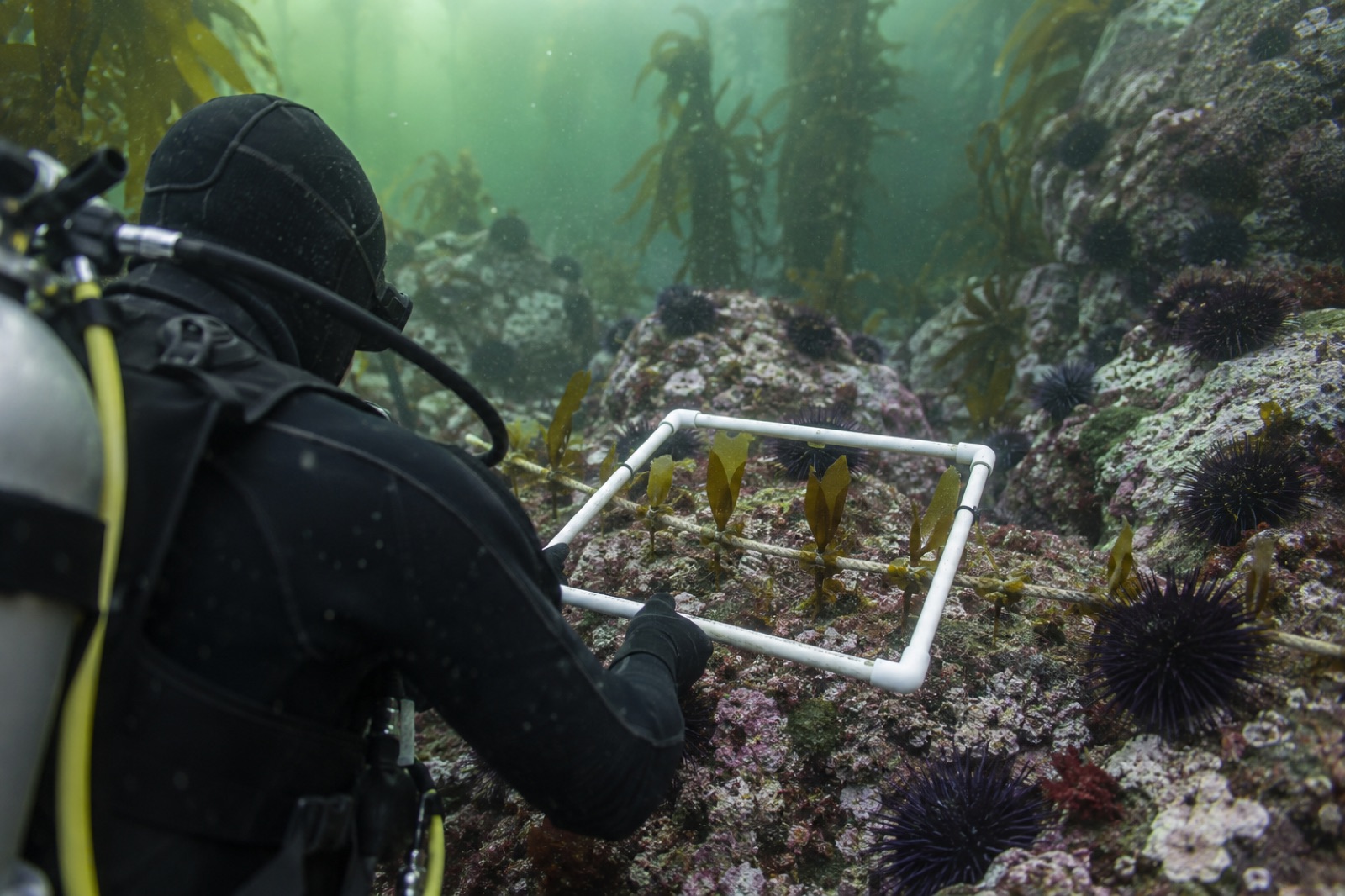
Field notes from a winter holdfast census across a Tasmanian reseeding site: urchin counts on treated vs control transects, and what we changed for next season.
Jack Callum ·
The first Holdfast lines we ever laid are three years old and due for retrieval. What biodegradable seeding lines look like after three winters — and what they taught us.
Jack Callum ·
A Tidewright field note from Gulf St Vincent: collecting golden kelp broodstock by torchlight with the Kudjela Sea Country Rangers, two hours either side of low tide.
Jack Callum ·
Tidewright field note: three September weeks on Sitka Sound collecting kelp sorus — the wild reproduction tissue that seeds every Holdfast line we grow.
Jack Callum ·
A Tidewright field note from the Holdfast hatchery: the red-lit night shift, quiet alarms, and what 3 a.m. teaches you about kelp seed quality.
Jack Callum ·
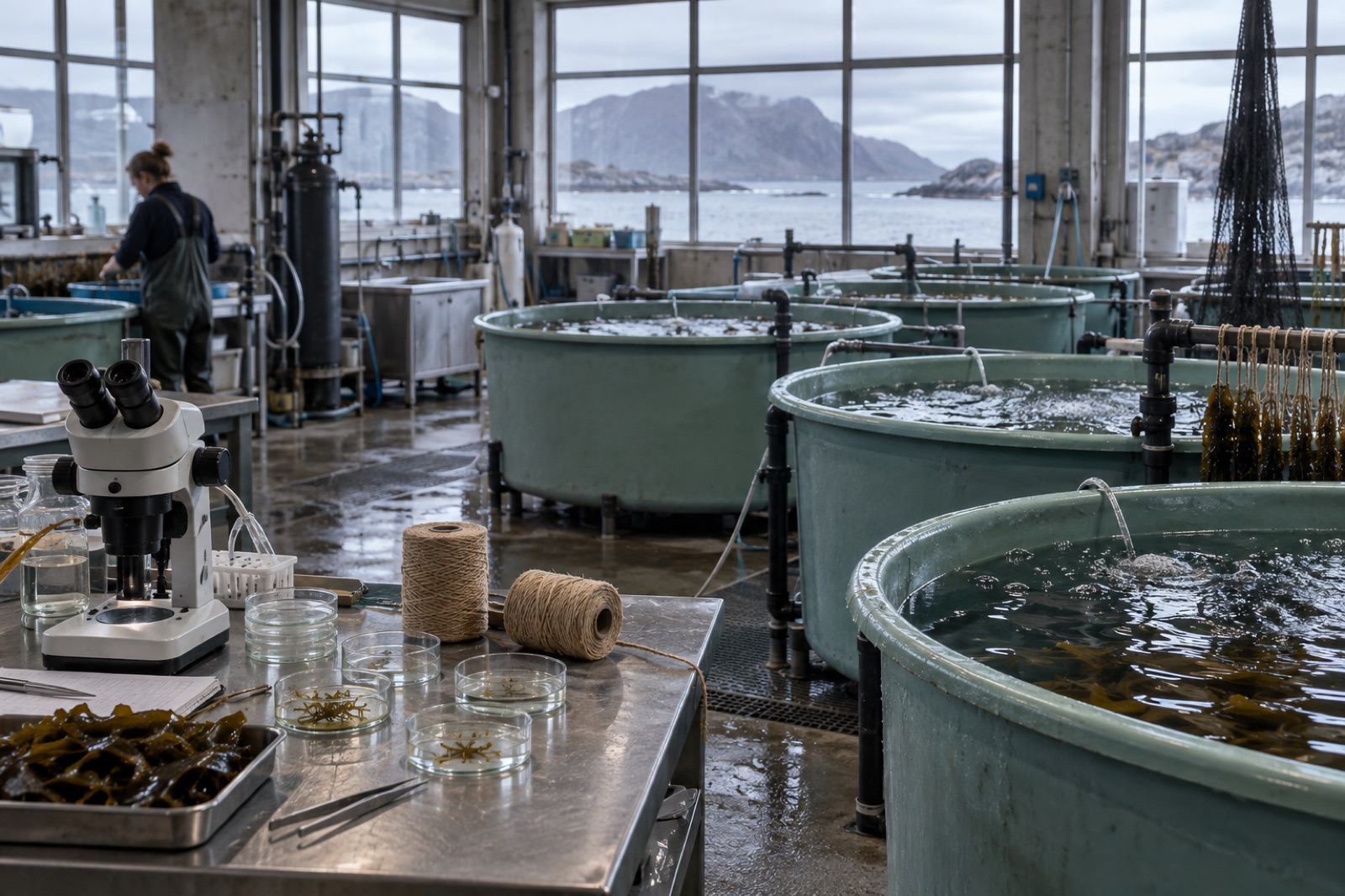
Five days as a trainee inside Tidewright's Holdfast hatchery: spore releases, cold rooms, seeded lines and the unglamorous real work of restoration.
Jack Callum ·
A Tidewright field note from Maria Island, Tasmania: deploying Holdfast seed lines onto heat-struck reef at dawn, and what we found three months on.
Jack Callum ·
Kelp has no true roots — its holdfast is a branching biological anchor built for storms. Explore holdfast anatomy, how kelp really feeds, and its hidden biodiversity.
Dr. Theo Nakamura ·
A field note from Hokkaido's kombu coast: autumn seeding with the Kushiro growers' guild, and what a century of kombu craft teaches a restoration nursery.
Dr. Theo Nakamura ·
A field note from our Tasmanian nursery: two autumn weeks diving for fertile giant kelp blades, racing spores to tanks, and banking a forest's next generation.
Jack Callum ·
A Tidewright field note from the coldest corner of our hatchery: the gametophyte bank, where microscopic kelp cultures wait in the dark for the reefs that will need them.
Dr. Elias Brandt ·
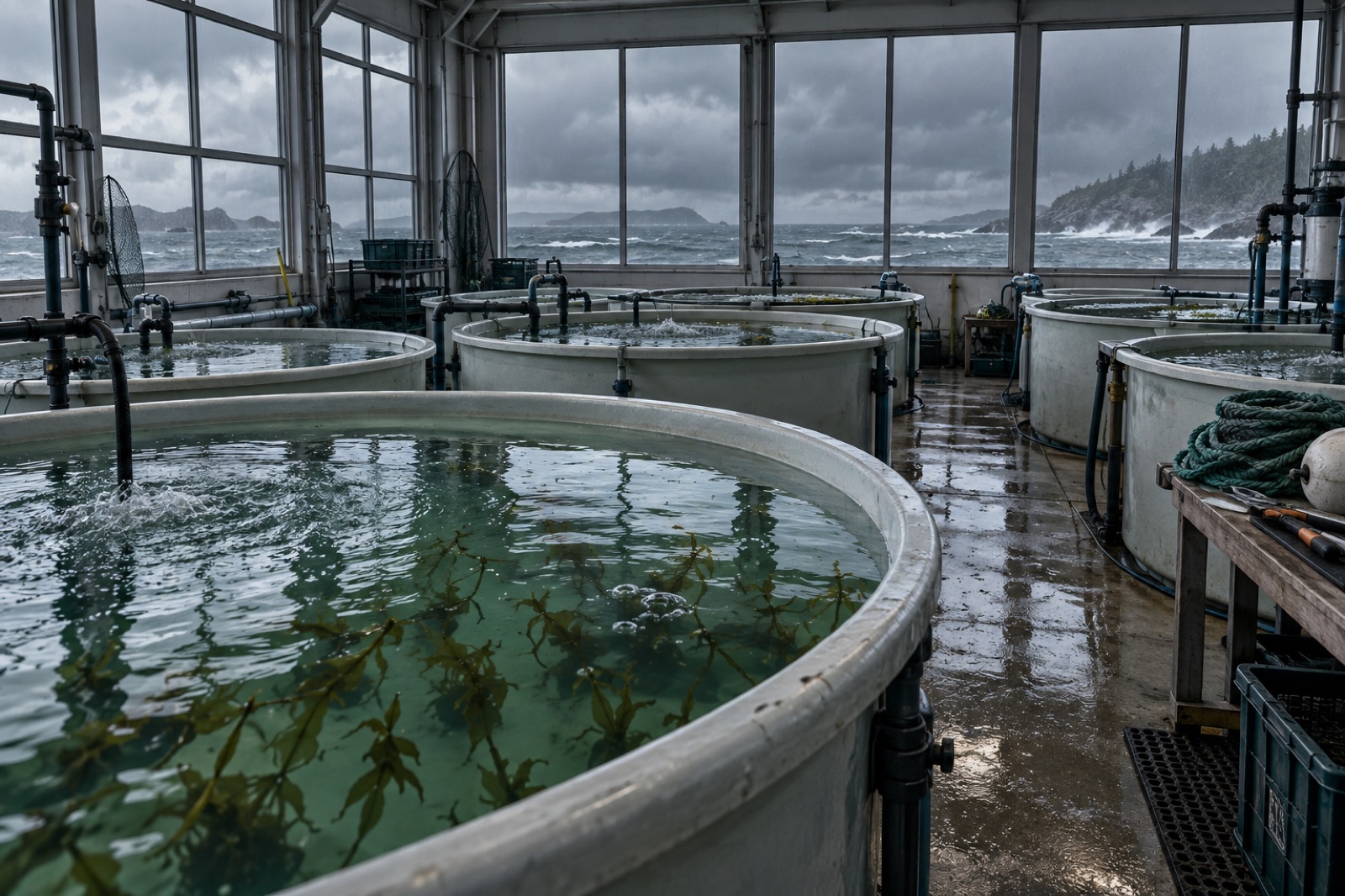
A Tidewright field note from our Triabunna hatchery: when a freak hailstorm killed the power mid-season, the crew had eleven hours to save a year of kelp seedstock.
Jack Callum ·
Inside a kelp holdfast census at Tinderbox: bagging, sieving and counting the hundreds of small animals that tell us whether a restored reef is alive.
Dr. Mara Ellison ·
A southerly storm wrapped two Holdfast lines into each other off Tasmania. The dive to untangle them — and the line-spacing rule that came out of it — from the field log.
Jack Callum ·
A kelp holdfast holds tonnes of drag through a storm with no glue and no roots. The biomechanics of nature's toughest anchor, and what engineers learn.
Dr. Mara Ellison ·