Lift a cobble on a rocky Puget Sound point at low tide and the crab that bursts out from under it is, most likely, a purple shore crab — quick, smooth-legged, purple-tinted. Walk a few hundred metres into the muddy back of the same bay, where a creek fans out across eelgrass and salt-marsh panne, and the crab under the stones changes. It is smaller-eyed, slower to run, and its legs carry a fringe of fine bristles you can feel if you hold it (gently, and briefly). That is the hairy shore crab, Hemigrapsus oregonensis: the estuarine half of the Pacific coast's most familiar crab genus, and a small masterclass in how one lineage splits itself between rock and mud.
Fast facts
|
|
| Scientific name |
Hemigrapsus oregonensis |
| Group |
Brachyuran crab, family Varunidae (shore crabs) |
| Carapace width |
Commonly 2–3.5 cm; large males approach 4.5 cm |
| Range |
Northeast Pacific: Alaska and the Bering Sea south to about central California |
| Habitat |
Estuaries, tidal creeks, salt-marsh edges, eelgrass beds, mud and sand under scattered cobble |
| Diet |
Diatoms, algae, detritus, small worms, amphipods and carrion |
| Key tell |
Dense tufts of setae (bristles) on the walking legs and claw arms |
The bristles are the whole story
The name is honest. Where the purple shore crab's legs are naked — the species name nudus literally means bare — the hairy shore crab's walking legs and the lower margins of its claws are fringed with obvious yellow-brown setae. Under a hand lens these are not decoration. They are working tools: the tufts trap fine sediment and the diatom film that grows on it, and the crab passes its legs through its mouthparts to strip the catch, a grazing style suited to a place where the best food is a smear of life on mud rather than a scrape of algae on rock.
The rest of the identification is confirmatory. The carapace runs grey-green, olive or brownish, squarish with three shallow teeth behind each eye, and often carries a scattering of small light spots. It lacks the purple wash and the red-spotted claws of its smooth-legged relative. Where the two species share a bay — and across the Pacific Northwest they share almost all of them — the rule of thumb holds: bristles and mud say oregonensis, bare legs and rock say nudus.
Built for the brackish margin
Everything about the hairy shore crab's life assumes fresh water is somewhere nearby. It tolerates salinities far below full seawater, burrowing into damp mud or wedging beneath cobble scattered over sand — microhabitats where rainwater and creek flow keep conditions dilute through the low tide. It is one of the few crabs a shorewalker can find reliably where an estuary meets the sea, the zone described in our science explainer on where rivers meet the kelp.
That estuarine specialisation buys the crab an enormous, under-contested food supply (estuarine sediments are among the most productive habitats on the coast) at the cost of constant physiological work: holding body salts against the dilute water pressing in. It also shapes behaviour. The hairy shore crab is a notably slower runner than its rocky cousin — some handlers describe it as almost unwilling to flee — which makes sense on soft sediment, where a burrow or a buried rock is always closer than open rock ever would be.
A day in the mud
The crab's rhythm is tide-set. Immersed, it works the sediment surface and the bases of eelgrass blades for diatoms, filamentous algae, tiny amphipods and whatever carrion the tide delivers — including, on kelp coasts, shredded fragments of drift kelp washed into the estuary mouth, part of the same detrital subsidy that fuels the shore. Exposed, it retreats into its burrow or under cobble, where the setae that feed it may also slow water loss from the leg surfaces.
Reproduction follows the northern intertidal calendar. Females carry an orange-to-dark sponge of eggs beneath the abdomen through late winter and spring, hatching them into the estuary's own plankton as swimming zoea larvae. Estuarine retention — the physics that keeps planktonic larvae circulating inside a bay rather than flushed out to the open coast — gives H. oregonensis a more localised, more estuary-bound life history than most shore crabs, a contrast to the open-coast dispersal described in our guide to larval journeys.
The small middle of the food web
Nobody makes a nature documentary about the hairy shore crab, which is precisely its ecological point. It is a converter: in, diatoms and detritus that nothing larger can use; out, crab — a meal sized and shaped for great blue herons stalking the marsh edge, crows flipping cobble at low tide, raccoons and river otters working the bank, and staghorn sculpins waiting in the channel. Our kelp forest food web overview traces how much of the forest's production exits through scavengers and small crustaceans; in the estuaries that flank kelp country, species like this one are the estate agents of that transfer.
Threats and a quiet resilience
Estuaries are among the most modified habitats on the Pacific coast — diked, dredged, filled, culverted — so the hairy shore crab's habitat record is inseparable from the century-long shrinkage of West Coast salt marsh and tideflat. On top of that sits competitive pressure: the European green crab, Carcinus maenas, which we profile in our piece on the shore crab that crossed the world, overlaps it exactly in habitat and appetite, and where green crabs establish in Pacific estuaries, native varunids are part of what gets eaten and out-competed.
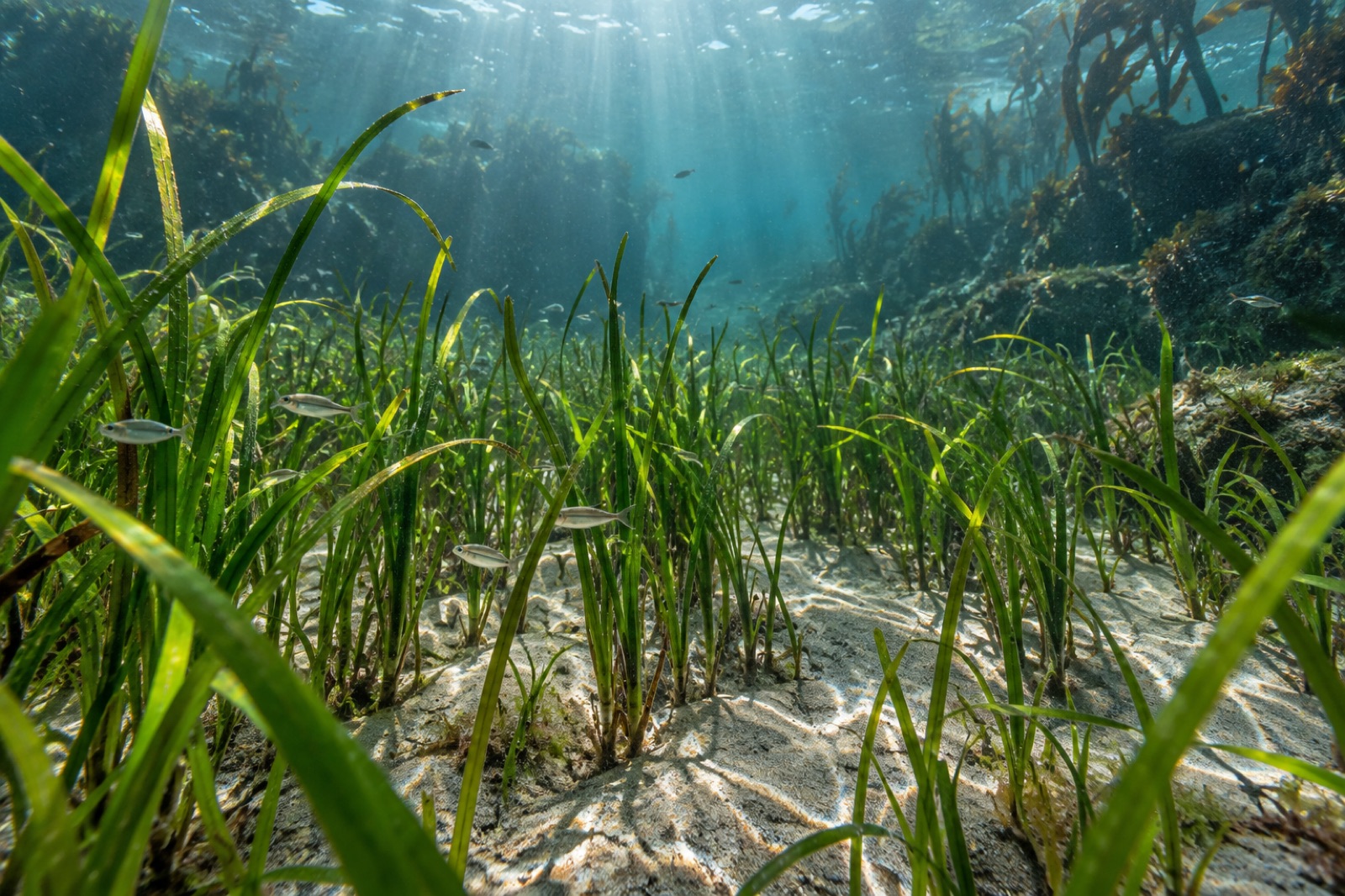
The counterweight is that H. oregonensis is genuinely good at what it does in genuinely obscure places — the brackish, silty corners that even green crabs use more cautiously. Restored marshes, daylighted creeks and reconnected tideflats tend to get their hairy shore crabs back early, often before the return of the eelgrass beds that will eventually shade them, like the meadows profiled in our eelgrass species portrait.
Where to look
Any broad, muddy, cobble-strewn bay flat on the Pacific coast between Alaska and central California will do. The back channels of Puget Sound and the tideflats of the Strait of Georgia are heartland habitat; so are the sloughs behind the dunes on the Oregon and northern California coasts. Search on a dropping tide, at creek mouths and old salt-marsh edges. Turn the stone slowly — the crab under it is in no hurry either. The rest of the intertidal cast is catalogued in our invertebrates encyclopedia section.
Key takeaways
- The hairy shore crab (Hemigrapsus oregonensis) is the estuarine counterpart of the purple shore crab, ranging from Alaska to central California in mud, marsh and tideflat habitat.
- Its diagnostic feature is written in the name: dense bristle tufts on the walking legs and claw arms, used to harvest diatom films from sediment.
- It tolerates brackish conditions far better than its rocky-shore relatives, living where creeks and rain dilute the tide.
- It converts estuarine diatoms and detritus into prey for herons, otters, raccoons and fishes — a small but pivotal link between kelp-country food webs and the shore.
- Its main pressures are estuary habitat loss and the invasive European green crab; marsh restoration brings it back quickly.
FAQ
How do I tell a hairy shore crab from a purple shore crab?
Turn the crab over gently and look at the legs. H. oregonensis has obvious fringes of hair-like setae on the walking legs and lower claw arms; H. nudus has smooth, naked legs. Habitat helps too — hairy shore crabs favour mud, marsh and tideflat, while purple shore crabs dominate open rocky shores.
Is the hairy shore crab rare?
No — it is abundant across its range but concentrated in estuarine and bay habitat rather than the wave-swept rocks most shorewalkers visit, so it is easy to overlook. In Pacific Northwest estuaries it is often the commonest crab on the flat.
What do hairy shore crabs eat?
Mostly diatoms, filamentous algae, fine detritus, small worms and amphipods, plus carrion including drift-kelp fragments washed into estuaries. Their leg setae act as a grazing tool for harvesting microbial films off sediment.
Are hairy shore crabs affected by invasive green crabs?
Yes. The European green crab occupies the same Pacific estuary habitat and both preys on and competes with native crabs. Monitoring programs track hairy shore crab numbers as one indicator of green crab impact.
Can I find them without going to a big estuary?
Yes — any sheltered, silty shoreline with scattered cobble near a creek mouth or marsh can hold them. Search on a falling tide and replace every stone exactly as you found it.