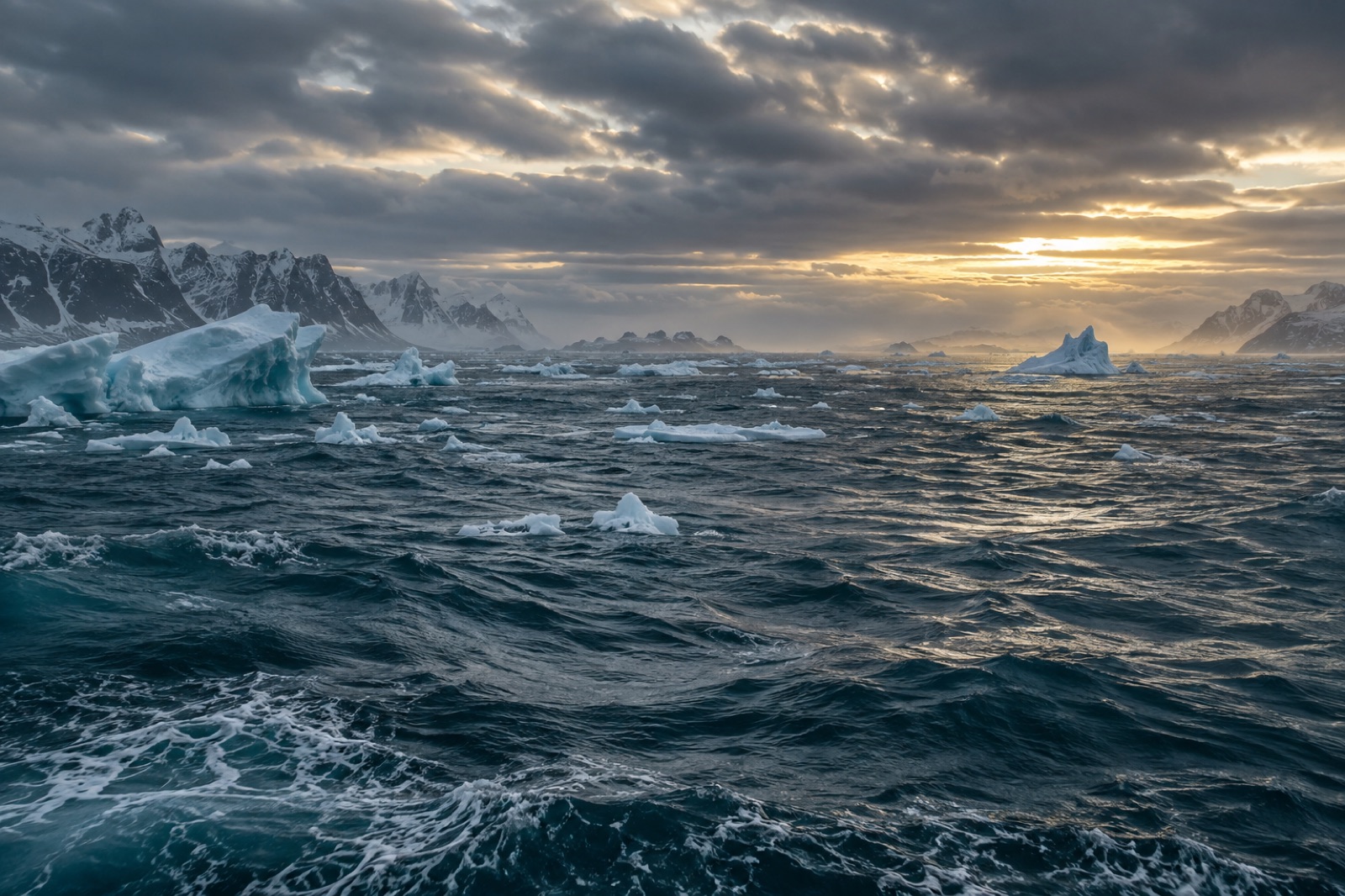
Science10 min read
The AMOC Explained: The Atlantic's Overturning Engine
How the Atlantic's great overturning circulation works, what the observations say about its strength, and why its slowing matters for climate and coasts.
Dr. Lena Fischer ·
23 articles
How the Atlantic's great overturning circulation works, what the observations say about its strength, and why its slowing matters for climate and coasts.
Dr. Lena Fischer ·
How the ENSO cycle works — trade winds, thermocline tilt, warm pools and global teleconnections — and why the Pacific's mood swings reach every ocean.
Dr. Lena Fischer ·
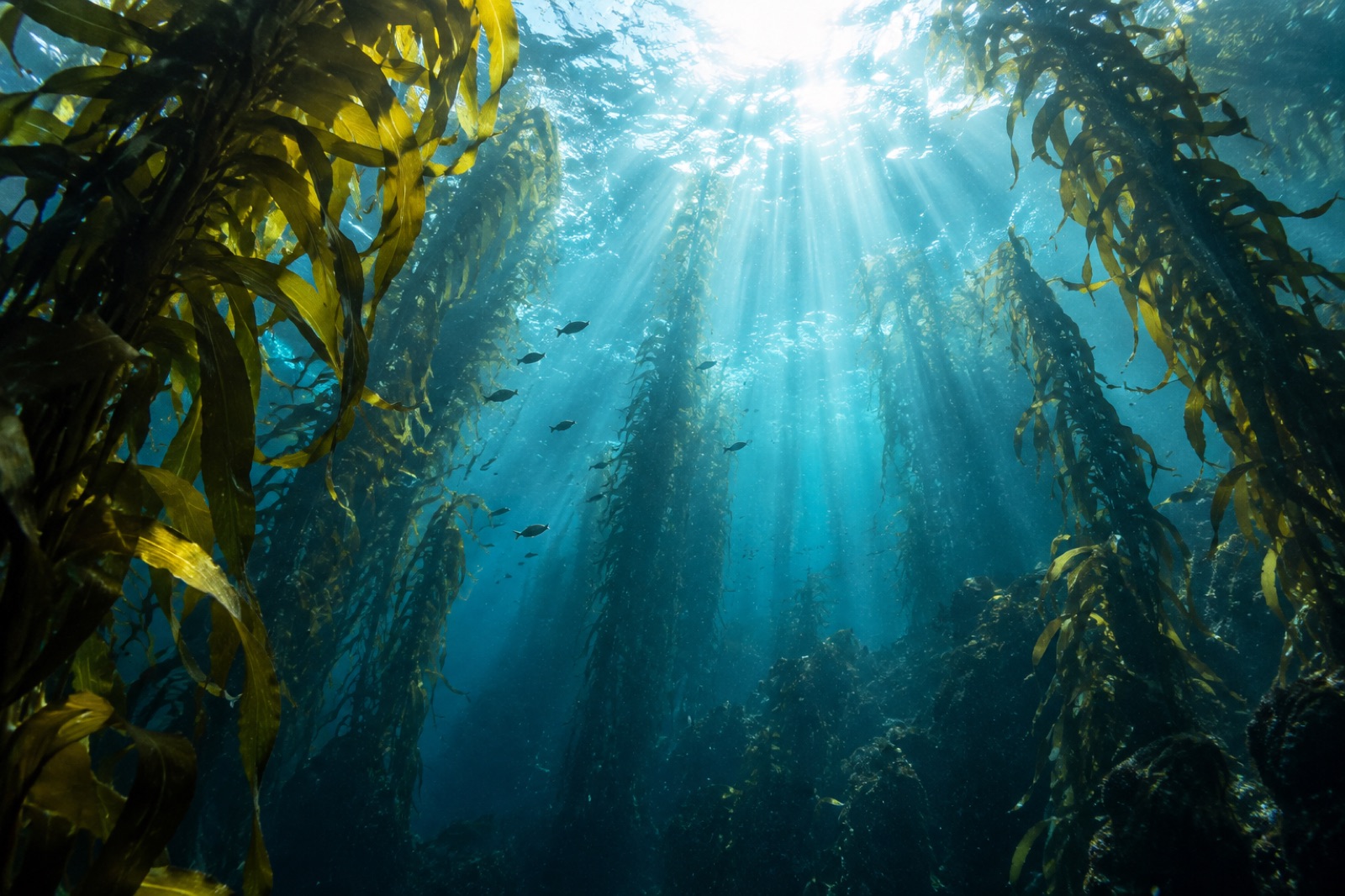
The euphotic zone is the sunlit skin of the sea where photosynthesis powers nearly all marine life. What defines it, how deep it runs, and why it matters.
Dr. Theo Nakamura ·
Beneath the surface tide runs a hidden one, pulsing cold nutrient-rich water onto reefs on a fortnightly beat. How the internal tide keeps kelp forests fed.
Dr. Lena Fischer ·
Internal waves arrive in packets of solitary giants, break underwater, and flood reefs with cold, nitrate-rich water. A field guide to the surf no one sees.
Dr. Lena Fischer ·
The ocean's biggest waves never break the surface. How internal waves ride the hidden boundary between water layers and deliver cold nutrients to kelp forests.
Dr. Lena Fischer ·
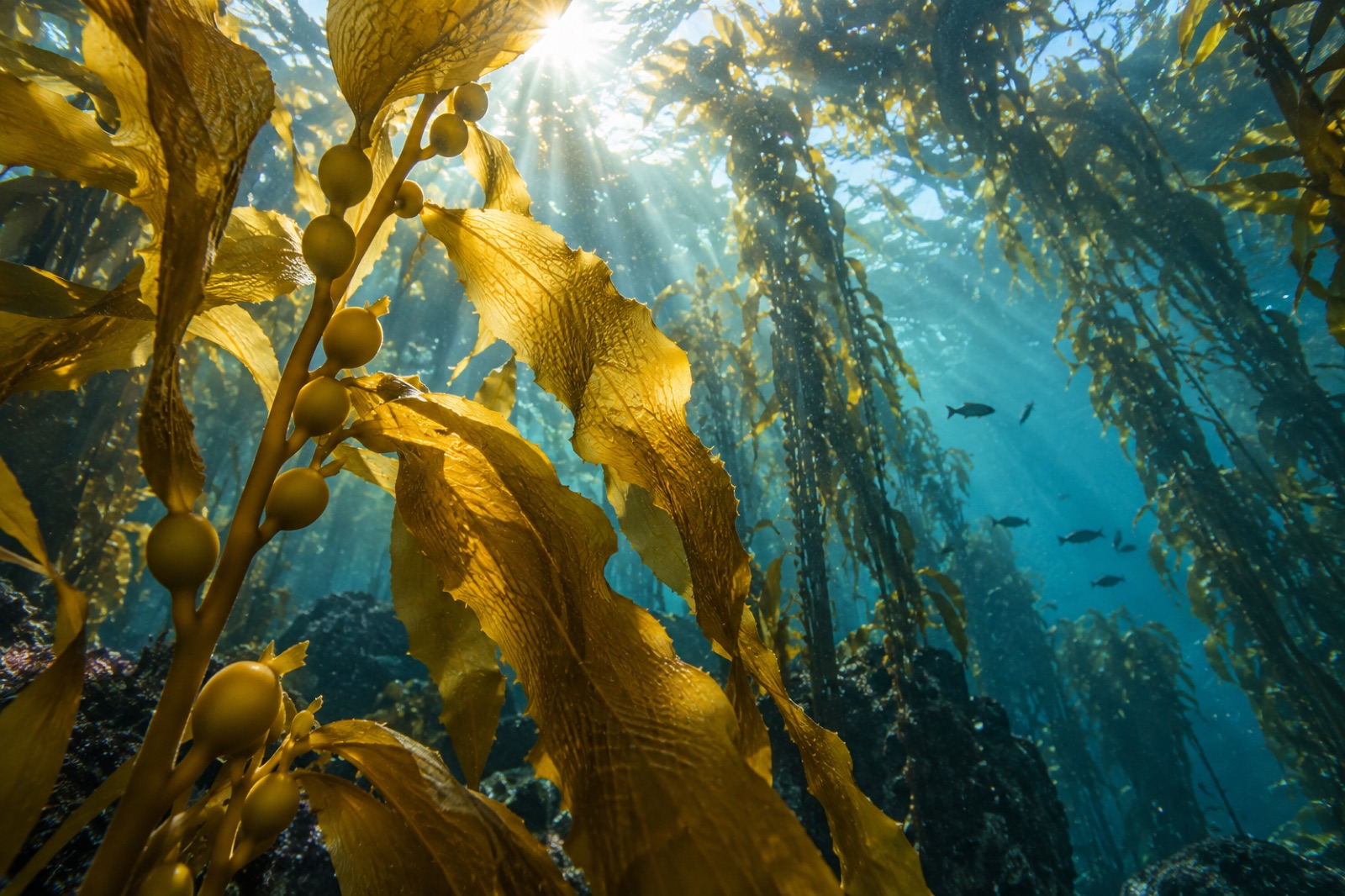
Those bulbs along a kelp frond are gas bladders called pneumatocysts. Here's what's inside them, how kelp inflates them, and why a forest floats.
Dr. Theo Nakamura ·
Kelp survives storms not by being strong but by being soft. How flexible stipes, streamlined blades and smart materials let kelp cheat drag — and where the design fails.
Dr. Lena Fischer ·
The ocean's mixed layer — its wind-stirred surface engine — sets how much light plankton see and when deep nutrients return. How mixed layer depth works and why it matters.
Dr. Lena Fischer ·
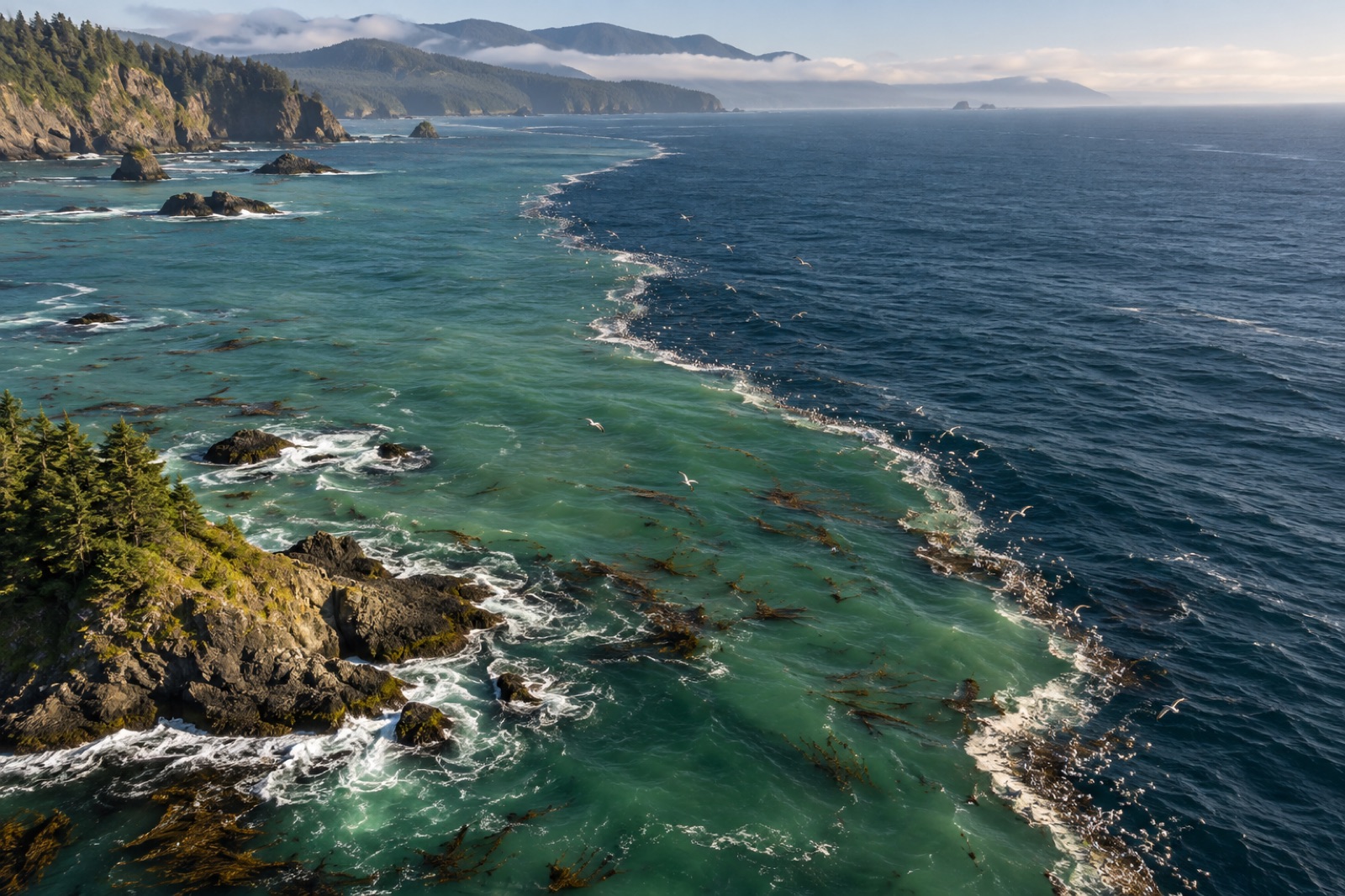
Ocean fronts — the sharp boundaries where different water masses collide — concentrate plankton, baitfish and predators into living lines. Here's why they matter.
Dr. Lena Fischer ·
Rip currents are the surf zone's return plumbing — narrow, fast rivers of seawater leaving the beach. The physics behind them, and how to get out of one.
Dr. Lena Fischer ·
Sea ice forms, grows and melts on the ocean itself, reshaping light, salt and circulation. How it forms, why algae bloom under it, and what its retreat means for kelp.
Dr. Lena Fischer ·
Thermoclines, haloclines and pycnoclines are the invisible boundaries that slice the sea into layers. What they are, how they form, and why they run coastal life.
Dr. Lena Fischer ·
Waves bend toward shallow water, which concentrates energy on headlands and spreads it in bays. How refraction shapes reefs, kelp forests and coastlines.
Dr. Lena Fischer ·
Wind blows, water turns ninety degrees. The gentle physics of Ekman transport — the spiral beneath the surface, coastal upwelling, gyre hills and spills.
Dr. Lena Fischer ·
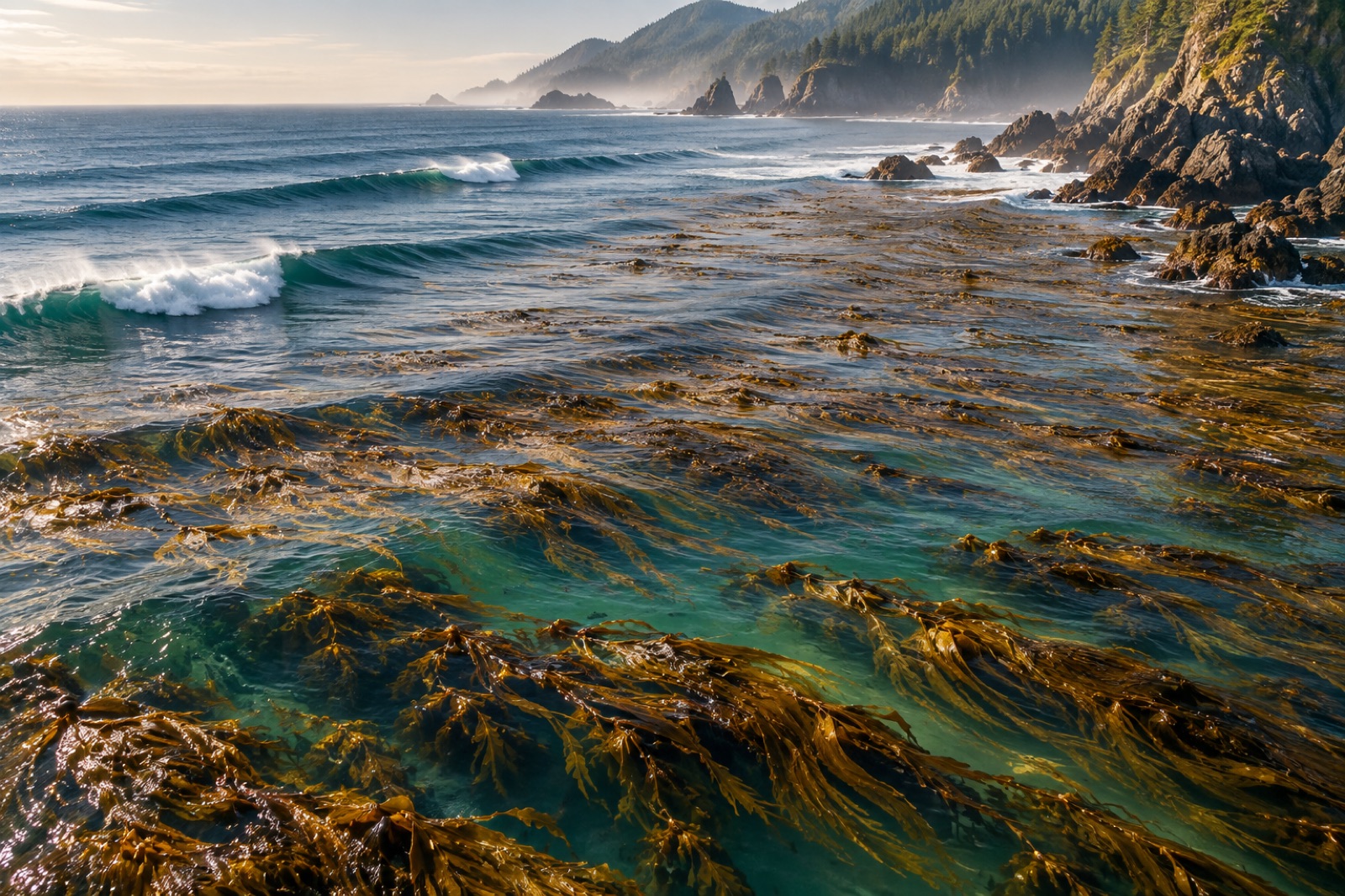
Kelp canopies act like flexible breakwaters, dragging energy out of waves and currents. Here's the physics — and how much coastal protection forests really give.
Dr. Lena Fischer ·
The ocean stacks itself into layers by temperature and density. Here's how stratification controls nutrients, productivity — and the fate of kelp forests.
Dr. Lena Fischer ·
Why is the sea salty, why is some sea fresher than the rest, and why does salt settle into layers? The ocean's salt budget and haloclines, explained.
Dr. Lena Fischer ·
Tides do more than raise and lower the shore. Where strong tidal currents rub against banks and sills, they stir deep nutrients up — and kelp coasts come alive.
Dr. Lena Fischer ·
The Moon and Sun raise the sea twice daily, and every coast turns that rise and fall into currents, mixing and zonation. The mechanics, plainly.
Dr. Lena Fischer ·
Oxygen minimum zones are vast, naturally breathless layers of the mid-water ocean. How they form, why warming expands them, and what that means for coasts.
Dr. Lena Fischer ·
The global overturning circulation, driven by heat and salt, moves water, carbon and nutrients around the planet over centuries. How the conveyor works.
Dr. Lena Fischer ·
A deep dive into upwelling physics: Ekman transport, the world's great upwelling systems, how scientists track them from space, and what climate change does.
Dr. Lena Fischer ·