Diving Fortescue Bay: Tasmania's Deep Kelp Gardens
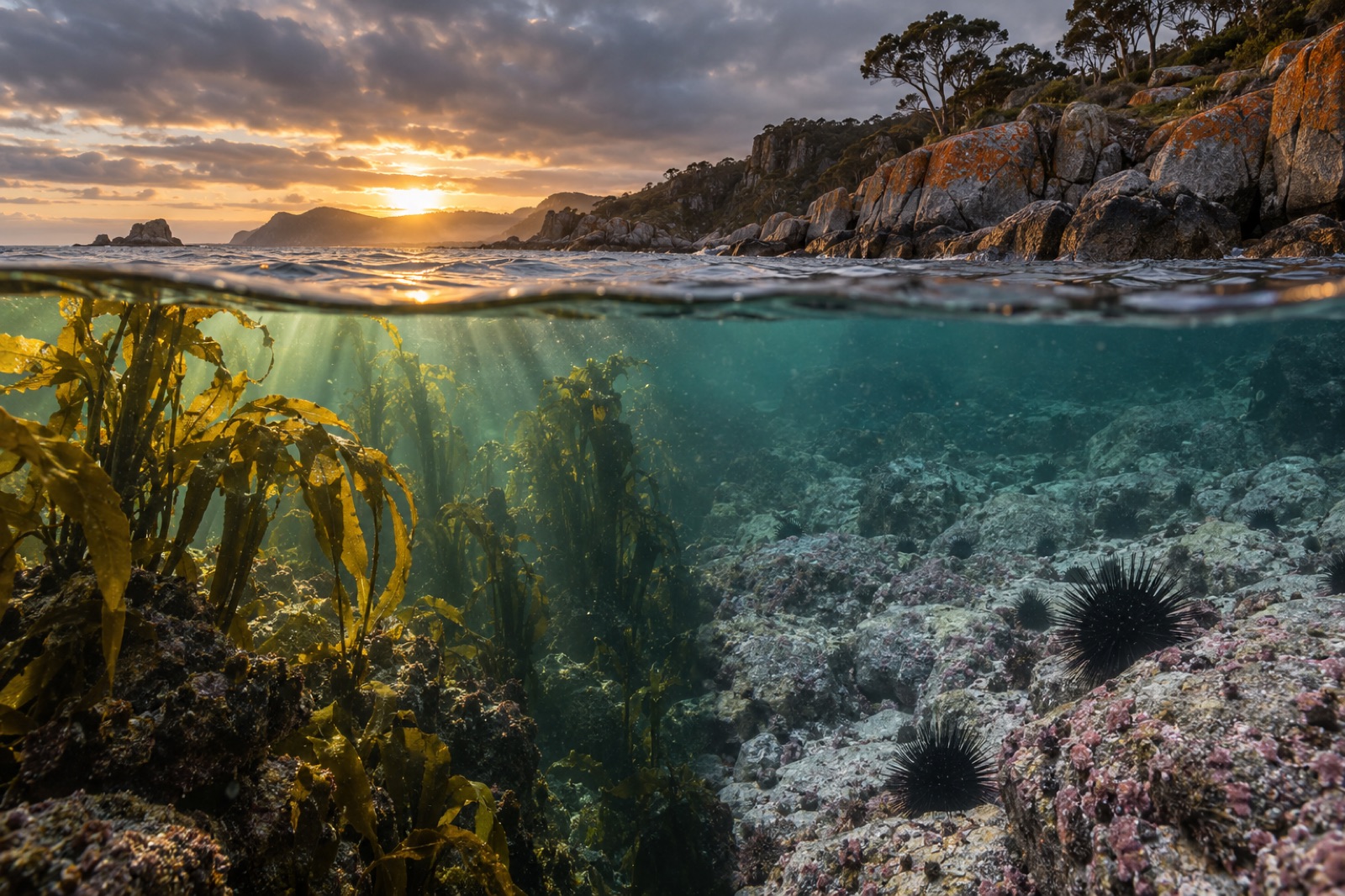
Fortescue Bay, on the wild east face of the Tasman Peninsula about ninety minutes from Hobart, holds some of the most atmospheric temperate diving in Australia: deep kelp gardens over granite boulder reefs, sea caves worn into sheer coastal rock, sponge communities in cold, clear water — and, if you are willing to move slowly, weedy seadragons drifting like bits of animated weed. It is also a place where the story of Tasmania's giant kelp collapse is written plainly on the reef. This guide covers how to dive it, what you will see, and how to read the ecological story while you are down there.
Where Fortescue Bay is and how to get there
Fortescue Bay lies inside Tasman National Park, at the end of a graded gravel road that leaves the Arthur Highway between Eaglehawk Neck and Port Arthur. The drive from Hobart takes roughly an hour and a half; allow two if you stop at the peninsula's lookouts, which you should.
There is a campground behind the beach, a day-use area, a boat ramp, and very little else — no dive shop, no fuel, no café. The nearest full services are at Port Arthur (twenty minutes) and Eaglehawk Neck (thirty). You will arrive with everything you need for the day, including full tanks: the closest reliable fills are in Hobart or at charter operators working the peninsula. Check on current operator offerings before you commit.
Because the bay is inside a national park, a valid Tasmanian Parks Pass is required. Forest fire-season closures can affect the access road — check the parks service alerts, especially December through March.
The dives
The southern shore kelp gardens
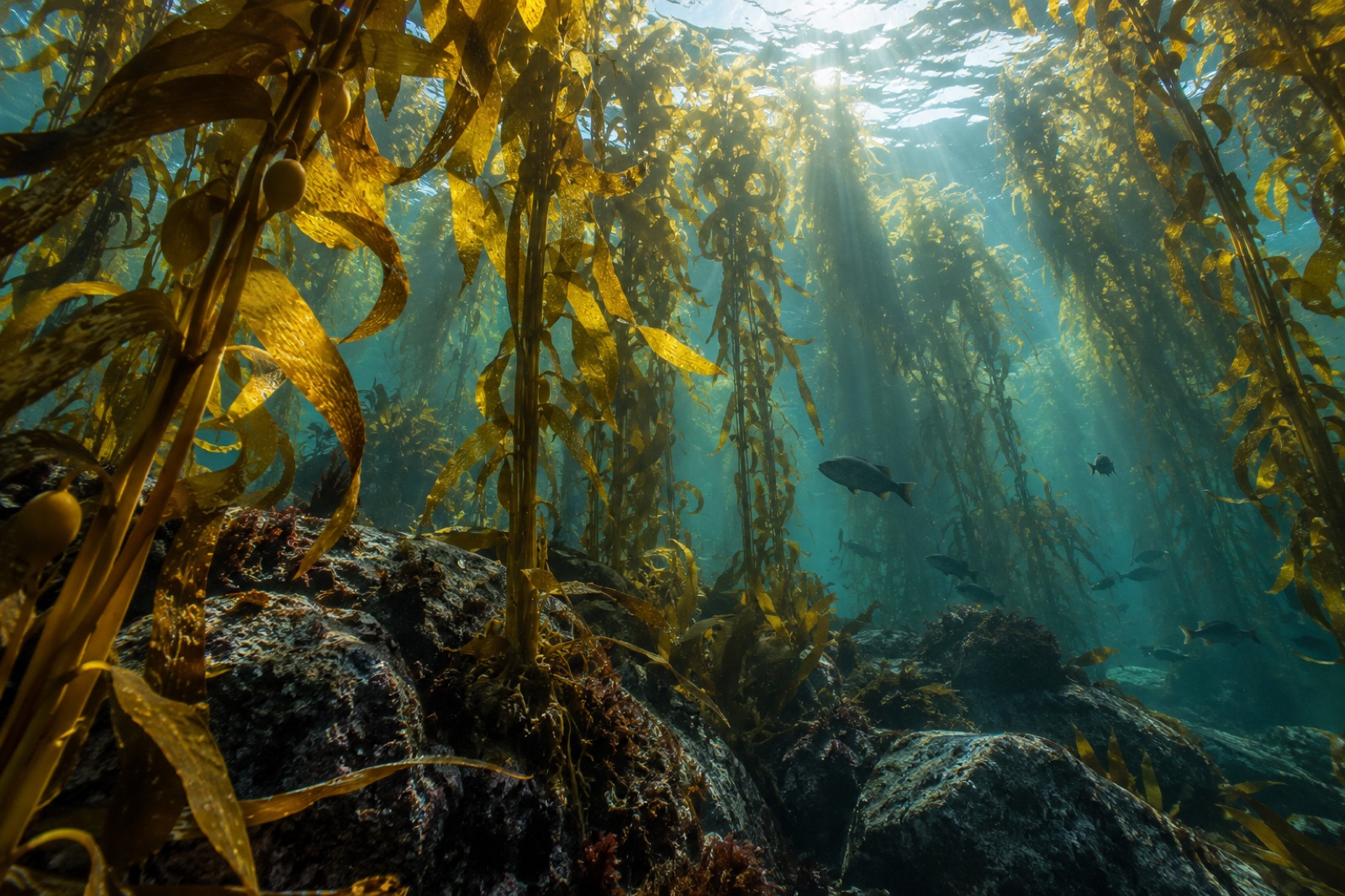
Enter off the beach at its southern end and fin out along the rocky shore inside the bay. The reef steps down through 5–15 metres in shelves of granite boulders, and this is where the kelp garden grows: dense stands of golden kelp and strap weeds on the shallow ledges, with giant kelp scattered through — small forests of a few dozen plants where a generation ago there were stands of thousands. Between the kelp, the boulders carry sponges, sea tulips and ascidians in the surprisingly rich colours of cold clear water.
This route suits newly certified divers: the topography is simple, depth is optional, and the bay is well sheltered from the prevailing western weather.
The outer reefs and caves (boat or confident shore divers)
Outside the bay proper, the peninsula's southeast coast is serious terrain — cliffs, deep water, swell-exposed rock — and most of it is boat diving with local charters. Closer in, sea caves and swim-throughs riddle the headlands, their walls carpeted with sponges and zoanthids. These dives are for experienced cold-water divers only: entries and exits are surge-affected, and weather windows close quickly. When in doubt, go with an operator who knows the coastline.
What to look for
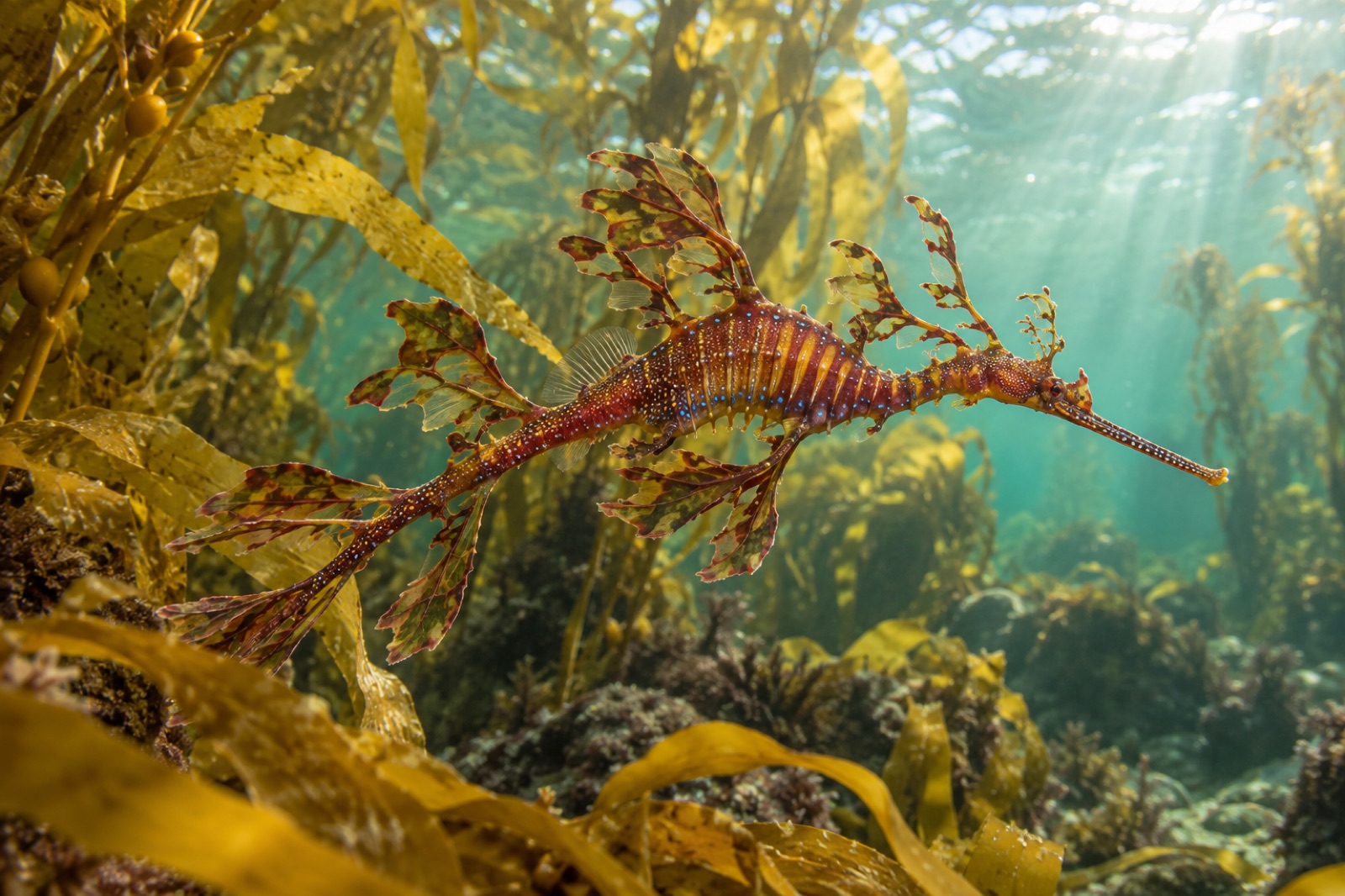
The weedy seadragon is the bay's quiet celebrity. They live where kelp meets sand — drift slowly along the boulder-sand margin at 8–12 metres and scan for anything that sways slightly out of rhythm with the surge. Move gently; a diver who settles and waits will often be encircled by one.
Around them: southern rock lobster stacked under ledges, draughtboard sharks and Port Jacksons resting in the caves' mouths, big endemic stingarees on the sand, schools of bastard trumpeter and banded morwong through the kelp, and the full community of Tasmanian endemic fishes that evolved in these cold, isolated waters.
Conditions, season and exposure
- Water temperature: 12–17°C. Late summer (February–March) is warmest; winter (June–August) is cold but often delivers the best visibility of the year.
- Exposure: The bay faces east. It is sheltered from the westerly systems that dominate Tasmania's weather, but easterly and northeasterly swells roll straight in. With any significant easterly forecast, choose a west-coast-of-the-peninsula alternative or a shore day.
- Visibility: Commonly 10–20 metres in settled weather, better after a run of westerly winds.
- Gear: A 7 mm suit with hood, gloves and boots is the minimum most of the year; many locals dive dry year-round. Our cold-water diving essentials guide covers the kit and the mindset.
- Tides: Slack water is not critical inside the bay, but low tide exposes more shallow reef and makes entries boulder-hoppier.
Reading the reef: Fortescue and the giant kelp collapse
To dive Fortescue without context is to see a beautiful kelp garden. To dive it with context is to see something rarer: a landscape in recovery, on the front line of one of the ocean's clearest climate stories.
Tasmania's east coast has warmed at roughly three to four times the global average rate, driven by the strengthening East Australian Current pushing warm, nutrient-poor water ever further south. Giant kelp, which needs cold, nitrate-rich water, has lost more than 95% of its Tasmanian extent since the 1970s. Marine heatwaves have hammered the survivors — we tell that story in Tasmania's Vanishing Giant Kelp and in our broader guide to the east coast front line. The science behind the warming itself is in Marine Heatwaves 101.
At Fortescue the signature is subtle but legible: kelp plants of mixed age rather than monolithic old forest, more golden kelp (the more heat-tolerant generalist) relative to giant kelp than historical descriptions suggest, and — over the last few years, encouragingly — patches of young giant kelp where conditions have cooperated. Restoration programs across the region, including trial work we describe in our impact reporting, are testing whether climate-resilient seedstock can accelerate that recovery.
Practical tips
- Book nothing, bring everything. Treat the day as self-sufficient: full tanks, food, water, a tarp for gearing up, and a dive flag if you enter from the beach.
- Buddy discipline matters. There is no dive infrastructure in the bay. Plan conservative profiles and carry a signalling device; phone coverage is patchy to nonexistent.
- Combine it well. Fortescue pairs naturally with Maria Island (a ferry ride and world-class nature reserves) and the reef dives out of Eaglehawk Neck for a full Tasman Peninsula dive week.
- Respect the park. Take nothing but photographs; the peninsula's marine reserves and its fisheries rules are actively enforced.
Key takeaways
- Fortescue Bay, 90 minutes from Hobart inside Tasman National Park, is Tasmania's signature shore dive: boulder-reef kelp gardens, sea caves, seadragons.
- The southern shore route suits new divers; the outer reefs and caves are for experienced, ideally charter-supported divers.
- Water is 12–17°C with 10–20 m visibility; the bay is exposed to easterly swell and closes quickly in bad weather.
- Weedy seadragons, southern rock lobster and resting sharks are the signature encounters.
- The site is a living document of Tasmania's giant kelp loss — and of its early, deliberate recovery.
- Self-sufficiency is mandatory: no fills, no shops, a Parks Pass required, and patchy phone coverage.
FAQ
Is Fortescue Bay good for beginner divers?
The sheltered southern shore route is excellent for freshly certified divers in calm conditions — shallow, gently sloping, and easy to navigate back to the beach. Beginners should avoid the outer reefs and any easterly swell, and ideally dive with a local guide on their first visit.
Where do I get tank fills near Fortescue Bay?
There are no fills at the bay itself. Plan to fill in Hobart before the drive, or check current offerings from the charter operators running out of Eaglehawk Neck, some of whom run boat dives and can advise on gear logistics.
When is the best time to dive Fortescue Bay?
February to April offers the warmest water and settled autumn weather; June to August is cold but can be crystal clear. Avoid periods of easterly swell in any season — the bay is wide open to it.
Can I snorkel Fortescue Bay?
Yes — on calm days the shallow kelp garden inside the bay is wonderful snorkelling, with kelp, wrasse and stingarees in 3–6 metres. A 5–7 mm wetsuit is essential.
What happened to the giant kelp here?
Warming water from the intensifying East Australian Current, plus marine heatwaves, has cut Tasmania's giant kelp forests by roughly 95% since the 1970s. Fortescue retains scattered stands and patches of regrowth, and restoration trials in the region are testing more heat-tolerant seedstock.