Field Notes8 min read
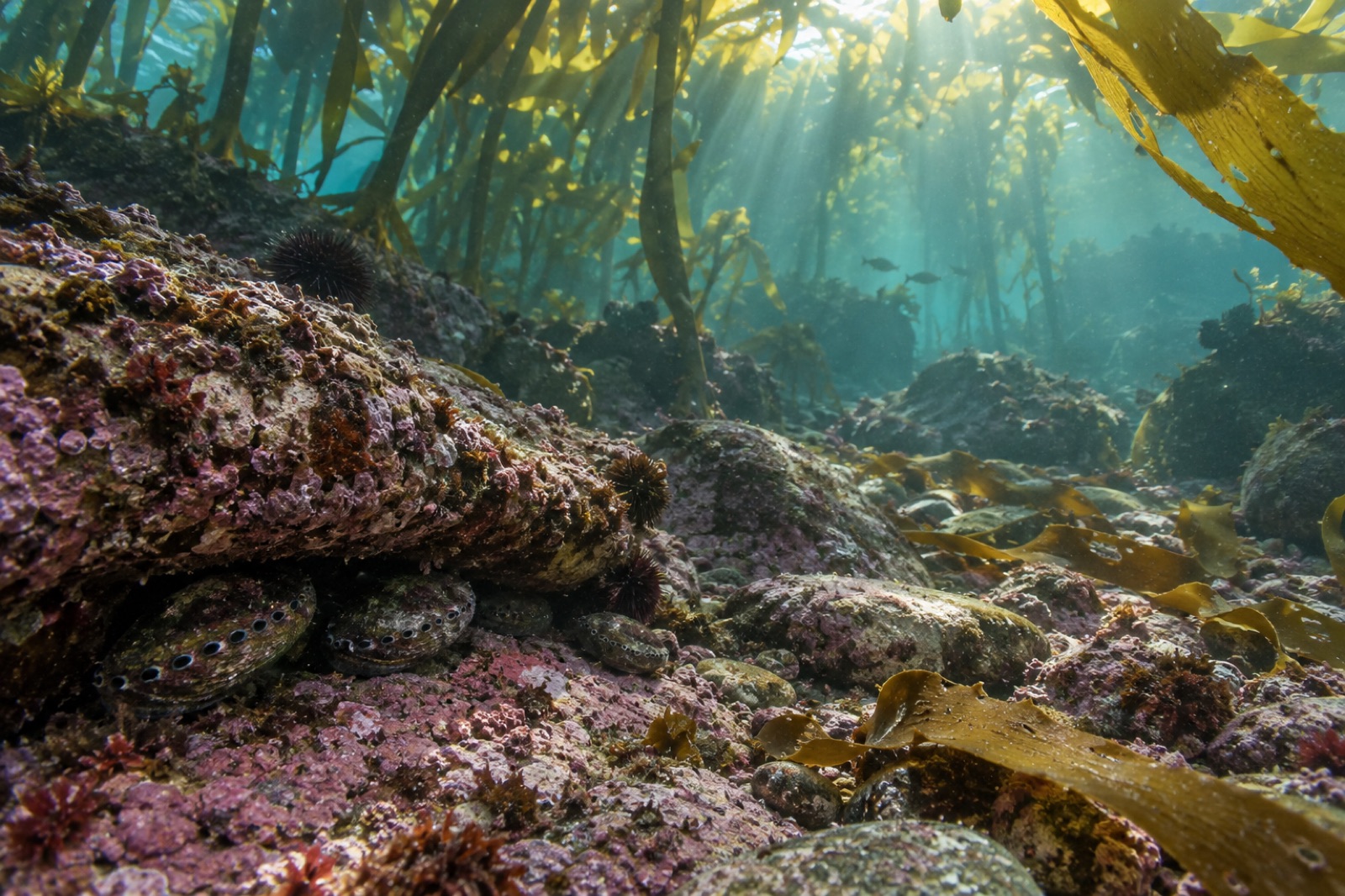
Field Notes: Abalone Back in the Quadrats
Seven years after seeding began on Tasmania's Lumeriah Coast, juvenile blacklip abalone are turning up in the monitoring quadrats again. Here's why that matters.
Dr. Mara Ellison ·
43 articles
Seven years after seeding began on Tasmania's Lumeriah Coast, juvenile blacklip abalone are turning up in the monitoring quadrats again. Here's why that matters.
Dr. Mara Ellison ·
The banded morwong is a slow-growing, site-loyal grazer of Tasmania's kelp reefs — a fish that can live for generations and taught fisheries a hard lesson.
Dr. Theo Nakamura ·
Ferry to Bruny Island for d'Entrecasteaux Channel kelp forests, sea-cliff wildlife cruises, white wallabies and Tasmania's foodiest postcode.
Tom Okafor ·
Six days on Tasmania's kelp front line: a day-by-day diary of the baseline survey that will decide where Tidewright's next restoration lines go.
Jack Callum ·
A Tidewright field note: twice a year, volunteers walk Tasmania's beaches counting cast kelp — because the wrack line tells us what the reef can't.
Dr. Mara Ellison ·
Every March we fly every southern-hemisphere site at peak canopy. Twelve flights a day, dawn tides, and a data pipeline that turns pixels into a season's verdict.
Jack Callum ·
Field notes from the day Canopy Ledger's first verified carbon credit was retired — the registry paperwork, the hesitations, and what the crew made of the moment.
Priya Raman ·
A Tidewright field note from Tasmania's Lumeriah Coast: anchoring a monitoring buoy over the thousandth seeded hectare, and what a big round number is actually worth.
Jack Callum ·
A Tidewright field note from Triabunna: 300 neighbours, forty schoolkids and one microscope queue at the Holdfast kelp hatchery's first community open day.
Naomi Reyes ·
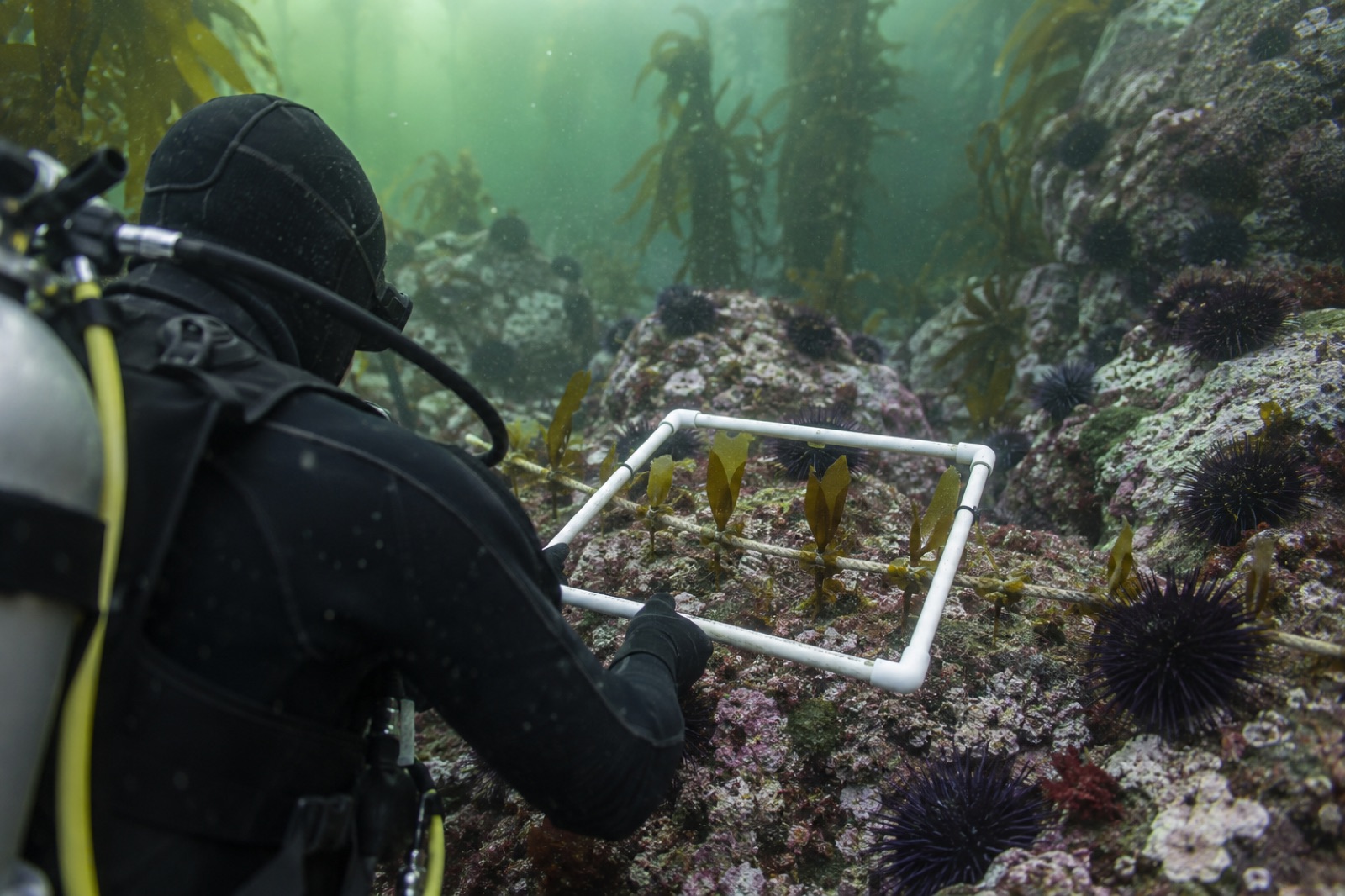
Field notes from a winter holdfast census across a Tasmanian reseeding site: urchin counts on treated vs control transects, and what we changed for next season.
Jack Callum ·
Twenty-four fourth-graders, forty masks, and one restored kelp bay. Field notes from a Tinderbox school snorkel day — and why it matters to the program.
Jack Callum ·
Five trainees, two instructors, one Tasmanian barren. What it actually takes to turn working divers into an urchin-removal crew, and what the first week teaches them.
Jack Callum ·
Dawn on Tasmania's east coast: four divers, two hammers, and a barren the size of a football pitch. What an urchin cull actually looks like from inside the vis.
Jack Callum ·
The first biodiversity credit we ever issued took eleven months, three verifiers and one metric we threw away. Field notes from inside the process.
Priya Raman ·
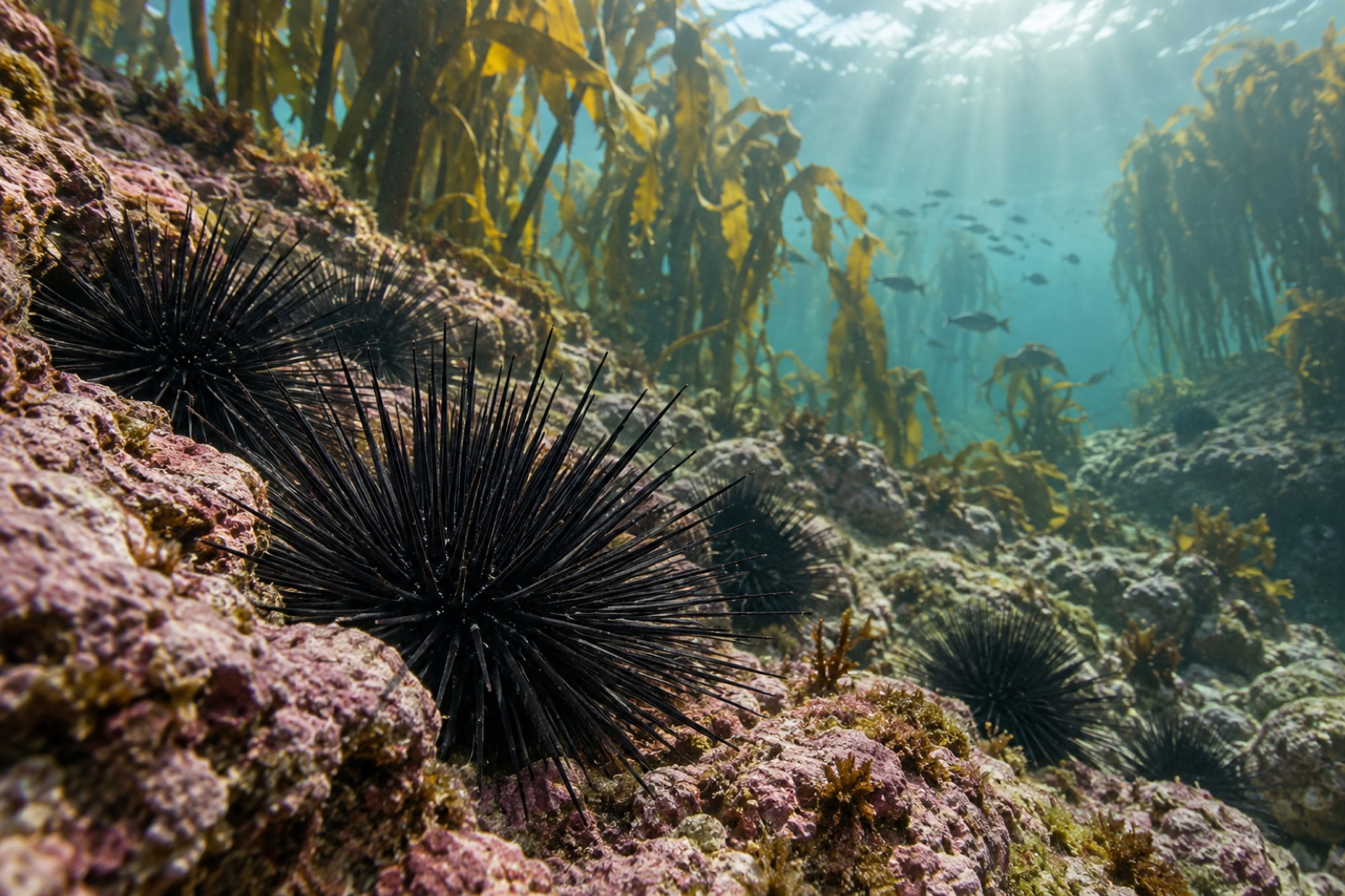
The long-spined sea urchin is reshaping Australia's temperate reefs as warming currents carry it south — a species profile of the barren-builder of Tasmania.
Dr. Lena Fischer ·
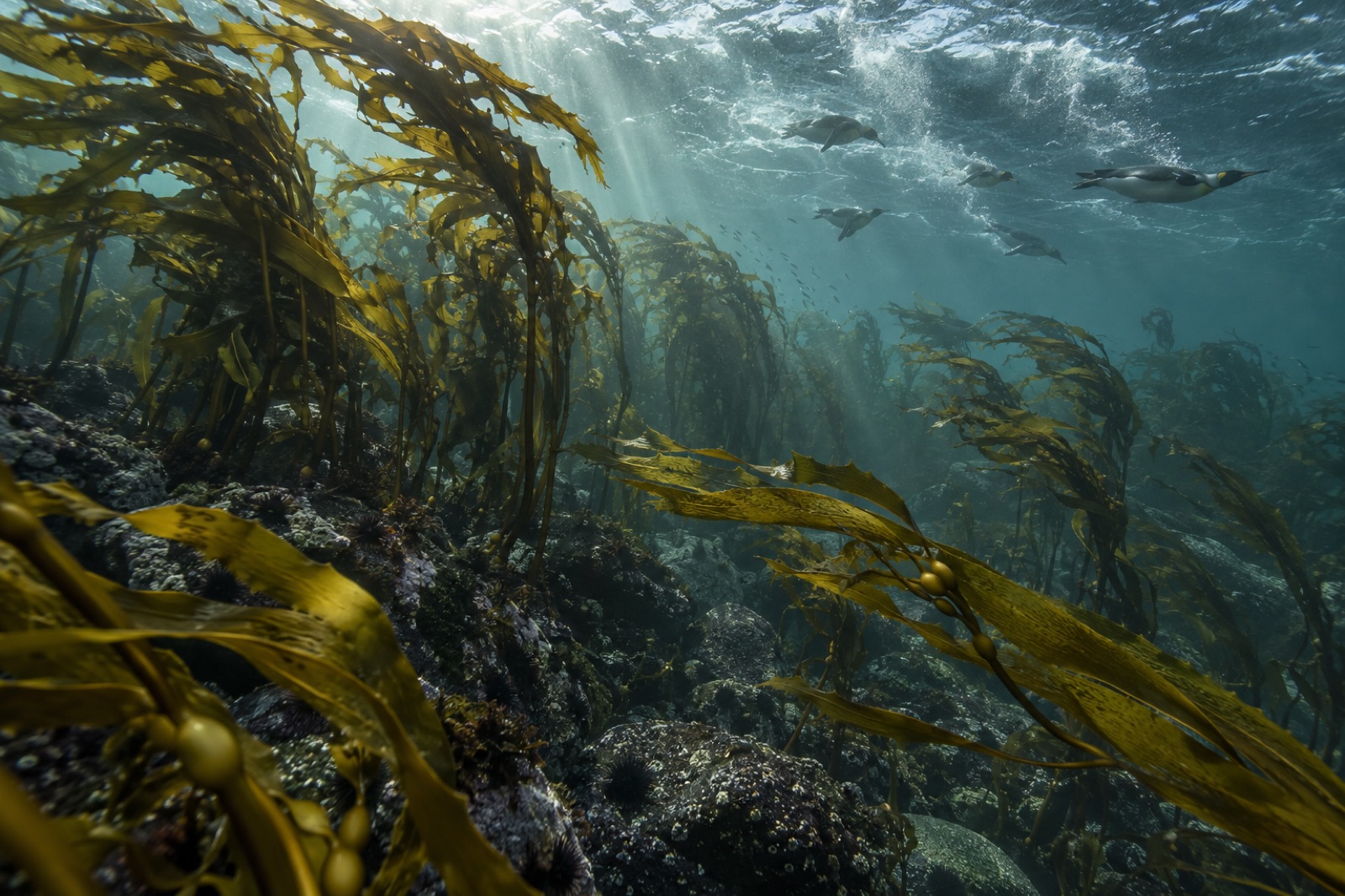
Macquarie Island's giant kelp forests became the first marine ecosystem listed as Critically Endangered on the IUCN Red List — a subantarctic warning in full view.
Dr. Theo Nakamura ·
A Tidewright field note from Maria Island, Tasmania: deploying Holdfast seed lines onto heat-struck reef at dawn, and what we found three months on.
Jack Callum ·
Tr L-7 is a single 30-metre transect off Tasmania surveyed every month since 2021. Five years of unglamorous re-measurement turned out to be our sharpest instrument.
Jack Callum ·
A mains failure at 2 a.m. puts a Tasmanian kelp hatchery's season on a countdown. Field notes on triage, generators and the order in which things die.
Jack Callum ·
Maria Island pairs a World Heritage convict site with one of Tasmania's pioneering marine reserves. A diver and walker's guide to its reefs, wildlife and kelp.
Tom Okafor ·
Southern rock lobster (Jasus edwardsii) is the reef's top urchin predator. Its biology, fishery and role in stopping barrens — a species profile.
Dr. Mara Ellison ·
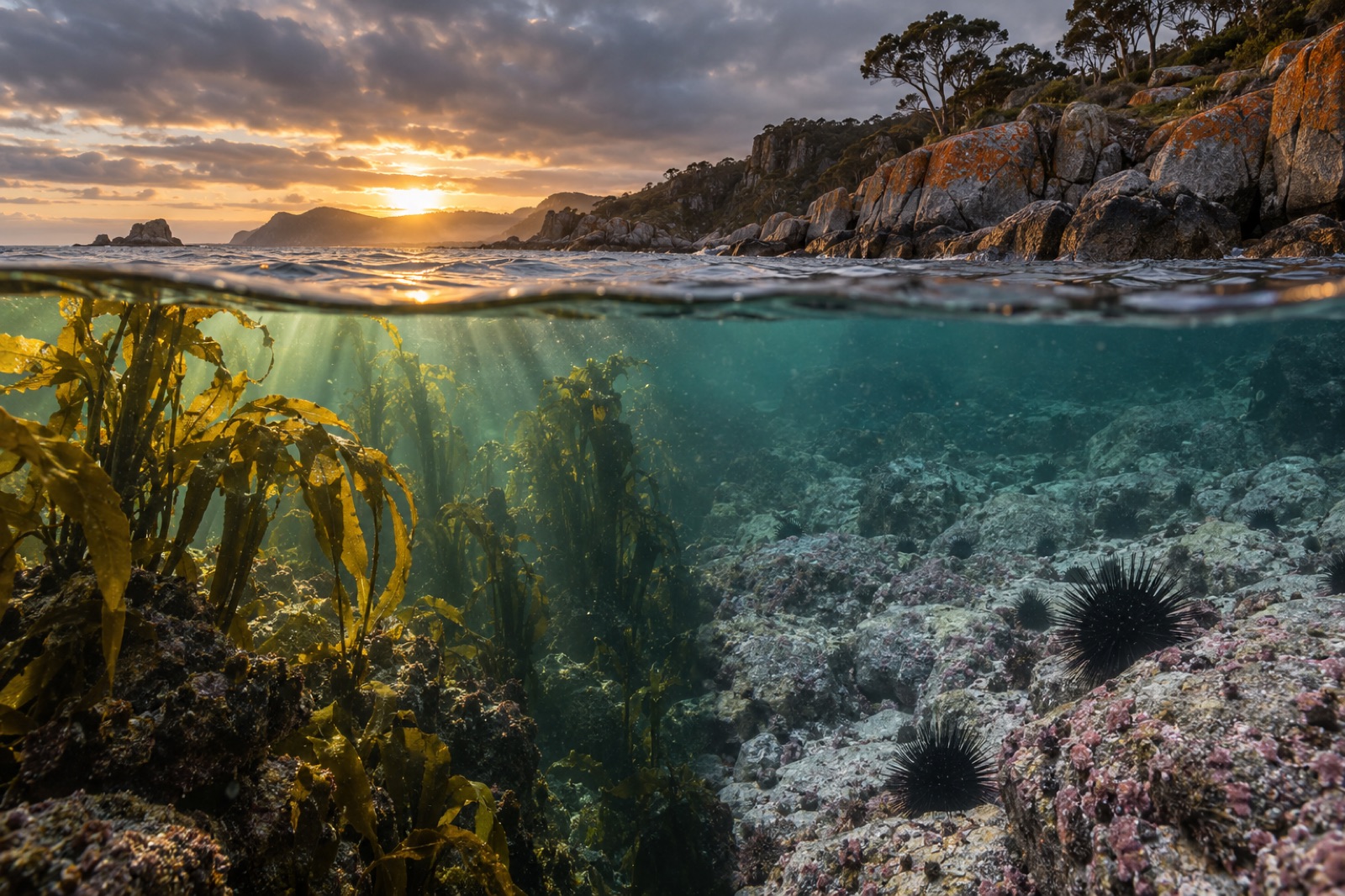
Tasmania's east coast has lost the vast majority of its giant kelp forests to warming seas and urchins. Explore what happened here, and what's coming back.
Dr. Lena Fischer ·
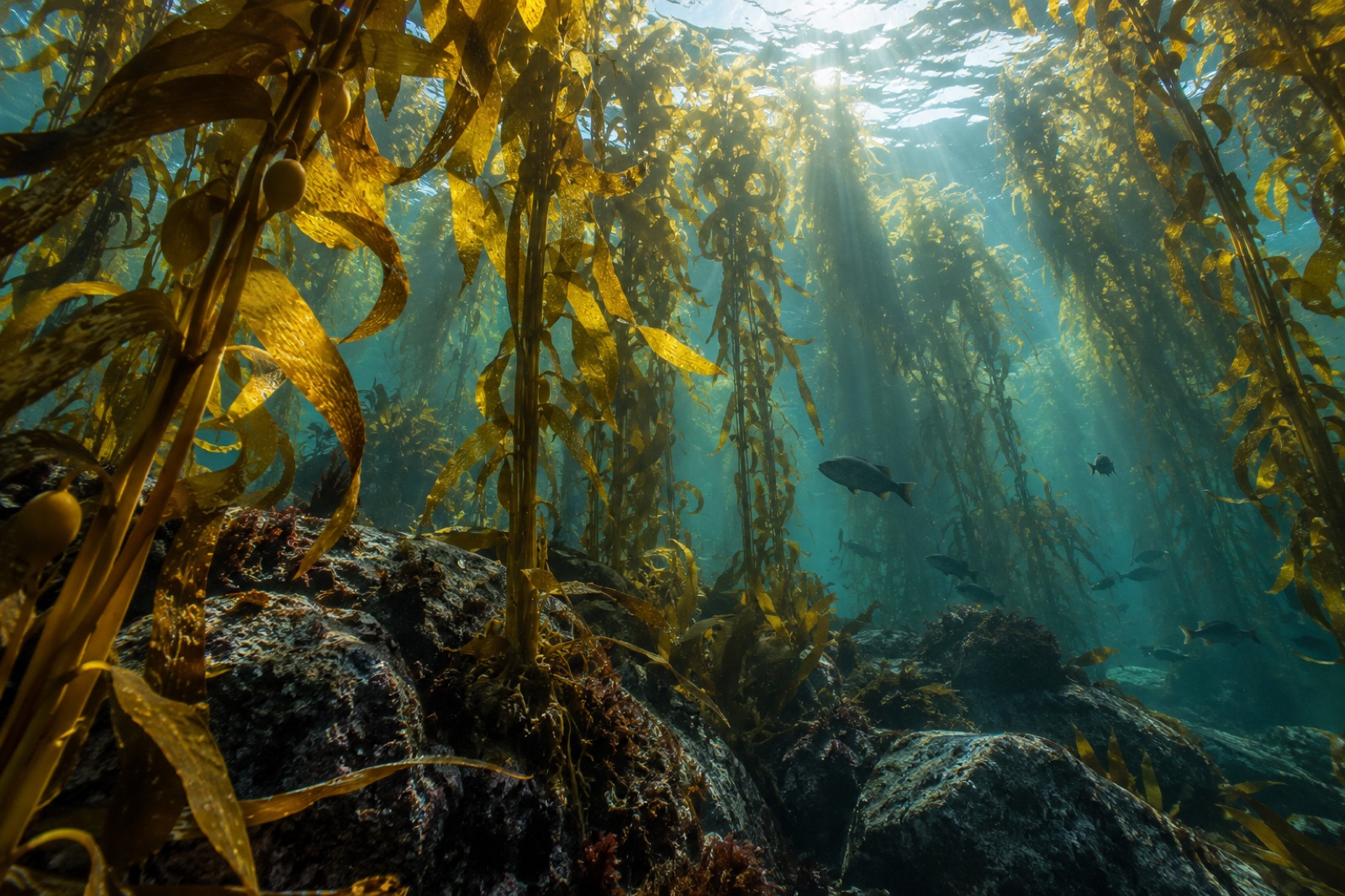
Tasmania lost around 95 percent of its giant kelp forests in decades. Here's the science of the collapse, the urchin invasion — and the restoration race to bring it back.
Dr. Theo Nakamura ·
Tidewright's field crew logs their first week seeding Holdfast lines at Tinderbox, Tasmania — survey dives, southerly swells, and 40,000 metres of seeded line.
Jack Callum ·
A Tasmania survey block scored high on every restoration metric and we still walked away. On suitable habitat, restraint, and the reefs that don't need us.
Jack Callum ·
A field note from our Tasmanian nursery: two autumn weeks diving for fertile giant kelp blades, racing spores to tanks, and banking a forest's next generation.
Jack Callum ·
Two weeks in Tasmania building the Kudjela Rangers' dive survey crew: skills assessments, safety drills, and the moment a new surveyor out-dove her instructor.
Jack Callum ·
For one week at Tinderbox we counted the same kelp canopy twice — once by drone, once by diver. Here's what each method caught, missed and taught us.
Jack Callum ·
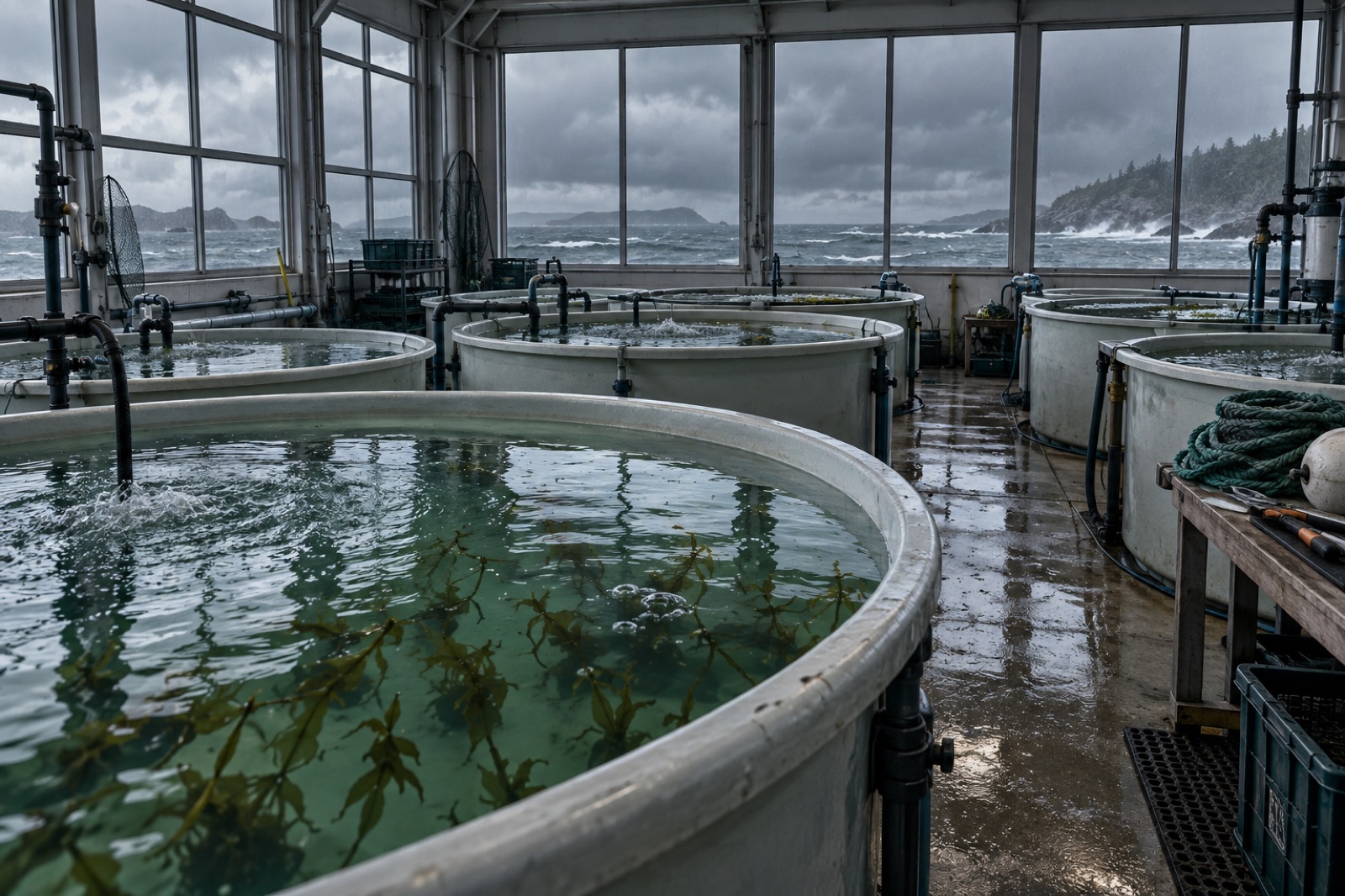
A Tidewright field note from our Triabunna hatchery: when a freak hailstorm killed the power mid-season, the crew had eleven hours to save a year of kelp seedstock.
Jack Callum ·
Five days on sea country with the Kudjela Rangers off Tasmania's east coast: eDNA sampling, seasonal calendars, and what genuine co-management looks like on the water.
Jack Callum ·
Between Tasmania and mainland Australia, Bass Strait mixes two seas into some of the roughest, richest kelp country on Earth. An island-by-island guide.
Tom Okafor ·
A southerly storm wrapped two Holdfast lines into each other off Tasmania. The dive to untangle them — and the line-spacing rule that came out of it — from the field log.
Jack Callum ·
Why Tidewright's sharpest fish census is a diver swimming 400 metres at dawn on fin power alone. A field note on roving-diver surveys off Tasmania.
Dr. Mara Ellison ·
Bicheno's Governor Island marine reserve packs weedy seadragons, Red Velvetfish and golden kelp into easy boat dives off Tasmania's east coast. A diver's guide.
Tom Okafor ·
Every autumn we weigh the urchins culled from the barren edge at Boomer Bay. This year the scales told a different story — and changed next year's plan.
Jack Callum ·
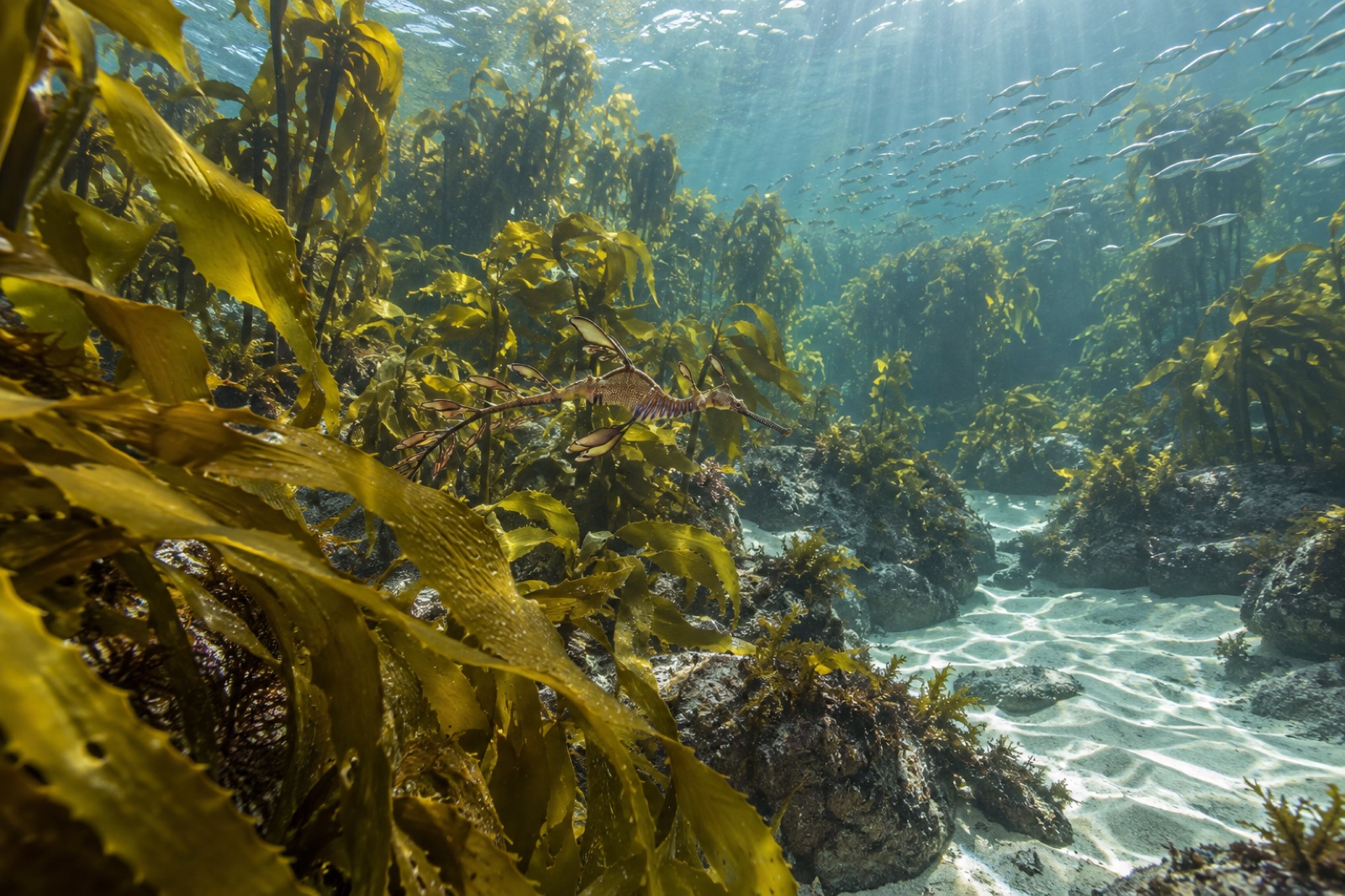
Australia has a second great reef — 8,000 km of temperate kelp forest across five states, more endemic than the Great Barrier Reef, and in serious trouble.
Dr. Mara Ellison ·
Twelve months at Tidewright's most-watched restoration site: a school snorkel program, 400 volunteer dives, and a kelp forest visible from the walking track.
Jack Callum ·
Once a year we swab restored and wild kelp beds across Tasmania for the provenance program. Two hundred blades, five sites, and what the lab read in them.
Dr. Elias Brandt ·
Tidewright's field team missed a spring-tide outplanting window at Lumeriah Coast. This is the honest decision log, what it cost, and the checklist it created.
Jack Callum ·
A guide to Hobart's Derwent Estuary — its kelp and seaweed habitats, a century of industry, urban restoration at Tinderbox, and where to see it yourself.
Dr. Mara Ellison ·
A routine survey sweep off Tasmania's northeast turned into the discovery of the season: wild giant kelp recruiting on a reef the charts had written off.
Jack Callum ·
A field guide to diving Fortescue Bay on Tasmania's Tasman Peninsula — kelp gardens, weedy seadragons, sea caves, conditions and what the site says about kelp loss.
Dr. Mara Ellison ·
The striped trumpeter is Tasmania's celebrated hand-line fish — a kelp-reef juvenile, a deep-reef adult, and a lesson in how long-lived fish repay patience.
Dr. Mara Ellison ·