Resurrection Bay does something few places in Alaska can manage: it puts genuinely deep fjord water — and the kelp forests that fringe it — within walking distance of a coffee shop. The bay opens south off the town of Seward, on the Kenai Peninsula's road-connected side, with cruise ships, halibut charters and sea kayaks sharing a harbour that sits beneath glaciers and a national park. Under the waterline the same drama continues: rock walls that strip away the need for a long boat ride, kelp beds an easy snorkel from shore, and marine life stacked from the tide line down past sport-diving depths. For anyone chasing Alaska kelp without an expedition budget, this is the door. This guide covers the bay's fjord workings, its kelp fringe, how to dive and snorkel it, and what the 1964 earthquake did to the town at its head.
Where a glacier quit
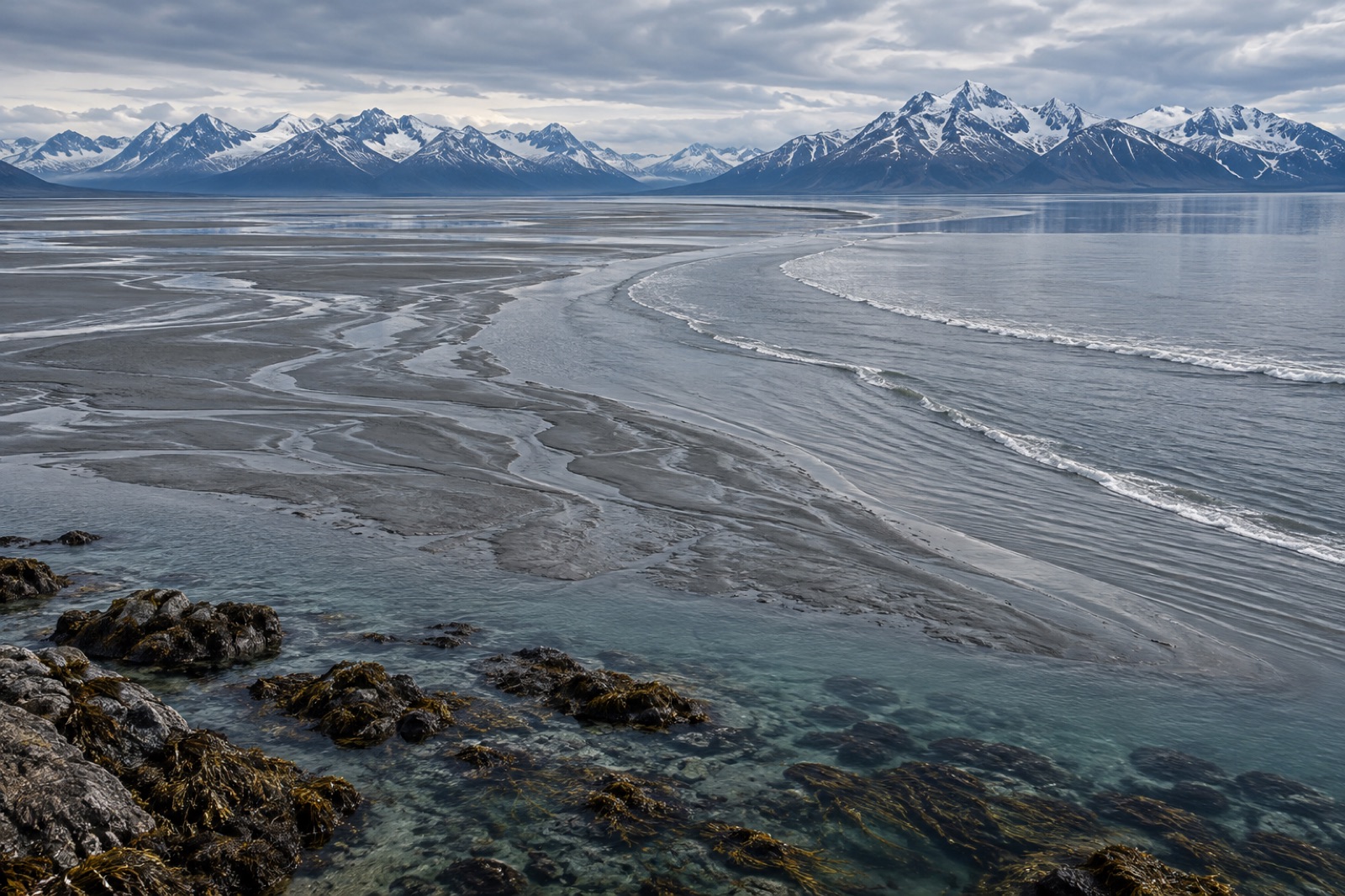
Resurrection Bay began as a glacier's driveway. During the ice ages, ice pouring off what is now the Harding Icefield gouged a trough through the coastal range; when the ice retreated, the sea moved in. The result fits the classic fjord recipe — steep sides, a deep central basin reaching well beyond sport-diving depths, and mountain walls that continue underwater with barely a pause. Our explainer on fjords covers the general machinery: the sills, the layering, the deep-water renewals.
Two glacial signatures still shape the bay's water today. First, in summer, meltwater from the remaining glaciers — and from Exit Glacier, a short drive up the road in Kenai Fjords National Park — lays a cool, brackish, silt-stained skin over the surface. Second, that skin is thin. Drop below the freshwater lens and the water is clear blue-green ocean, running cold and well-oxygenated. For kelp, that's a liveable compromise: the light penalty is modest, the nutrient supply strong, the temperature right down the middle of the boreal comfort zone.
The oceanography, briefly
Fjord bays live or die by exchange — how fast outside ocean water crosses the sill and renews the deep basin. Resurrection Bay's mouth is comparatively open to the Gulf of Alaska, which keeps water moving and prevents the stagnant depths that plague silled fjords elsewhere. Tidal ranges are big by temperate standards (several metres on springs, part of the same North Pacific tide engine described in our tides explainer) but more modest than the rampage up in Cook Inlet.
The practical consequences:
- Visibility is seasonal. Summer plankton blooms and glacial silt can cut the top few metres to murk; below the thermocline, and in spring before the melt starts, it can be startlingly clear. Autumn and early spring often bring the best underwater light — the same pattern our guide to diving in low visibility teaches you to use rather than fear.
- Temperatures stay year-round cold: roughly 4–8 °C at diving depths, a degree or two warmer in surface layers at summer's end. Drysuits are the norm.
- The freshwater lens matters for snorkellers: the top metre can be several degrees colder on the skin than you expect, and murkier. Push down through it and the view opens.
The kelp fringe
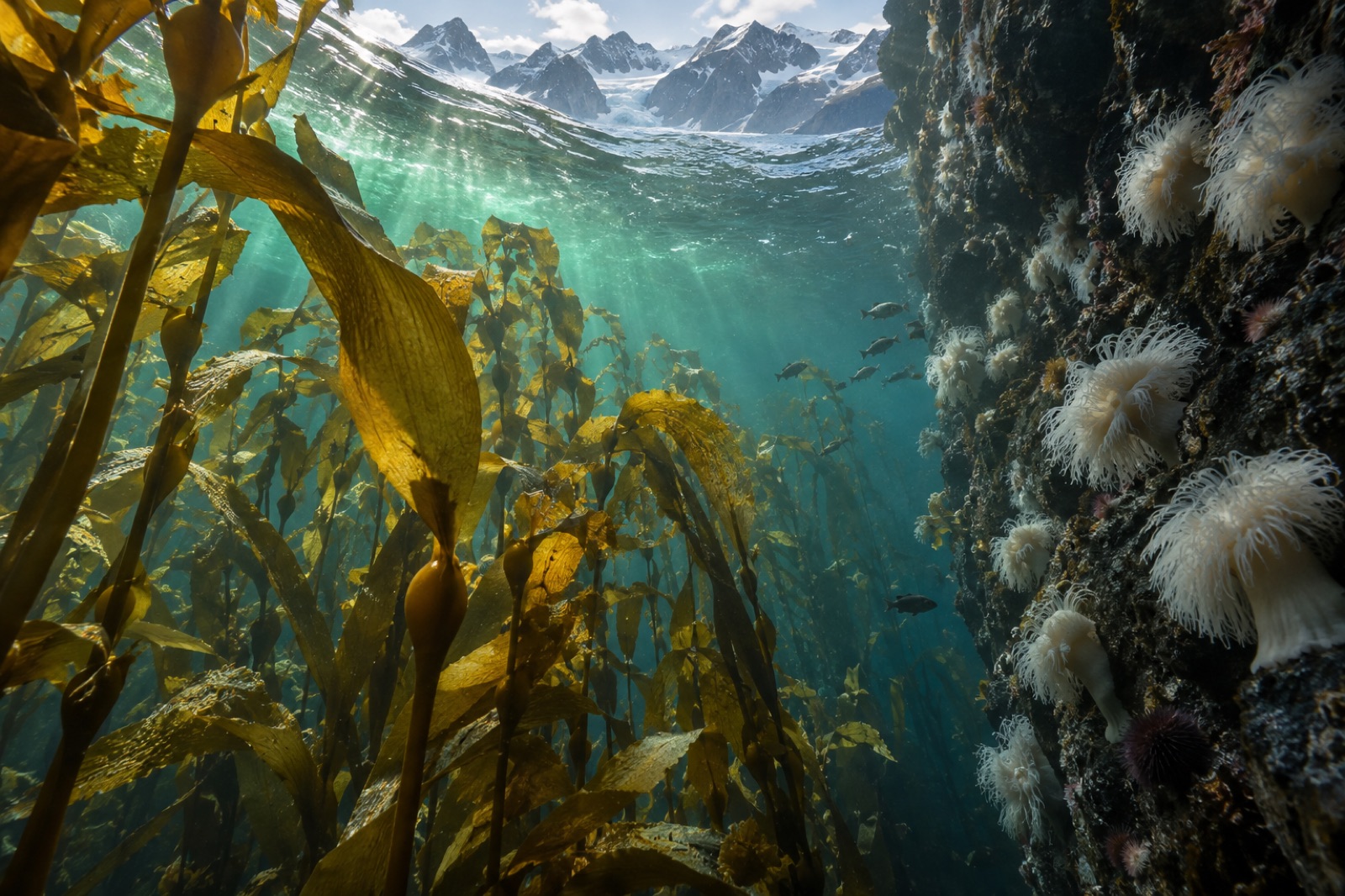
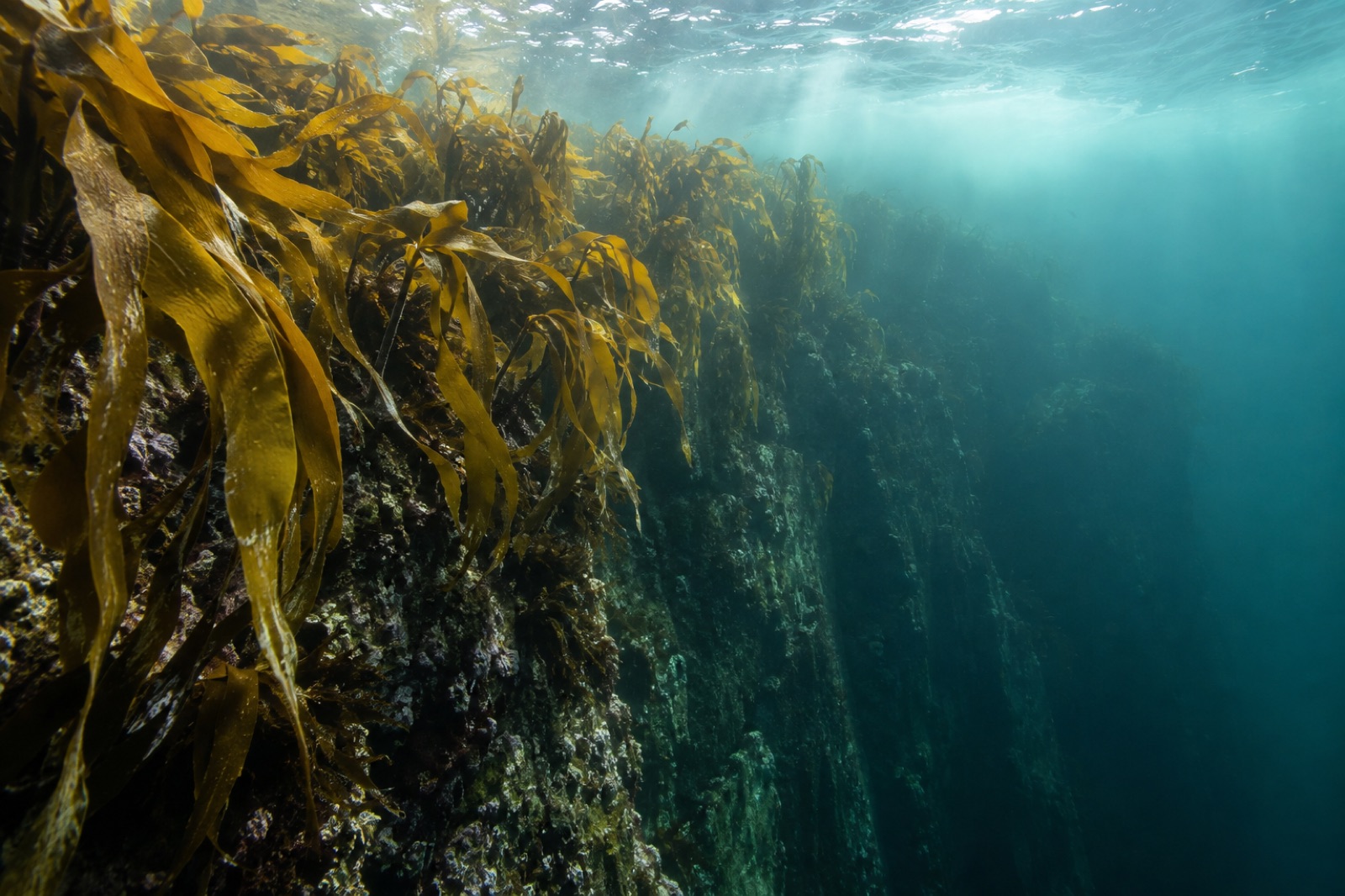
Resurrection Bay's kelp is a fringe rather than a plain — a boreal band following the rocky margins. Sugar kelp dominates the shallow subtidal in golden fields along the gentler shores; ribbon kelp streams where current presses; and bull kelp holds annual patches on exposed outer points where swell keeps the water stirred. Underneath the canopy band, the steep walls carry dense sessile life: white towers of plumose anemones, painted stars, and encrusting coralline algae painted pink on the rock.
Because the substrate plunges so quickly, the zonation is compressed into a space a snorkeller can read in one breath-hold descent: rockweed and sea lettuce in the splash zone, fucoids and sea cabbage on the low benches, then the kelp band itself, then the wall. Long-time local divers will tell you that the bay has bristled with more cold-water oddities than its size should allow — giant Pacific octopus in the boulder dens, wolf eels in the wall cracks, and, on deep charter dives, occasional visits from bluntnose sixgill sharks cruising up from the depths.
Overhead, the wildlife justifies the trip by itself. Humpbacks feed through the outer bay in summer, orcas pass on their patrol routes, Steller sea lions haul out around the point colonies, and the cliffs carry puffins, murres and kittiwakes. Sea otters — re-established across the Kenai coast — raft in the quiet coves and do their famous quiet work as the kelp's bouncers, a relationship our trophic cascades explainer details. If you go watch them, do it right: our guide to watching otters without bothering them applies with particular force up here, where winter is no metaphor.
Diving and snorkelling Seward
Among Alaska road-system sites, Resurrection Bay is about as accessible as cold-water diving gets. Some orientation points:
Shore dives
The rocky shoreline near Lowell Point, south of town, offers walk-in access over a boulder-and-kelp slope. Entry is on foot over rounded cobble — review our shore-dive planning guide — and the payoff is immediate: kelp band in metres, anemone walls below. Other informal shore sites dot the bay's east side; conditions, access and parking vary seasonally, so confirm locally.
Boat dives
Charter operators run from the Seward Small Boat Harbor, and this is where the bay shines: wall dives along the outer shoreline, pinnacles, drift dives where the current chooses, with profiles from 10 to 40 metres depending on crew experience. Sites within a short ride hold the bay's densest life — the geometry concentrates the water flow that feeds filter feeders.
Gear reality
Strictly drysuit territory; 7 mm wetsuit freediving/snorkelling is possible for the hardy on summer days. Our cold-water diving essentials and drysuit versus wetsuit guides are your homework. Bring lights even at noon — the overcast Alaska sky makes the reef's colours invisible without them.
The day the sea stood up: 1964
Any honest account of this bay must include March 27, 1964. The Good Friday earthquake — magnitude 9.2, one of the most powerful ever recorded — shook the region for minutes. On Resurrection Bay's shoreline, submarine landslides triggered by the shaking generated local tsunamis that struck Seward's waterfront within minutes, arriving while aftershocks still rolled. Waves of fuel fire moved with the water where ruptured tanks ignited. The harbour, rail yards and downtown waterfront were devastated; lives were lost here and across the gulf.
The waterfront Seward rebuilt sits atop that memory. The Alaska SeaLife Center — a public aquarium and marine research and rehabilitation facility on the rebuilt shore — is worth a visit for its cold-water exhibits and sea bird program, and it's a fitting modern use of a shore the sea once took back.
Key takeaways
- Resurrection Bay is a glacially carved fjord with deep water at the dock — fjord walls, clear sub-thermocline water and a kelp fringe, all within minutes of Seward's harbour.
- A thin summer meltwater lens muddies the surface while the water below stays clear and cold; spring and autumn typically offer the best underwater visibility.
- The kelp community is boreal: sugar kelp fields, ribbon kelp in current, bull kelp on exposed points, plumose-anemone walls below.
- Shore and boat diving are both genuine options — rare for Alaska — with proper drysuit gear mandatory and local charter support available.
- The 1964 earthquake and its local tsunamis reshaped Seward; the modern waterfront, including the Alaska SeaLife Center, sits on rebuilt ground.
FAQ
Is Resurrection Bay good for beginner divers?
It's accessible but not beginner territory: water runs 4–8 °C, and drysuit skills are essentially required. Get certified and cold-water seasoned elsewhere, then enjoy it as one of Alaska's easiest advanced dives.
Can you snorkel Resurrection Bay?
Yes, from sheltered shore spots over the kelp band — 7 mm wetsuit minimum, summer calms, and a buddy. The freshwater surface layer will be colder and murkier than the water just beneath; duck-dive through it for the best views.
How do I get to Seward?
By road, the Seward Highway (about two and a half hours from Anchorage) is one of the continent's great drives, following Turnagain Arm's bore-tide shore. The Alaska Railroad also connects Anchorage and Seward seasonally, and cruise lines call in summer.
What wildlife might I see?
Humpback whales, orcas, Steller sea lions, sea otters, harbour seals, puffins, murres, and — underwater — giant Pacific octopus, wolf eels, rockfish and anemone walls. Kenai Fjords National Park boat tours cover the outer coast if DIY isn't for you.
When is the water clearest?
Typically spring before the melt, and again in autumn after plankton production drops. Summer brings the warmest surface but blooms and silt; winter is clear and dark. Divers pick April–May or September–October; everyone else picks summer daylight.