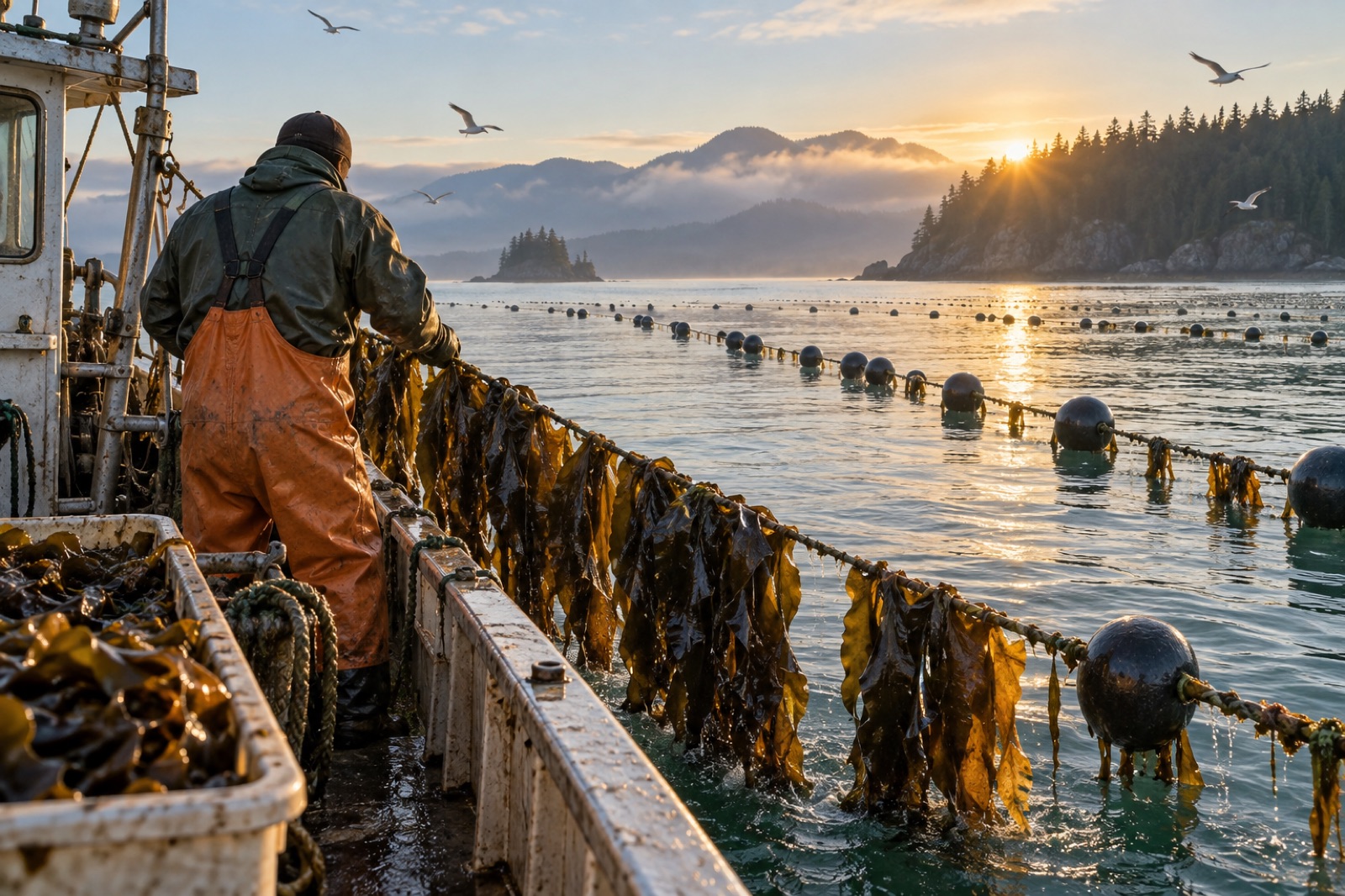
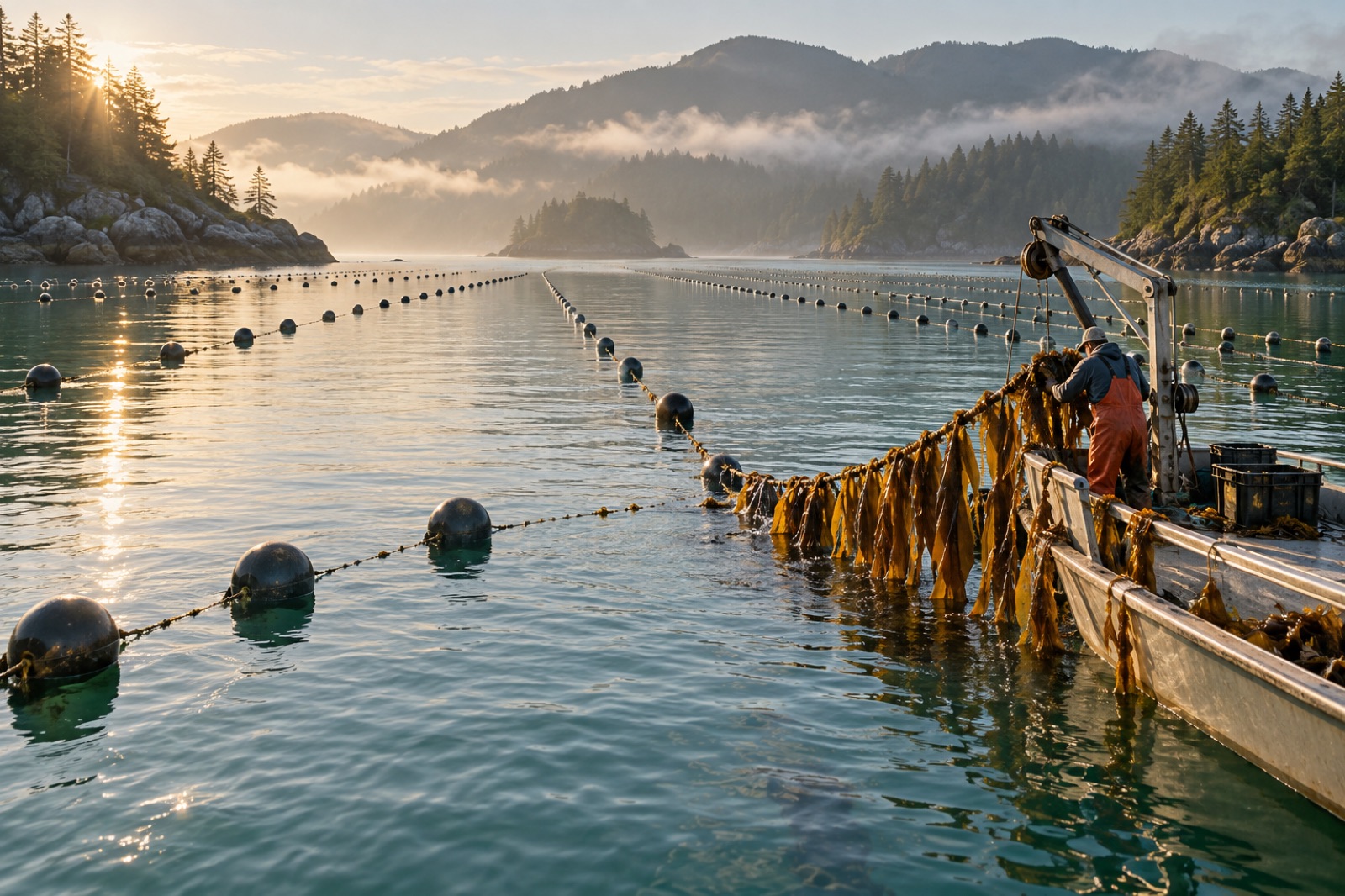
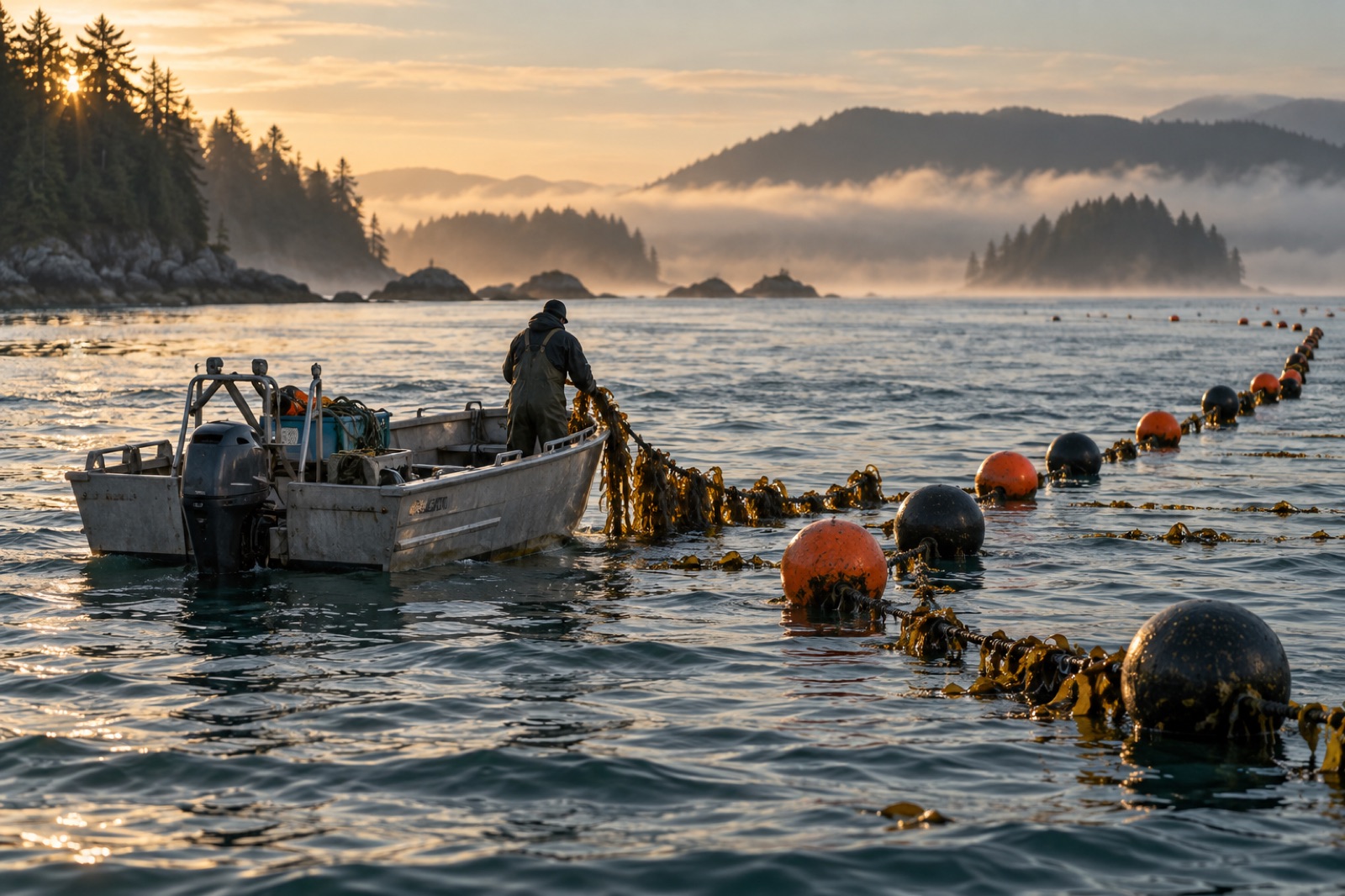
The most successful new kelp farmers in North America and Europe share a biography: they fished first. It makes sense. Nobody else arrives at aquaculture already fluent in boats, weather judgement, knots, hydraulics and the stubborn competence of running a working waterfront business. But the transition is also routinely oversold — "just grow it in the off-season" — and fishers deserve the honest version. This is that version: what transfers, what must be learned from zero, what the money really looks like in the first three years, and how to structure the switch so a bad season at sea does not sink the fishing business too.
What fishing gives you for free
Start with the genuine advantages, because they are large:
- Boat handling and seamanship. You can hold station on a line, work over the side safely, and read a forecast the way farmers read soil. Most non-fisher entrants spend their first two years learning what you already know.
- Working gear instincts. Blocks, winches, hydraulics, splicing, buoy work — the mechanical heartbeat of a kelp farm is fishing tackle laid horizontally. Our workboats for seaweed farms piece is essentially a tour of fishing vessels working a new crop.
- Working-waterfront social licence. Harbours, moorings, fuel docks and fish buyers are relationships. Existing fishers get berths, schedules and favours that outsiders wait years for — an advantage recognised in the community dimension of our fisheries solutions work.
- Off-season fit. Kelp's calendar — seed in autumn, grow through winter, harvest in spring — slots into the gaps of many trap, pot and troll fisheries. The seasonal rhythm in the seaweed farm calendar was practically written for a fishing household.
What fishing does not teach you
The gaps are where transitions fail, and they are mostly about tempo and audience.
Farming is scheduled; fishing is opportunistic. A fisher watches the forecast for windows; a farmer owes the crop attention on fixed dates — seed within the hatchery's delivery window, re-tension lines before the spring growth spurt, harvest in the quality week regardless of what the fishing is doing. The farmers who struggle are often excellent fishers whose fishing instincts keep pulling them off the farm at exactly the wrong week.
Your customer changes species. Fish buyers collect what you land. Kelp buyers contract what you promise — spec, tonnage, date, form. Selling seaweed is account management started the summer before harvest, not a dockside auction; study the market map in selling your seaweed before you seed a single line.
Biology replaces abundance. Fishing asks "where are they?"; farming asks "are they photosynthesising on schedule?" That means water quality, nutrients, fouling and growth-rate literacy — the farmer's eyes described in reading the water. None of it is hard for a smart operator, but it is genuinely new.
The permit timeline is its own fishery. Leases and licences take 6–24 months in most jurisdictions, and the process runs on paperwork seasons, not weather windows. Start it before you finish reading this article: the permits guide walks the sequence.
The economics, honestly
Here is the shape of a typical owner-operator transition using an existing vessel, based on common small-farm budgets:
- Year zero (application year). Permit costs, site survey, consultant or application support, hull and winch tweaks. Typical outlay: USD 5,000–30,000 depending on jurisdiction and how much gear you already own. Fishing income continues.
- Year one (the small plant). One to three hectares, seeded modestly. Capital for ground tackle, lines and seeded twine: commonly USD 25,000–60,000. Expect to learn more than you earn; a first-year crop that pays its own cash costs is a success.
- Year two (the test of repeatability). Same footprint, better timing. Yields per metre often double on identical gear purely from operator learning. Revenue begins to matter.
- Year three (the decision year). Expand, specialise or hold. This is the honest point to decide whether seaweed is your second business or your main one.
Two structural warnings from the seaweed farm economics article apply double to transitioning fishers: revenue arrives in one heavy spring week (cash-flow plan accordingly), and the market you planted for can shift over a permit cycle — never plant more than you have midway commitments for.
The practical pathway, step by step
- Work someone else's harvest first. One spring week on an operating farm teaches more than a winter of reading. Many established farms hire seasonal help — see the crewing reality in crew for a kelp farm — and it is the cheapest possible tuition.
- Scope the market before the site. Talk to three buyers (food distributor, processor, hatchery-linked program) and ask what spec and volume they would contract. The answer shapes your site size, not vice versa.
- File the permit while you still fish. The application clock is the longest pole in the tent; run it in parallel with fishing seasons, not after them.
- Start at teaching size. A half-hectare to two hectares, near home, reachable in any weather you would fish in. The small-scale kelp farm walkthrough is the right mental model.
- Convert the boat lightly. A kelp line hauler is a pot hauler with a gentler clutch; a fairlead, a washing hose and deck space matter more than steelwork. Details in the equipment guide.
- Keep the fishing ticket active for three years. Diversification is the point; the farm should earn its promotion to primary income.
Skills courses worth the money
Formal training matters most in three areas: food-safety handling (your crop becomes a food product the moment you sell it for eating — the food-grade handling standard is not optional), hatchery-interface literacy (understanding seeded twine quality so you can refuse bad lots), and basic data discipline (temperature logs, growth records). Seamanship refreshers and electronics courses are usually money better spent on a season of hire-in help.
Why this transition matters beyond one household
Working waterfronts are being squeezed from both directions: stocks under pressure, and coastal postcodes gentrifying under the boats. Seaweed farming is one of the few additions to a harbour economy that uses the same boats, the same people and the same seasons while rebuilding the ecosystems the fishery depends on — restored kelp habitat supports the juvenile fish and invertebrates that tomorrow's catch recruits from. That habitat logic is the backbone of Tidewright's restoration model, and the farming side of it is described in regenerative ocean farming. The career-direction curious can also browse the aquaculture careers map, and crews thinking deeper can look at Tidewright's own careers page.
None of that macro story pays your diesel bill. But it does mean the transition you are considering has tailwind: buyers, councils and funders increasingly want fisher-led farms to work. Use that — negotiate on it — and then go make the crop.
Key takeaways
- Fishers bring the most valuable and least teachable assets: seamanship, gear competence, waterfront relationships and an off-season that matches kelp's calendar.
- The real gaps are tempo (farming runs on fixed dates), buyers (contract sales, not dockside auctions), biology literacy and permit timelines of 6–24 months.
- Plan three years: application year, a small teaching plant, then repeatability — with the fishing income kept active throughout.
- Work someone else's harvest before your first seed; scope buyers before sites; start at teaching size; convert the boat lightly.
- Fisher-led farms are good economics and good ecology — kelp habitat rebuild supports the fisheries that fund the transition.
FAQ
Can I keep fishing full-time and run a kelp farm on the side?
For three hectares or so, with good neighbours and realistic scheduling, yes — kelp's autumn-to-spring calendar is designed for it. The failures come at fixed-cost pinch points (seeding week, harvest week) when the farm and the fishery both demand the same tide. Have backup crew arranged for those two weeks before you seed.
Do I need aquaculture qualifications to switch?
Formal requirements vary by jurisdiction, but most require only the permit itself plus, for food sales, standard food-safety hygiene training. Far more valuable than certificates: one season working a commercial harvest and a working relationship with your hatchery's technicians.
What does a starter farm actually cost if I already own a boat?
Commonly USD 30,000–80,000 all-in for one to three hectares once permits, survey, ground tackle, lines and first seed are counted, versus USD 80,000–150,000+ for entrants buying vessels. See the full budget breakdown in seaweed farm economics.
Is there grant or program support for fishers entering seaweed farming?
In several regions, yes — working-waterfront resilience funds, blue-economy grants, and hatchery-linked starter programs increasingly target landing fishers specifically. Ask your local fisheries extension service, your hatchery, and (in Tidewright regions) explore the pathways on the partners page.
Will kelp compete with my fishing gear for space or season?
On the water, rarely — kelp farms occupy leases away from your grounds and run in the off-season. Competition is mostly for your time at pinch weeks. The bigger share is mutualism: farmed lines concentrate wild fish, and restored kelp habitat supports fishery recruitment over time.