Science8 min read
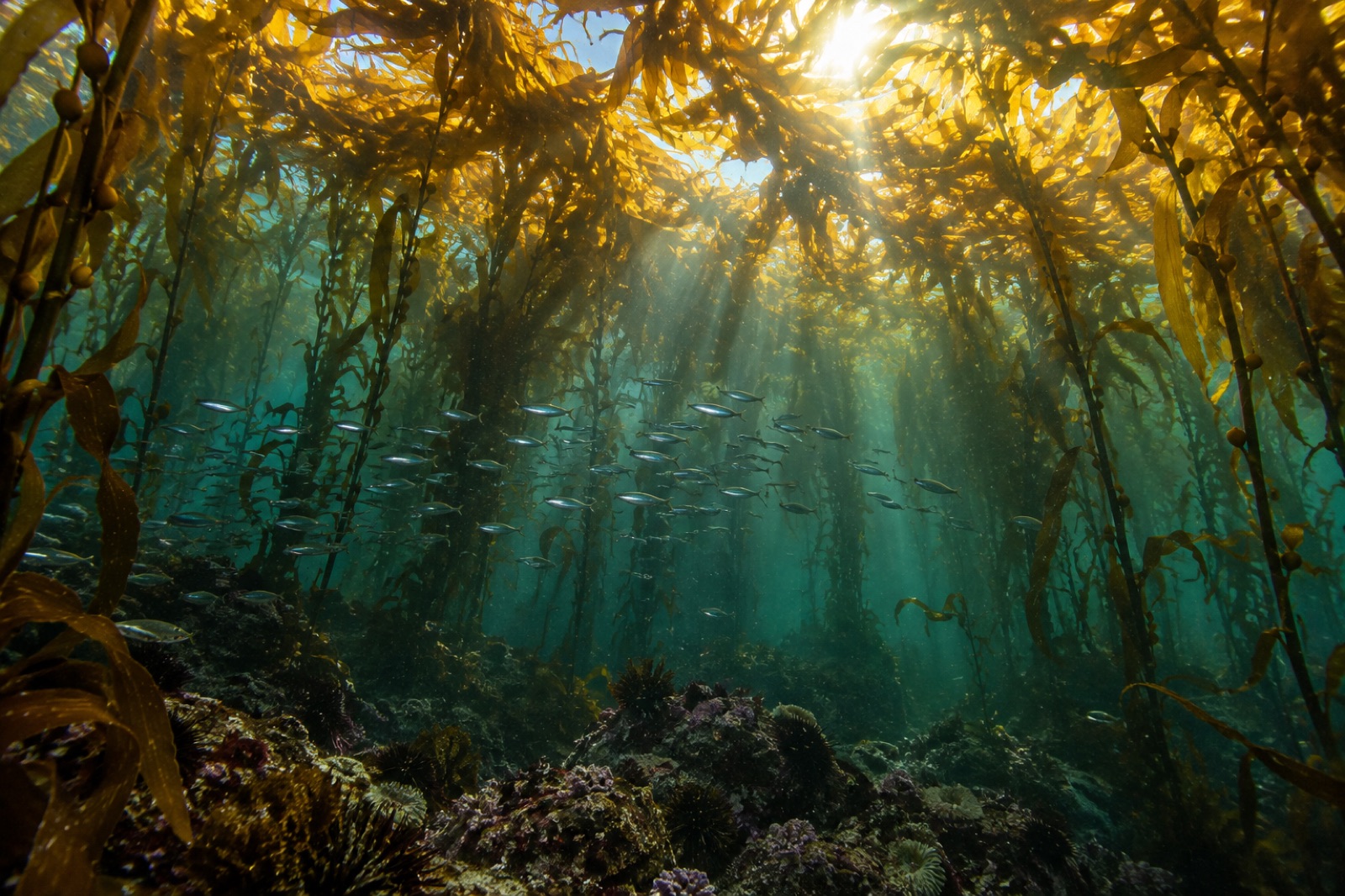
Cool Shade: Canopy Temperature Buffering in Kelp Forests
A kelp canopy does more than block light — it quietly rewrites the heat below. How canopy shade builds cool micro-refuges during heat spikes.
Dr. Lena Fischer ·
Explainers on the physics, chemistry and biology of temperate seas — marine heatwaves, upwelling, holdfast biology, trophic cascades, eDNA.
213 articles
A kelp canopy does more than block light — it quietly rewrites the heat below. How canopy shade builds cool micro-refuges during heat spikes.
Dr. Lena Fischer ·
Kelp barely fossilises, yet fossils, archaeology and DNA tell a rich story: Neogene origins, extinct kelp grazers, the kelp highway and ancient Indigenous stewardship.
Dr. Theo Nakamura ·
Between kelp generations lives a microscopic stage that can simply wait — pausing reproduction through heat, dark and scarcity. Inside gametophyte dormancy.
Dr. Elias Brandt ·
Beneath every kelp forest sleeps an invisible reserve of microscopic filaments. How gametophyte seed banks form, persist and wake — the forest's hidden memory.
Dr. Theo Nakamura ·
Genetic rescue moves genes into a struggling kelp population to restore diversity and fitness. How it works, when it helps, and when it backfires.
Dr. Elias Brandt ·
How stable-isotope fingerprints trace kelp carbon from a particular forest into food webs, sediments and supply chains — provenance science explained.
Dr. Elias Brandt ·
Kelp forests only look isolated. Spores, drifting fronds and invisible currents link reefs into a network — and that map is the key to restoring them.
Dr. Elias Brandt ·
The microbial film on a kelp blade shifts before visible stress appears. How scientists sequence kelp microbiomes and read them as early-warning diagnostics.
Dr. Elias Brandt ·
Kelp forests run on an annual clock of light, temperature and nutrients. Learn how kelp phenology works, why it's shifting, and why timing runs restoration.
Dr. Theo Nakamura ·
How scientists read the family tree of a kelp forest — from SNP chips to seascape genomics — and what genetic maps reveal about provenance and adaptation.
Dr. Elias Brandt ·
Kelp forests travel one microscopic spore at a time. How far spores really go, what decides where they settle, and why dispersal shapes every restoration plan.
Dr. Mara Ellison ·
Most kelp spores settle metres from their parents, but a rare few travel kilometres — and rafts cross oceans. What dispersal distances mean for connectivity and restoration.
Dr. Elias Brandt ·
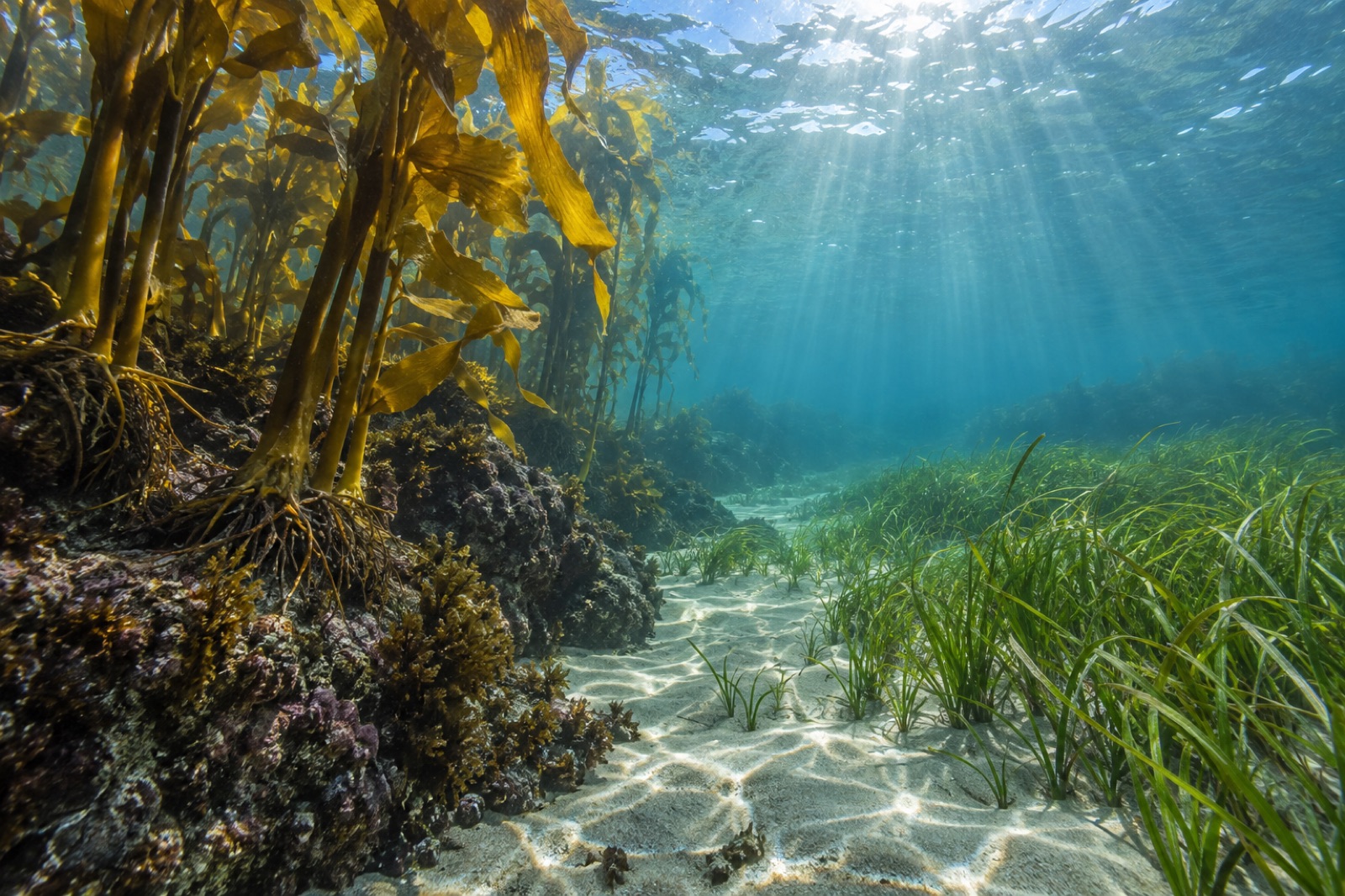
Kelp is an alga; seagrass is a flowering plant. How the ocean's two great habitats differ in biology, range, carbon storage and the ways we restore them.
Dr. Theo Nakamura ·
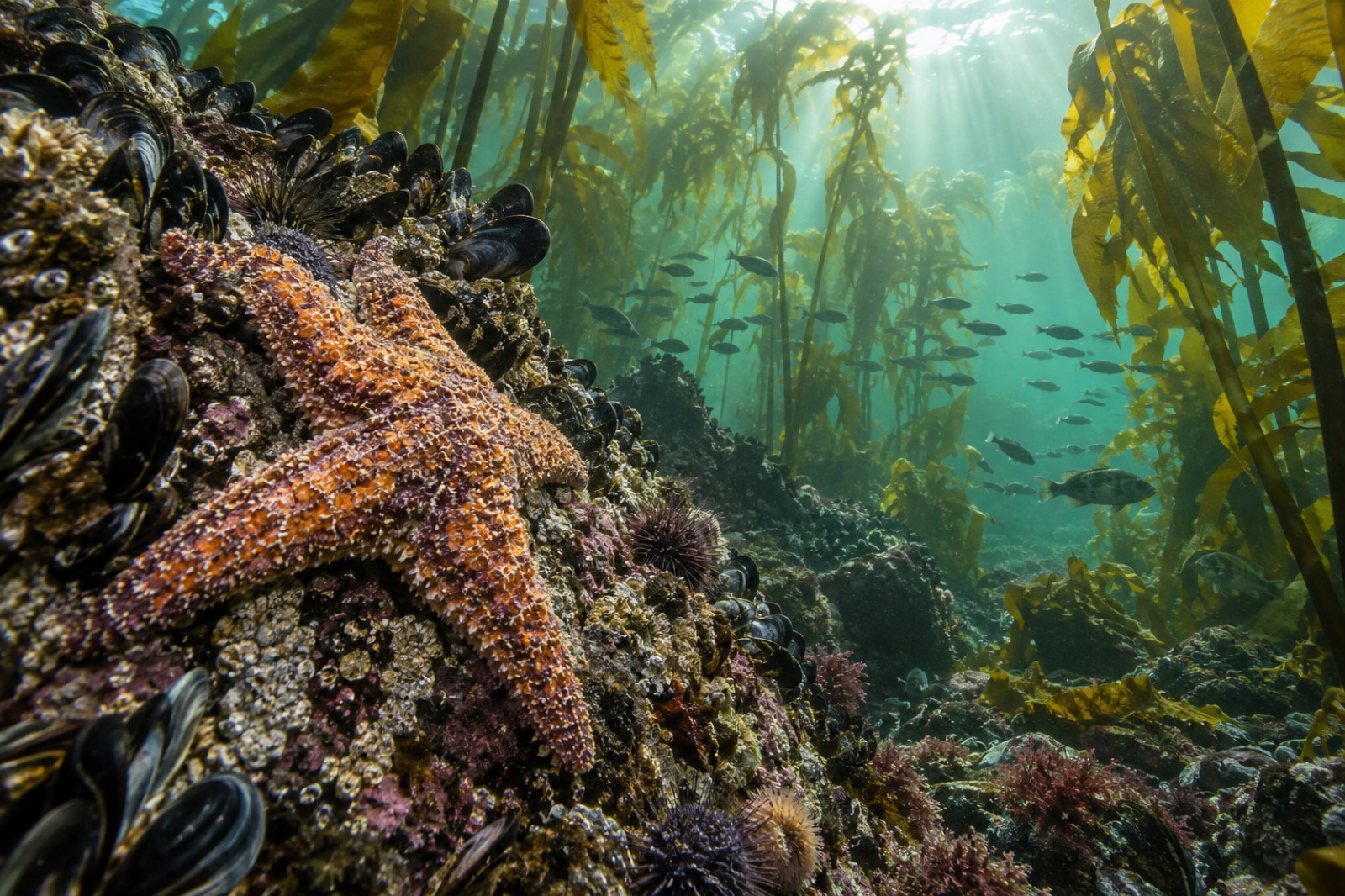
Keystone species hold ecosystems together despite small numbers. How Robert Paine's starfish experiment defined the idea — and what it means for kelp forests.
Dr. Theo Nakamura ·
King tides are the year's highest tides — astronomy, not weather. How perigee, syzygy and the solstices stack up, and why they preview our coastal future.
Dr. Lena Fischer ·
Kelp spores rarely travel far, while fish and invertebrate larvae ride currents for weeks. How dispersal distance shapes reef recovery and restoration design.
Dr. Elias Brandt ·
Almost every reef animal and alga spreads as a drifting larva or spore. How far they travel — and which reefs talk to which — decides how kelp recovers.
Dr. Mara Ellison ·
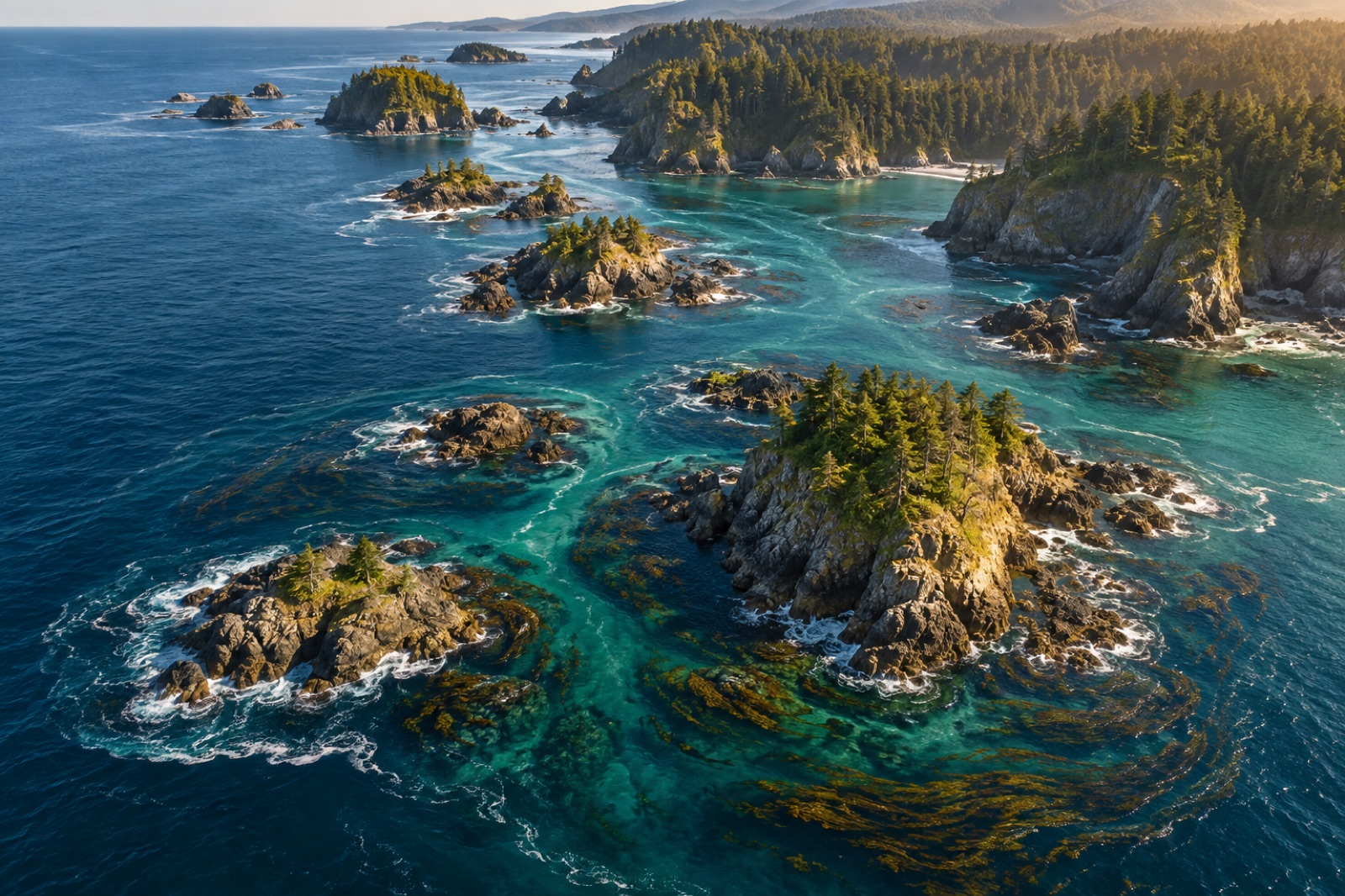
Reefs are joined by currents into a living network. How connectivity works, why stepping stones matter, and how it shapes marine reserves and kelp restoration.
Dr. Lena Fischer ·
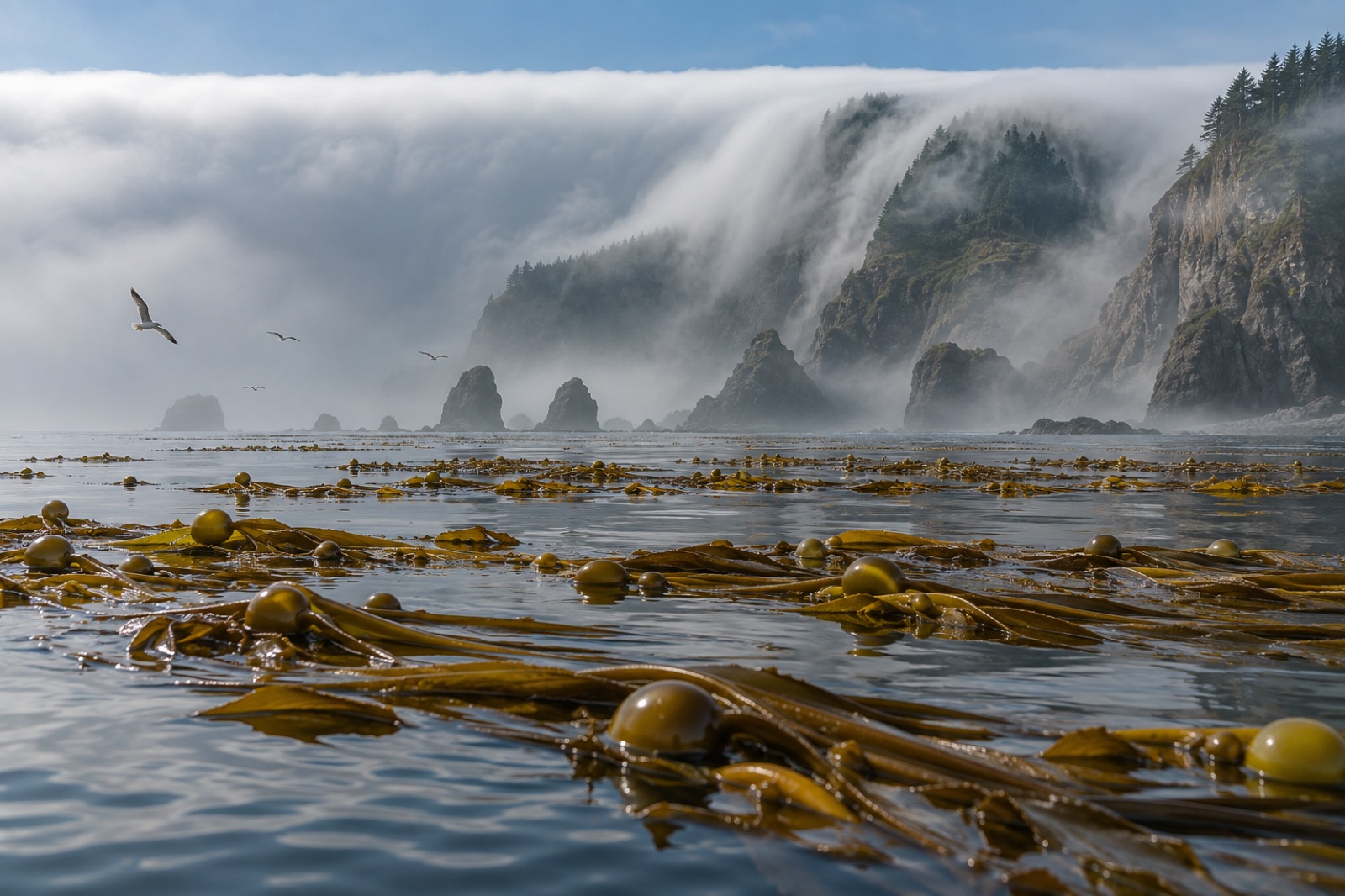
Why the world's great kelp coasts spend their summers under a blanket of fog, how the ocean manufactures it, and what a shifting grey sky means for forests below.
Dr. Lena Fischer ·
Fungi live inside kelp blades, partner with seaweeds and, as oceans warm, sometimes turn pathogenic. What marine mycology knows — and what it means for farms and reefs.
Dr. Mara Ellison ·
Marine heatwaves are spikes riding on a rising baseline of ocean warming. How scientists separate the two signals — and why the difference matters for reefs.
Dr. Lena Fischer ·
Marine mucilage — the 'sea snot' that smothered the Sea of Marmara — is plankton slime gone rogue. What it is, why it happens, and the climate signal inside.
Dr. Lena Fischer ·
Nitrogen feeds every kelp blade and limits most ocean growth. A plain-language tour of the marine nitrogen cycle — fixation, upwelling, uptake and loss.
Dr. Theo Nakamura ·
Reserve design is arithmetic: how big, how far apart, which reefs. The principles that decide whether an MPA network actually saves kelp forests.
Dr. Mara Ellison ·