Science8 min read
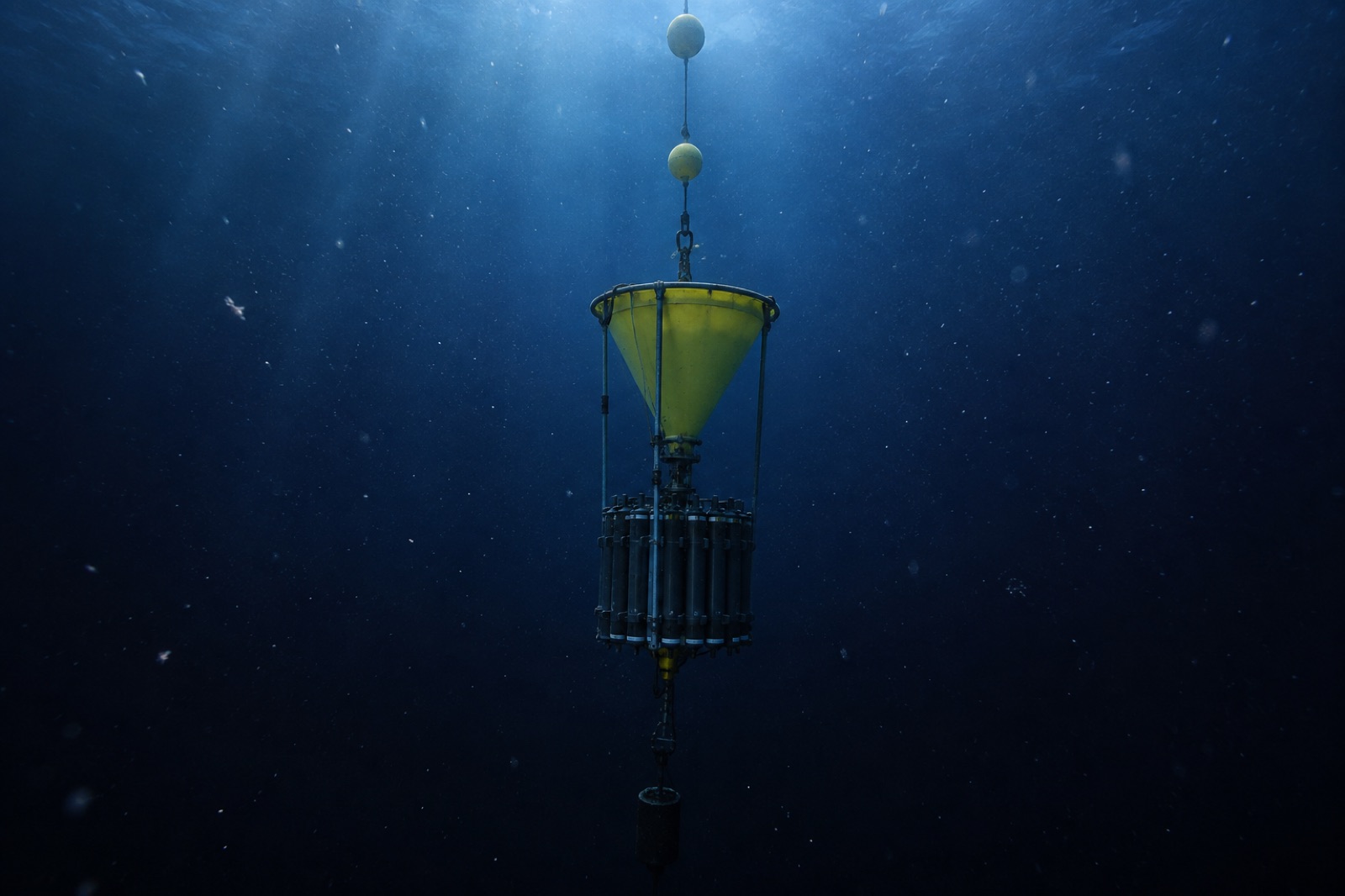
Sediment Traps: Catching Carbon on Its Way Down
How do we measure carbon sinking through ocean? Sediment traps — moored funnels hundreds of metres deep — catch marine snow and tally the export flux.
Dr. Lena Fischer ·
Explainers on the physics, chemistry and biology of temperate seas — marine heatwaves, upwelling, holdfast biology, trophic cascades, eDNA.
213 articles
How do we measure carbon sinking through ocean? Sediment traps — moored funnels hundreds of metres deep — catch marine snow and tally the export flux.
Dr. Lena Fischer ·
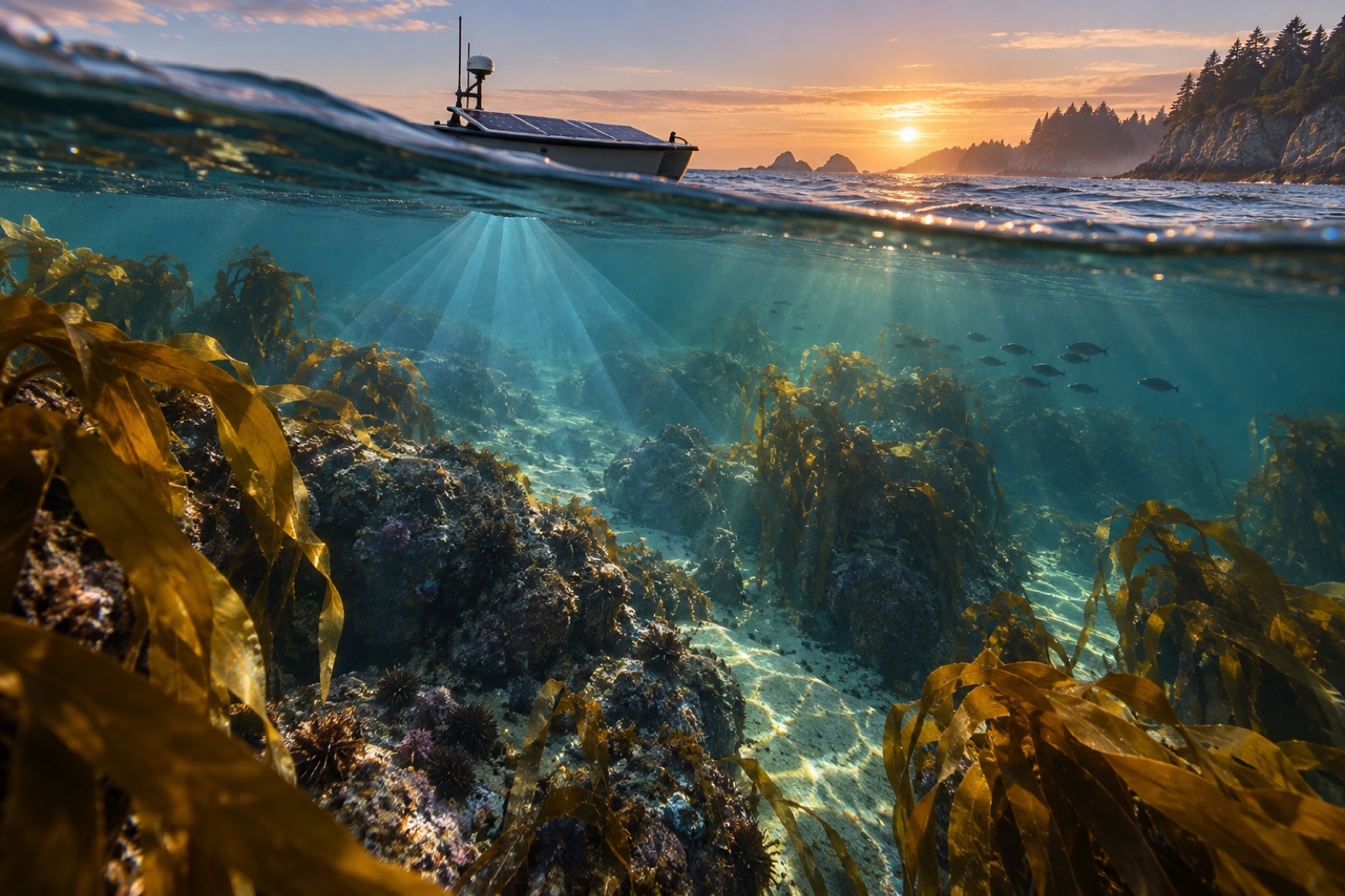
Multibeam and sidescan sonar build metre-scale maps of reef relief, substrate and kelp canopy. How acoustic mapping works, and what it can and can't see.
Dr. Mara Ellison ·
How scientists combine survey records, satellite data and climate projections to map where kelp grows today — and forecast where forests will survive in 2050.
Dr. Mara Ellison ·
Carbon and nitrogen isotope ratios let ecologists read what reef animals actually ate — and whether kelp carbon reached them. Here's how the method works.
Dr. Mara Ellison ·
Kelp carbon carries a chemical fingerprint. Stable isotope analysis lets ecologists trace it from blade to grazer to fish — and test restoration claims.
Dr. Theo Nakamura ·
Storms tear kelp forests apart — and keep them young. How wave forces damage kelp, why disturbance is essential to forest health, and what a stormier future means.
Dr. Lena Fischer ·
Freshwater doesn't stop at the shoreline. Submarine groundwater springs up through seabeds on kelp coasts worldwide — carrying nutrients, cool refuge and sometimes trouble.
Dr. Lena Fischer ·
Thermoclines, haloclines and pycnoclines are the invisible boundaries that slice the sea into layers. What they are, how they form, and why they run coastal life.
Dr. Lena Fischer ·
Tide pools are mini-climates in a handful of seawater. Some shield life through marine heatwaves; others become traps. The physics, the genetics and the conservation case.
Dr. Lena Fischer ·
Tides move more water than all the world's rivers. A clear guide to why the sea rises and falls — moon, sun, spring and neap tides, and what it all means for kelp.
Dr. Lena Fischer ·
Suspended sediment has quietly shrunk some of the world's kelp forests. How turbidity works, how sedimentation smothers recruits, and how clarity returns.
Dr. Mara Ellison ·
The mesopelagic twilight zone holds more fish than any other habitat on Earth and quietly moves carbon to the deep sea. Here's what lives there — and why it matters.
Priya Raman ·
Underwater, sound is the only sense that travels. How sound speed works in seawater, what the SOFAR channel is, and why the ocean is far noisier than it seems.
Dr. Mara Ellison ·
Where wind-driven upwelling stalls behind headlands, pockets of warm, retentive water form. These 'upwelling shadows' shape larvae, kelp and climate refuges.
Dr. Lena Fischer ·
Light is kelp's only real ceiling. How seawater absorbs and scatters sunlight, what sets kelp's depth limit, and why water clarity is a restoration variable.
Dr. Lena Fischer ·
Waves bend toward shallow water, which concentrates energy on headlands and spreads it in bays. How refraction shapes reefs, kelp forests and coastlines.
Dr. Lena Fischer ·
How coastal engineers evaluate kelp forests as wave protection — transmission, per-metre damping, storm-survival limits, and where living breakwaters genuinely fit.
Dr. Lena Fischer ·
Kelp looks brown, red seaweeds look red, and grass is green — because each lineage solved the sunlight problem differently. Here's the pigment chemistry of the sea.
Dr. Theo Nakamura ·
Withering syndrome has killed millions of abalone since the 1980s — a bacterial disease switched on by warm water. The science of the pathogen and outbreaks.
Dr. Mara Ellison ·
Every great kelp forest sits in the shadow of a great current. Here's how western and eastern boundary currents shape temperature, nutrients and the world's temperate reefs.
Dr. Lena Fischer ·
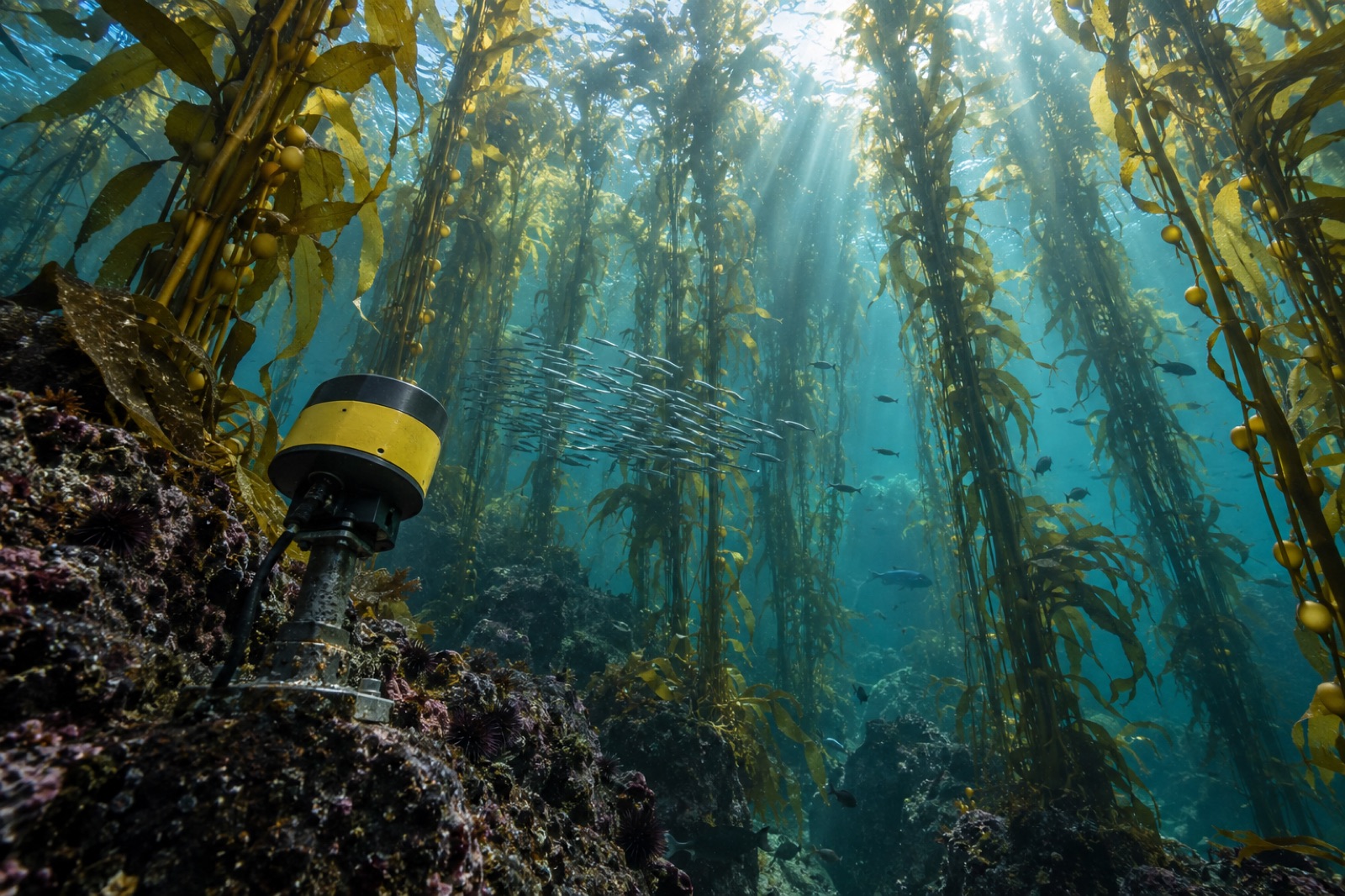
Echosounders see the part of a kelp forest satellites and divers can't — its living volume. How hydroacoustic surveys map canopy height, density and biomass.
Dr. Mara Ellison ·
Environmental DNA lets scientists census a kelp forest from a few litres of seawater. How eDNA surveys work, what they miss, and why they matter.
Dr. Mara Ellison ·
Wind blows, water turns ninety degrees. The gentle physics of Ekman transport — the spiral beneath the surface, coastal upwelling, gyre hills and spills.
Dr. Lena Fischer ·
Every few years the Pacific reorganises itself and kelp forests pay the price. How El Niño starves kelp — and how La Niña's cool afterwash lets it recover.
Dr. Mara Ellison ·