Encyclopedia9 min read
Basket Star (Gorgonocephalus eucnemis): Species Profile
Basket stars unfurl branching arms into cold currents to sieve plankton at night. Meet Gorgonocephalus eucnemis, the kelp coast's living gorgon head.
Dr. Mara Ellison ·
46 articles
Basket stars unfurl branching arms into cold currents to sieve plankton at night. Meet Gorgonocephalus eucnemis, the kelp coast's living gorgon head.
Dr. Mara Ellison ·
Panulirus interruptus is the clawless, night-hunting lobster of California kelp reefs — an urchin predator, a famous fishery, and a quiet guardian of the forest.
Dr. Theo Nakamura ·
Neobernaya spadicea, the chestnut cowry, is the only cowry native to California — a glossy chestnut shell beneath a blazing orange mantle, grazing the reef by night.
Dr. Theo Nakamura ·
The flat abalone is a deep, flattened grazer of Oregon and northern California reefs — the most northern-centred of California's abalones, never common and rarely seen.
Dr. Mara Ellison ·
The frilled dogwinkle drills barnacles on rocky shores and famously thickens its shell when crabs patrol — a textbook case of predator-induced defence.
Dr. Theo Nakamura ·
Megathura crenulata, the giant keyhole limpet, cloaks its shell in a living mantle and bleeds blue blood prized by medicine. Identification, diet and reef role.
Dr. Theo Nakamura ·
Meet the giant spined sea star, Pisaster giganteus — a blue-gray, knobby-armed giant of kelp-edge sand flats that hunts sand dollars and can span half a metre.
Dr. Mara Ellison ·
Endemic to New Zealand, the green-lipped mussel filters big southern water, builds reef — and anchors one of the world's most admired shellfish farms.
Dr. Mara Ellison ·
The hooded nudibranch Melibe leonina is a translucent sea slug that nets plankton from its perch on kelp blades. Biology, diet and where to see one.
Dr. Theo Nakamura ·
The spiny scallop Chlamys hastata is a sponge-armoured, blue-eyed bivalve of Pacific kelp forests that can swim away from sea stars. Full species profile.
Dr. Theo Nakamura ·
The leather star (Dermasterias imbricata) is a smooth, slippery, garlic-scented sea star that hunts anemones and sea cucumbers — biology, range and how to find it.
Dr. Theo Nakamura ·
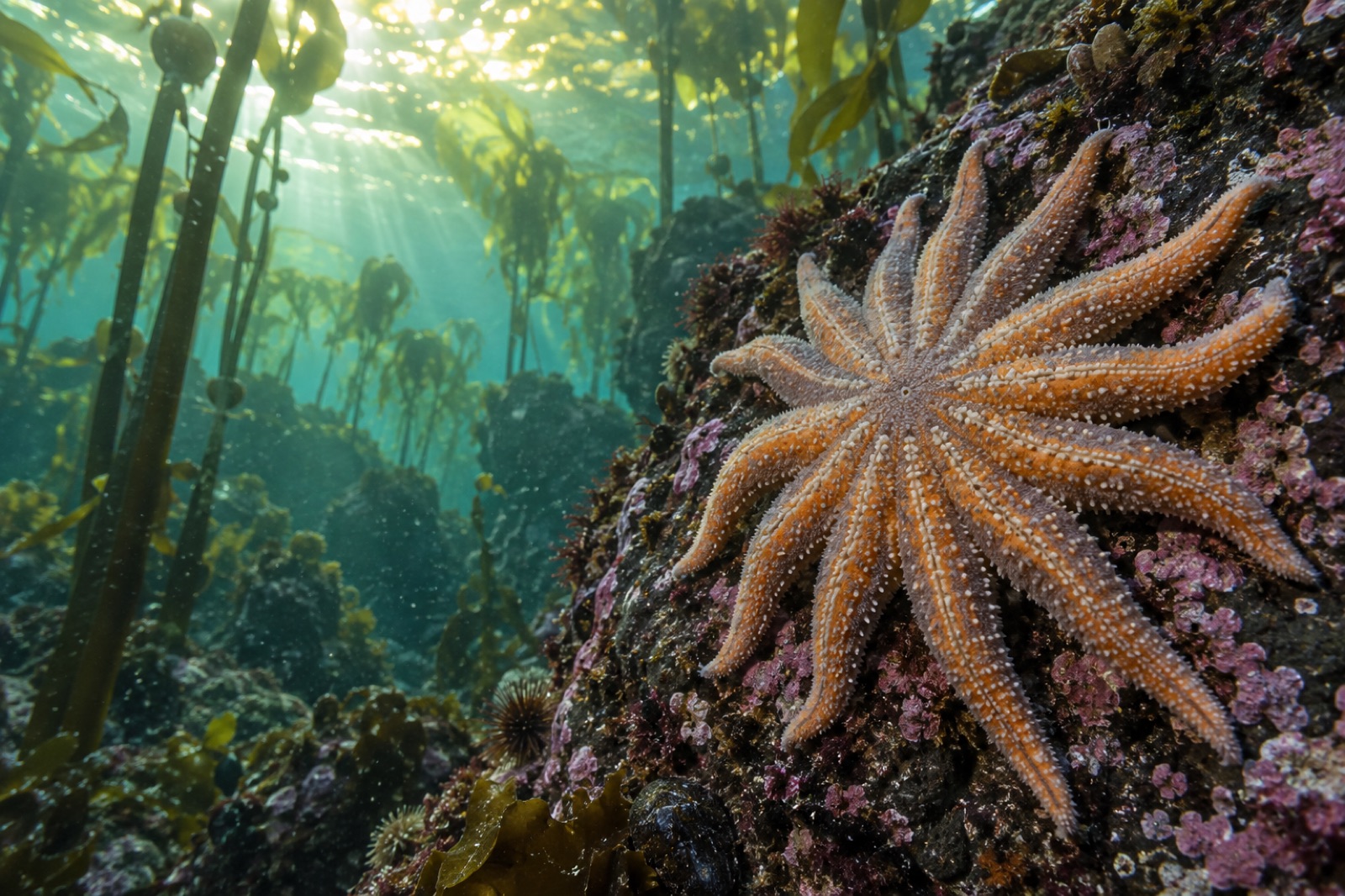
With up to sixteen arms and a taste for other sea stars, the morning sun star is the kelp forest's fastest hunter — and a weathervane of sea star wasting.
Dr. Mara Ellison ·
The opalescent nudibranch steals stinging cells from its anemone prey and wields them as weapons. Learn to identify Hermissenda crassicornis and its world.
Dr. Theo Nakamura ·
The orange sea pen is a quill-shaped coral colony of the sandy seafloor that retracts into the sediment when touched — and glows when disturbed.
Dr. Theo Nakamura ·
Meet the ostrich plume hydroid, the feathery stinging colony that covers kelp stipes — hundreds of polyps living as one animal, hunted by mites and sea slugs.
Dr. Theo Nakamura ·
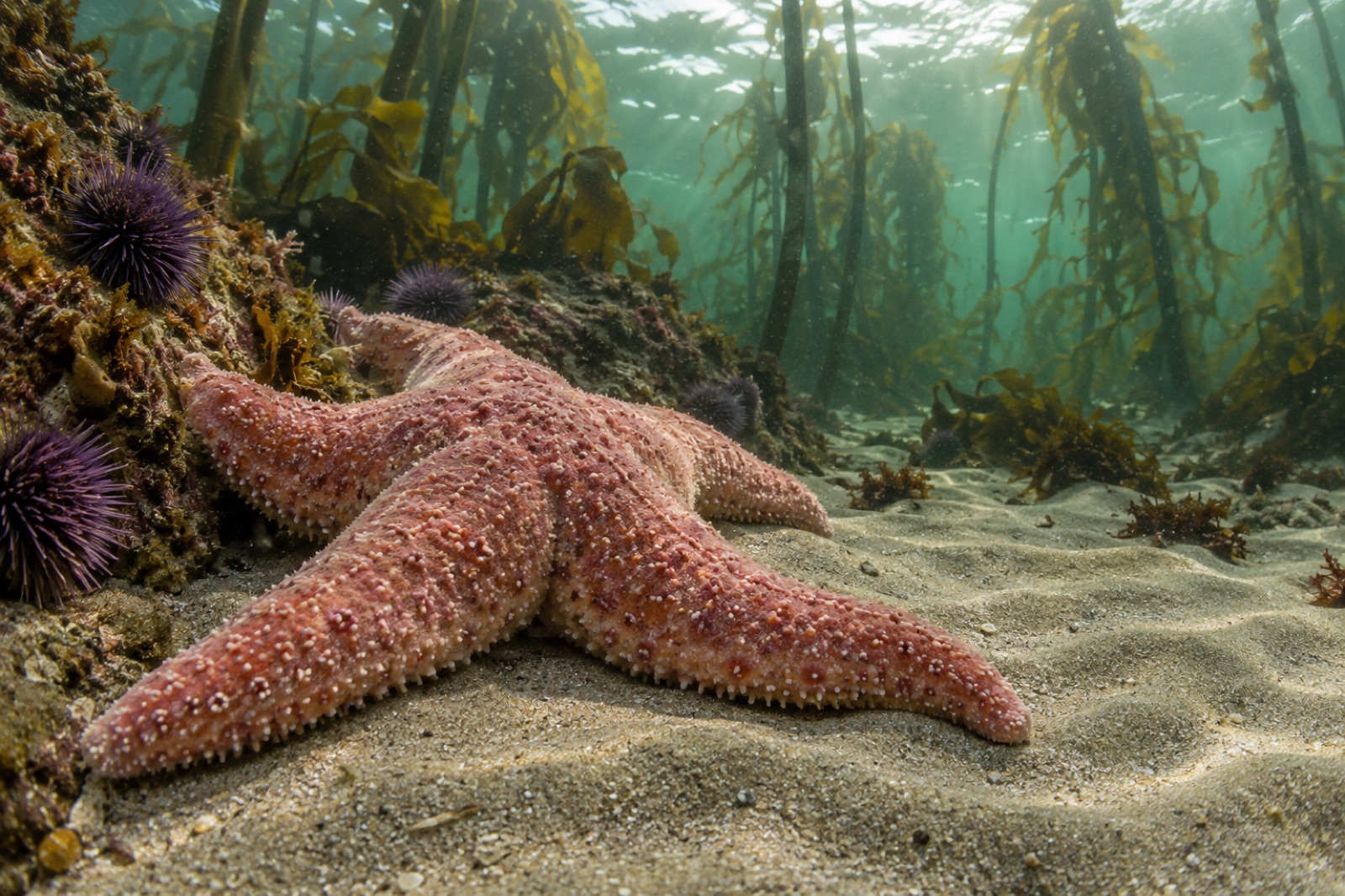
Meet the giant pink sea star — a two-foot, sand-plowing predator of clams and sand dollars that patrols the soft floors between Pacific kelp forests.
Dr. Theo Nakamura ·
Plumose anemones turn cold kelp-coast rock, wrecks and pilings into white forests of feathery tentacles. Meet Metridium, the towering filter feeder.
Dr. Mara Ellison ·
Crassadoma gigantea, the purple-hinged rock scallop, cements itself to rock for life and filters the kelp forest's currents behind a bright orange mantle. ID and ecology.
Dr. Theo Nakamura ·
Eccentric sand dollars crowd the sand beside Pacific kelp forests by the thousand — standing on edge to filter the water. Their biology, beds and neighbours.
Dr. Mara Ellison ·
The sea lemon Peltodoris nobilis is a fist-sized, lemon-scented nudibranch that grazes sponges on Pacific kelp reefs. Identification, biology and ecology.
Dr. Theo Nakamura ·
Sea lemons are confused with leopard dorids, the Monterey dorid and the Atlantic sea lemon. A diver's guide to telling the real Peltodoris nobilis apart.
Dr. Theo Nakamura ·
The California sheep crab is a slow, spiny giant of the kelp forest floor — a decorator crab that outgrew its disguise. Meet Loxorhynchus grandis.
Dr. Mara Ellison ·
Leptasterias, the six-rayed star, broods its babies under its own body on the wave-beaten rocks of the Pacific kelp fringe — a small star with a big secret.
Dr. Theo Nakamura ·
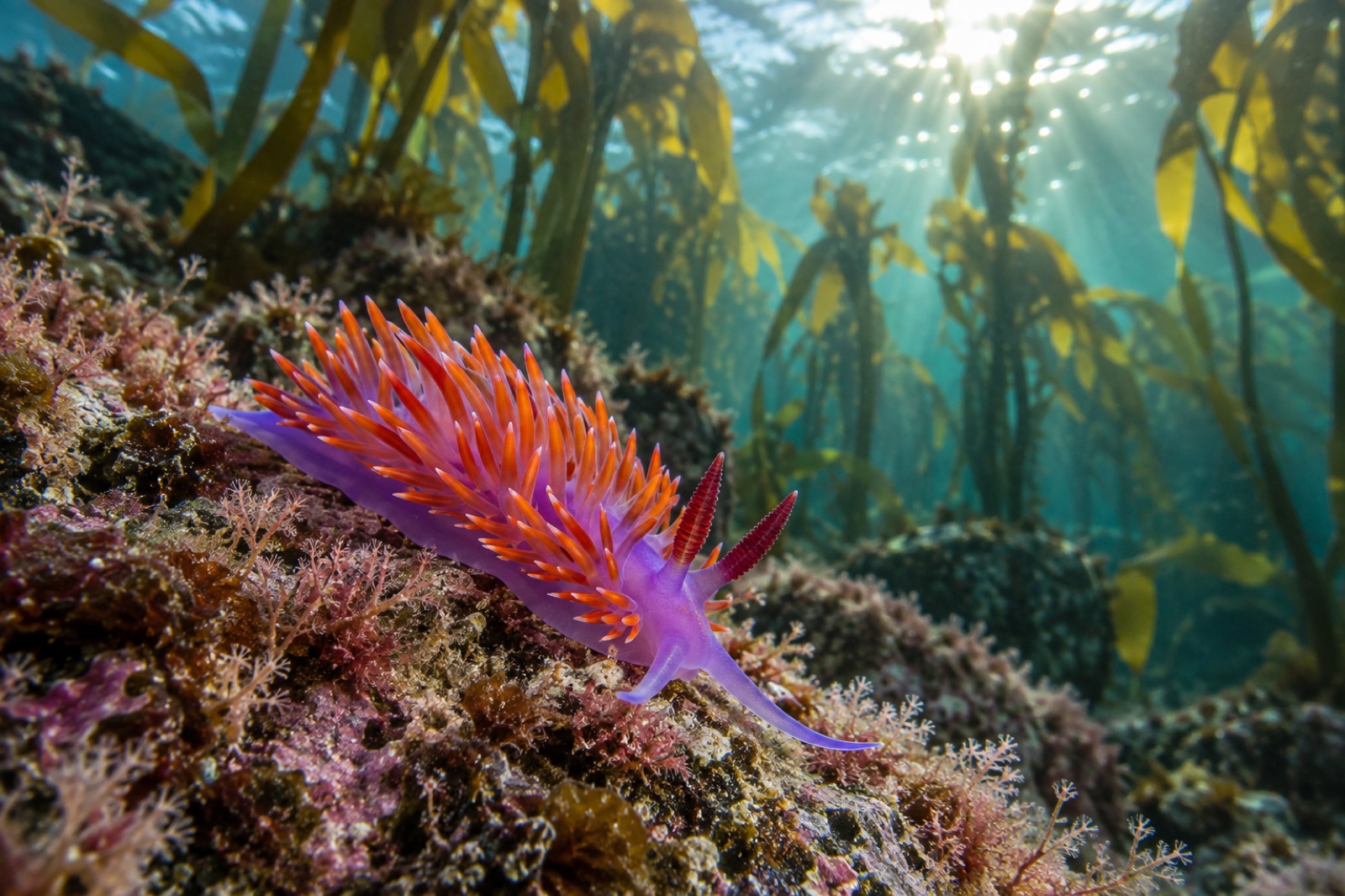
The Spanish shawl Flabellinopsis iodinea is a purple-and-orange aeolid nudibranch that steals stinging cells from hydroids. Identification, diet, habitat.
Dr. Mara Ellison ·
Octopus bimaculoides is a small den-dwelling octopus of California's rocky kelp reefs, named for the blue-ringed ocelli behind its eyes. Habits and habitat.
Dr. Theo Nakamura ·
Brittle stars are the kelp forest's most numerous residents — five-armed floor-dwellers by the thousand. Learn how they differ from sea stars and why they matter.
Dr. Mara Ellison ·
The giant green anemone is a solar-powered predator of Pacific tidepools and kelp-forest edges. Its biology, symbiosis and decades-long life.
Dr. Mara Ellison ·
Norris's top snail spends its whole life on giant kelp — a large red-brown top snail found in no habitat but the southern California kelp forest.
Dr. Theo Nakamura ·
Tochuina tetraquetra, the orange-peel nudibranch, is one of the world's largest sea slugs — a cold-water giant that hunts sea pens and smells faintly of watermelon.
Dr. Theo Nakamura ·
Meet the world's largest abalone — a kelp-eating giant sea snail of the Pacific coast. Its biology, fishery history and the road to recovery.
Dr. Theo Nakamura ·
Sea squirts look like alien machinery but land among our closest living relatives. Meet the stalked tunicates of kelp understories — anatomy, role and invaders.
Dr. Theo Nakamura ·
Strawberry anemone Corynactis californica: the cloning corallimorph that carpets kelp forest reefs — how it feeds, clones and spreads.
Dr. Theo Nakamura ·
Clown dorid (Triopha catalinae) species profile: identifying the polka-dotted nudibranch, its bryozoan diet, rhinophores and where to find it on kelp reefs.
Dr. Theo Nakamura ·
Lacuna vincta, the chink-shell kelp snail, lives its whole life on kelp blades — sometimes a helpful gardener, sometimes a grazer that can riddle a farm.
Dr. Mara Ellison ·
Evasterias troschelii, the mottled or false ochre star — the soft-bodied, deep-dwelling predator that picks off limpets, whelks and baby sea stars.
Dr. Theo Nakamura ·
Fish-eating anemone (Urticina piscivora) species profile: the big red anemone that catches fish under the kelp canopy and doubles as sea star prey.
Dr. Mara Ellison ·
The Pacific tube anemone isn't a true anemone at all. Meet Pachycerianthus fimbriatus: the felt-tubed, double-crowned ambush fisher of kelp-forest sand flats.
Dr. Mara Ellison ·
Urticina crassicornis, the painted or Christmas anemone of North Pacific kelp reefs: identification, diet, reproduction and its place in the cold-water forest.
Dr. Theo Nakamura ·
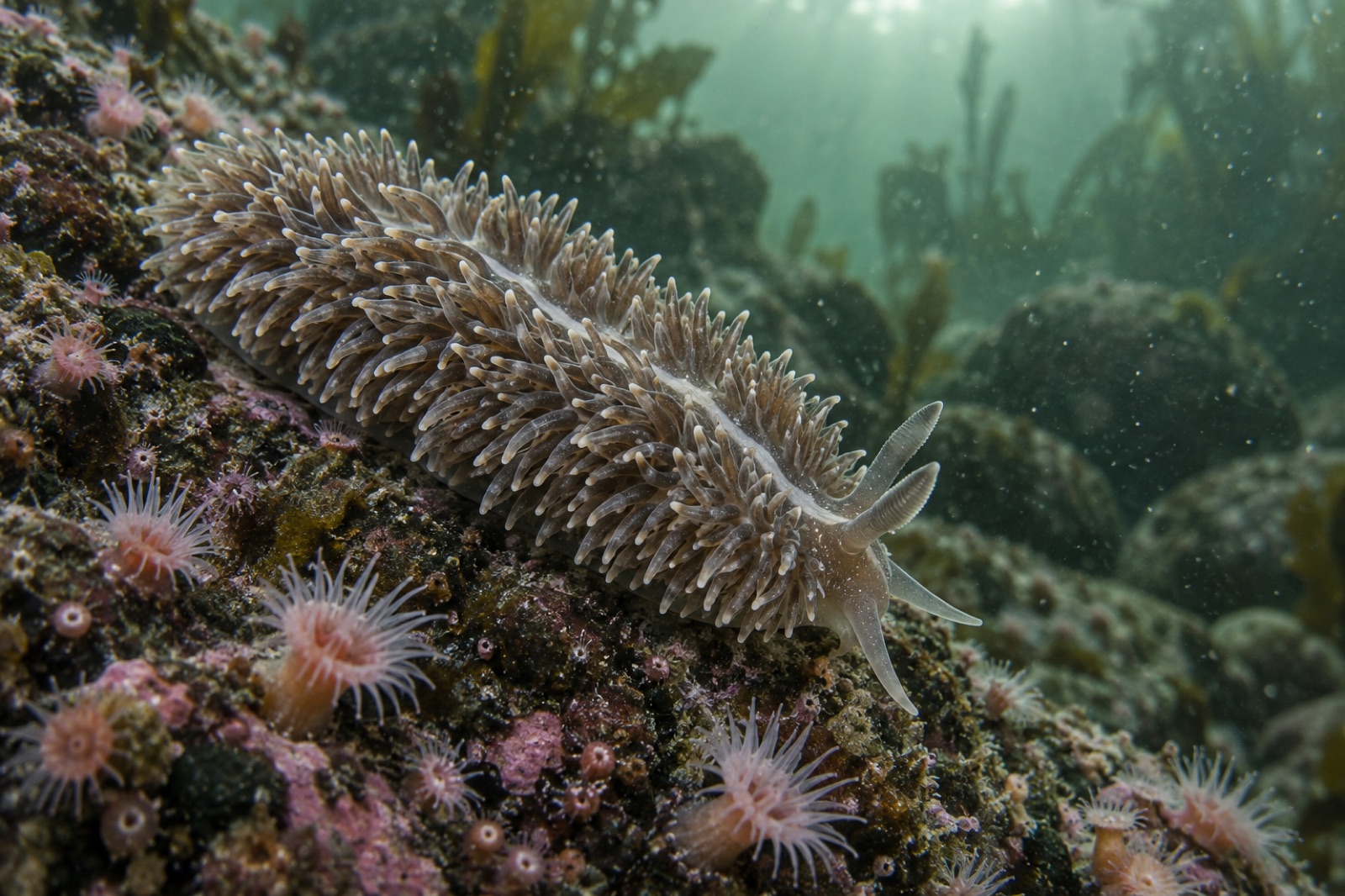
Meet Aeolidia papillosa, the shag rug nudibranch: a cold-water sea slug that hunts anemones, steals their stinging cells and wears them as armour.
Dr. Mara Ellison ·
Inside a kelp holdfast census at Tinderbox: bagging, sieving and counting the hundreds of small animals that tell us whether a restored reef is alive.
Dr. Mara Ellison ·
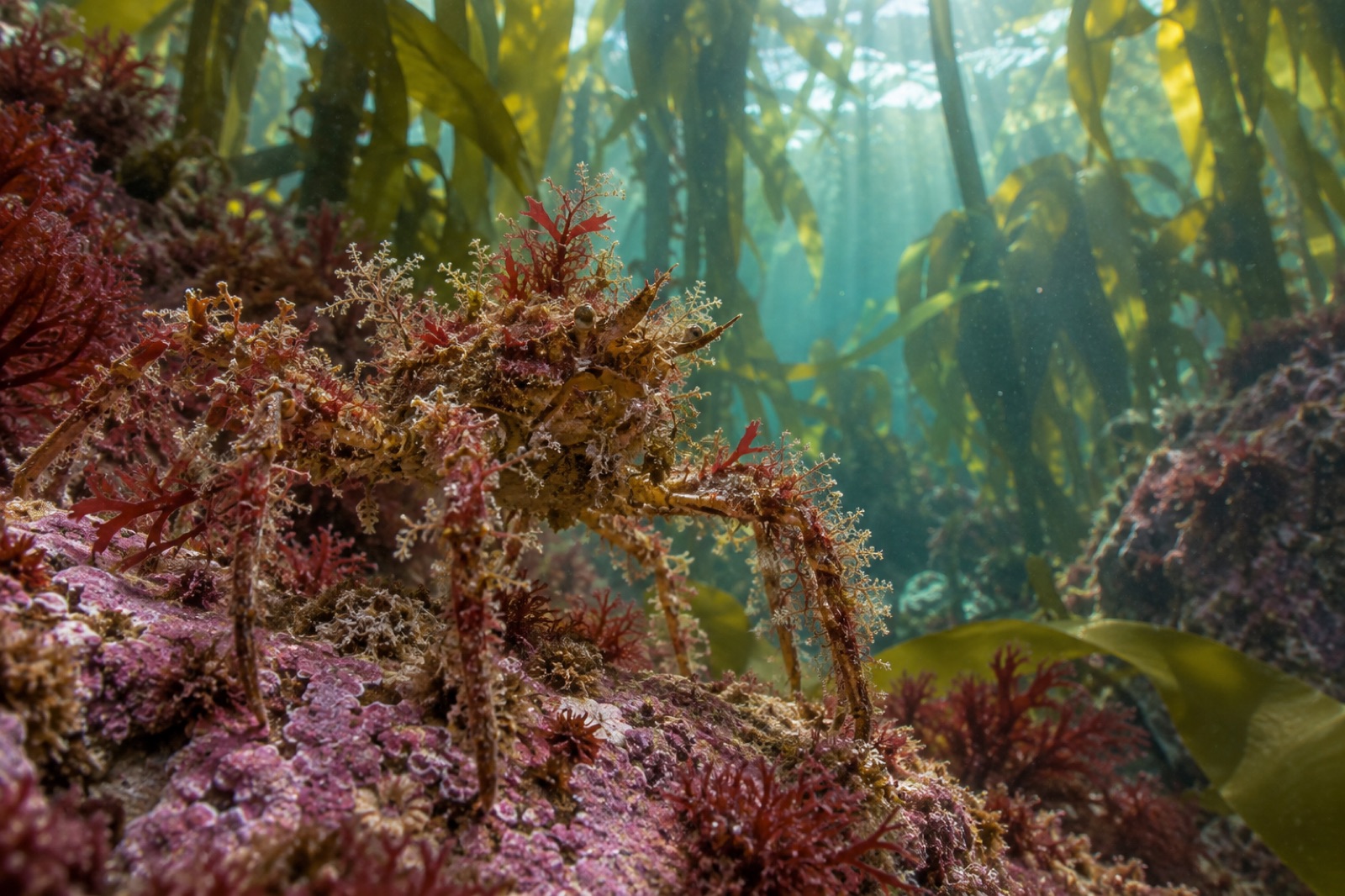
Meet the sharpnose crab — a small Pacific spider crab that plants living algae on hooked hairs across its shell. How the disguise works and where to find it.
Dr. Mara Ellison ·
Ceratostoma foliatum, the leafy hornmouth, is a winged predatory snail of Pacific kelp reefs — a slow driller of mussels and barnacles.
Dr. Mara Ellison ·
Meet the heart crab — a flattened, heart-shaped California reef crab that is not a true crab at all, but a king-crab relative descended from hermit ancestors.
Dr. Theo Nakamura ·
Stalked jellyfish are thumbnail-sized staurozoans that grip kelp fronds with a sticky foot and never swim. A guide to finding these hidden kelp forest gems.
Dr. Theo Nakamura ·
Helmet crab species profile: the saw-edged, bristled Telmessus cheiragonus — a night-roaming burrower of kelp coast sand from Alaska to Japan.
Dr. Mara Ellison ·
Brooding anemone species profile: protandric hermaphrodite, live-bearing parent, epiphyte of kelp and eelgrass — and a dispersal puzzle solved by rafting.
Dr. Theo Nakamura ·