Field Notes8 min read
Field Notes: Abalone Back in the Quadrats
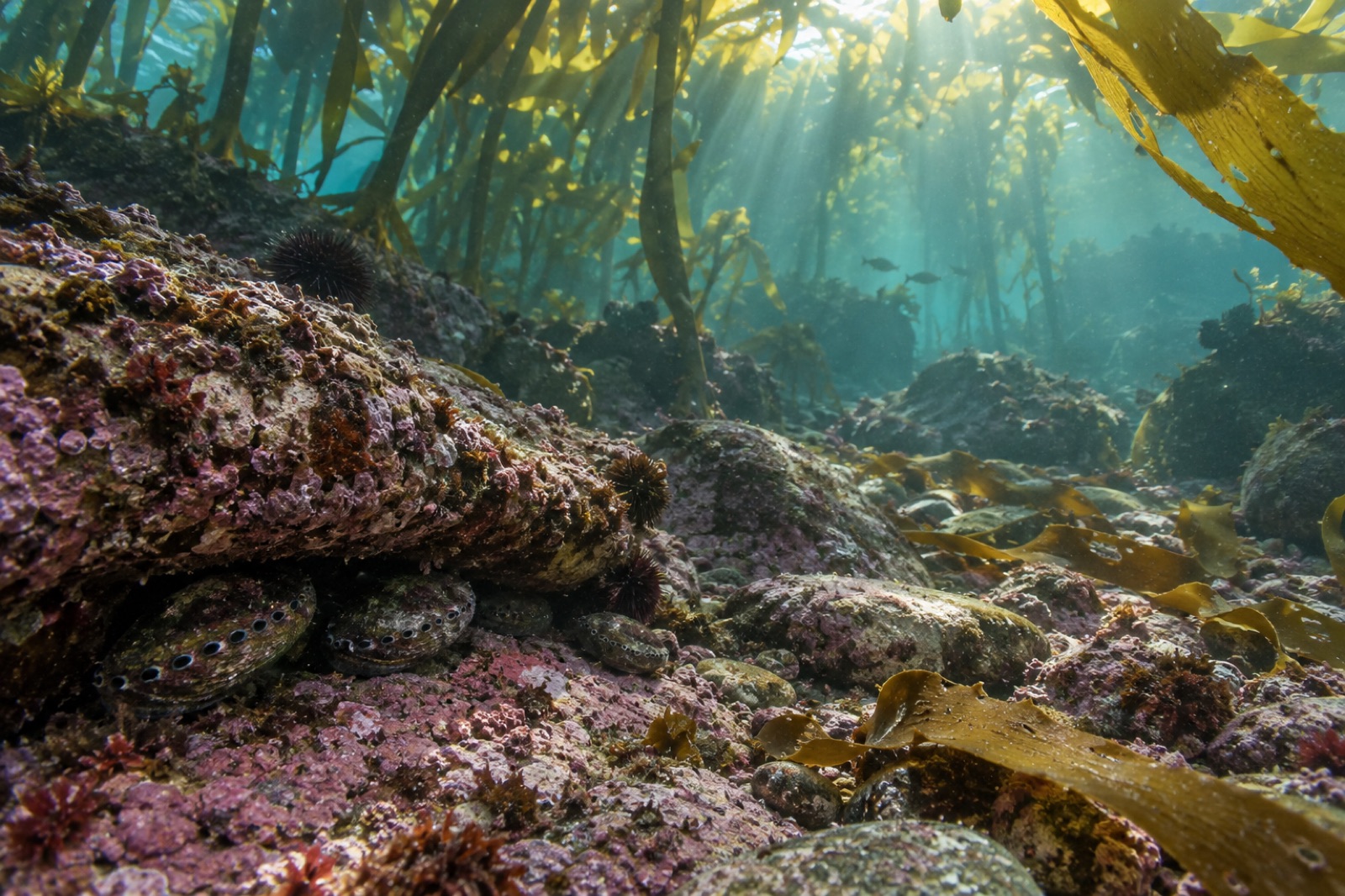
Seven years after seeding began on Tasmania's Lumeriah Coast, juvenile blacklip abalone are turning up in the monitoring quadrats again. Here's why that matters.
Dr. Mara Ellison ·
52 articles
Seven years after seeding began on Tasmania's Lumeriah Coast, juvenile blacklip abalone are turning up in the monitoring quadrats again. Here's why that matters.
Dr. Mara Ellison ·
How do you count fish you can't see? Acoustic surveys use sonar to turn echoes into biomass estimates. Here's how echosounders work — and their limits.
Dr. Mara Ellison ·
Biodiversity credits need a unit. Habitat hectares, species richness, condition scores, eDNA indices — the metrics on the table, and what each one misses.
Dr. Mara Ellison ·
Good kelp carbon claims start with good field design. A practical guide to plots, transects, replicates, stratification and the statistics of underwater surveys.
Dr. Mara Ellison ·
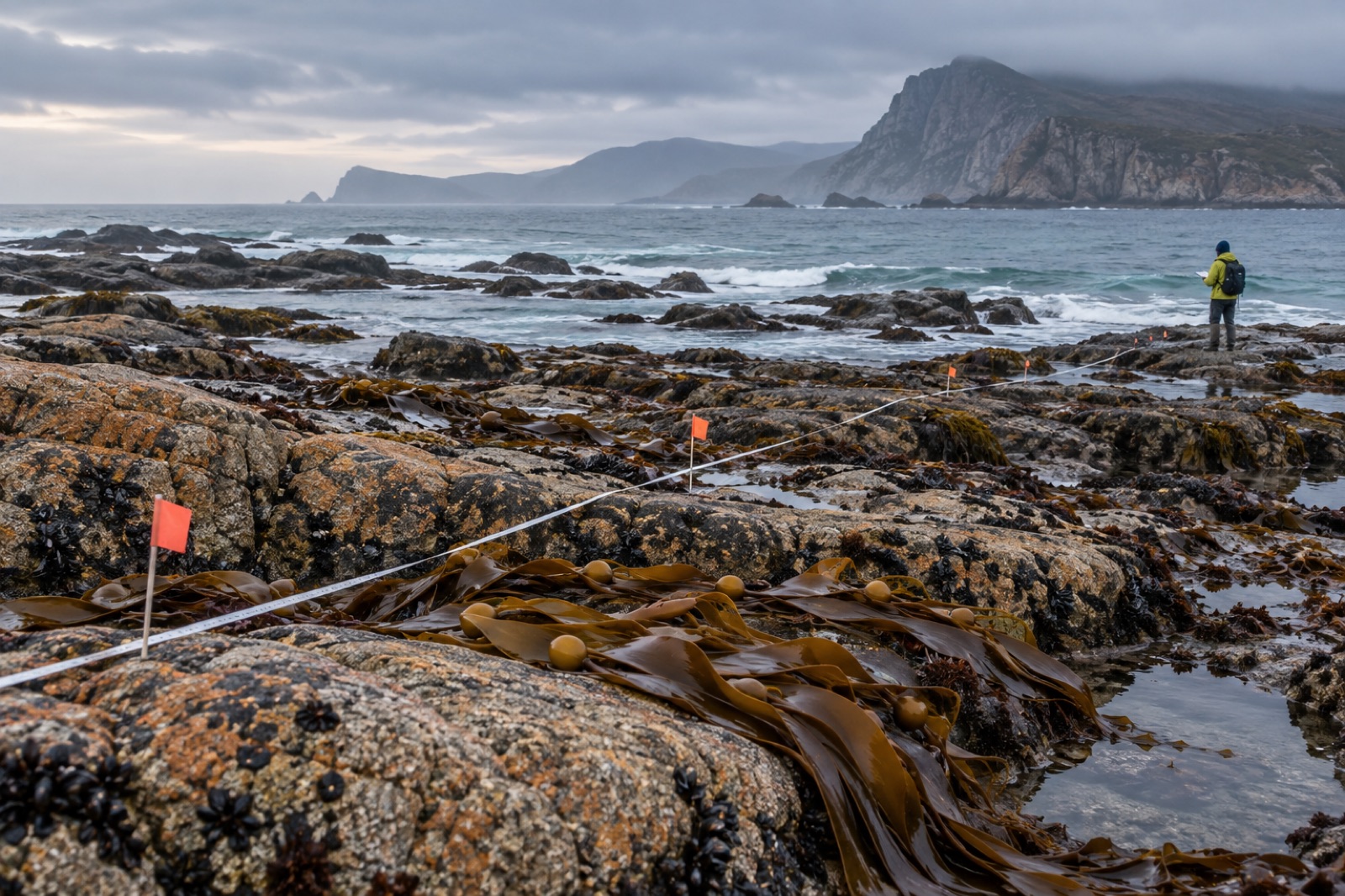
A kelp restoration project's first carbon verification, told from the inside — what auditors tested, what they found, and what makes kelp credits unusual.
Priya Raman ·
Turn a consumer drone and free GIS software into a farm record that tracks lines, growth and problems — and makes every season smarter than the last.
Naomi Reyes ·
Build a useful kelp farm sensor kit for the price of a good anchor: DIY temperature chains, light loggers, tilt sensors and telemetry that answers real farm questions.
Naomi Reyes ·
Every March we fly every southern-hemisphere site at peak canopy. Twelve flights a day, dawn tides, and a data pipeline that turns pixels into a season's verdict.
Jack Callum ·
A week flying multispectral drone surveys over Mendocino's recovering bull kelp: fog windows, canopy maths, and where the map still needs divers.
Jack Callum ·
A Tidewright field note from Tasmania's Lumeriah Coast: anchoring a monitoring buoy over the thousandth seeded hectare, and what a big round number is actually worth.
Jack Callum ·
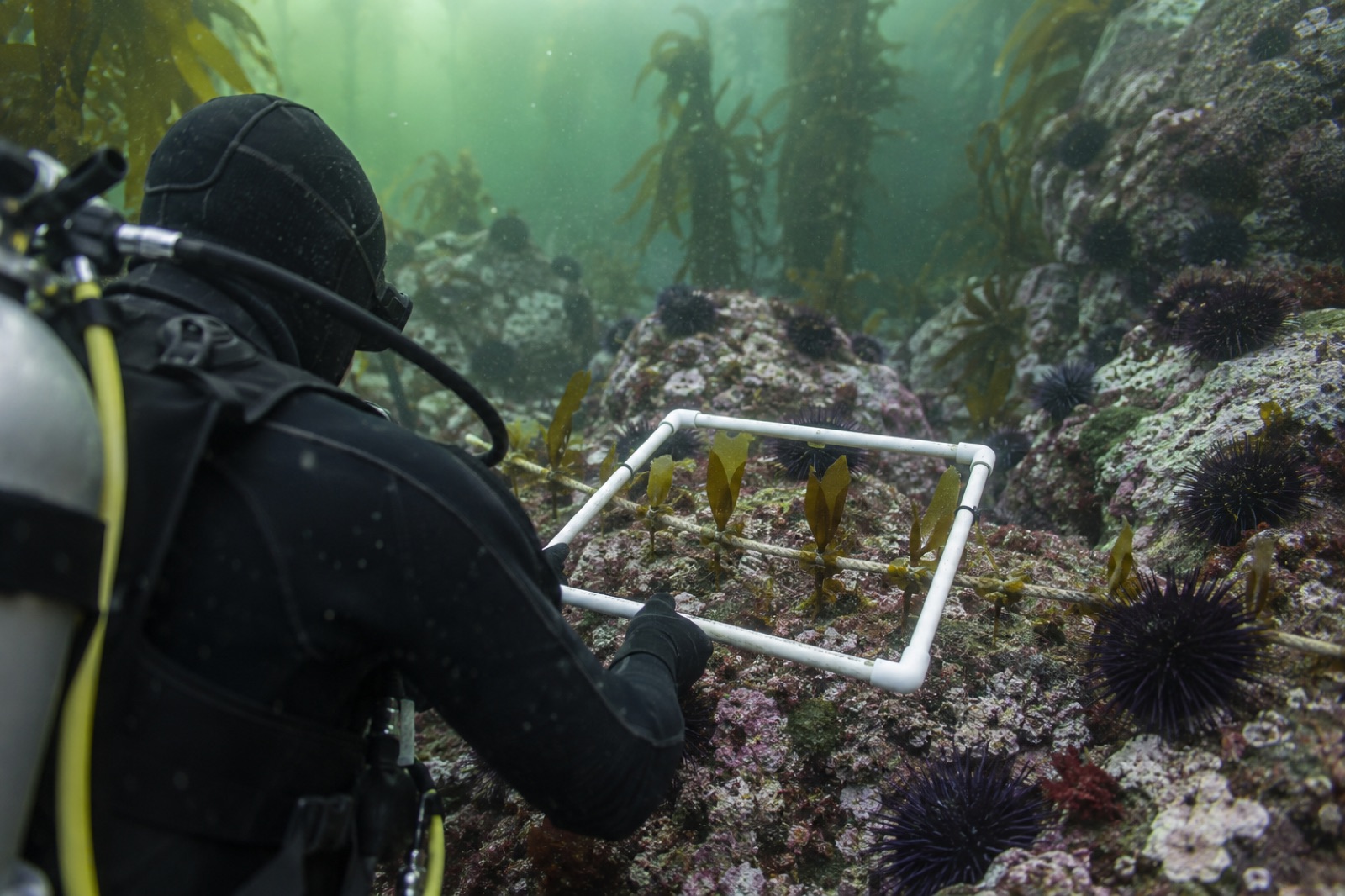
Field notes from a winter holdfast census across a Tasmanian reseeding site: urchin counts on treated vs control transects, and what we changed for next season.
Jack Callum ·
The first Holdfast lines we ever laid are three years old and due for retrieval. What biodegradable seeding lines look like after three winters — and what they taught us.
Jack Callum ·
The first biodiversity credit we ever issued took eleven months, three verifiers and one metric we threw away. Field notes from inside the process.
Priya Raman ·
Satellites and drones draw the canopy maps; divers make them honest. Field notes from a ground-truthing day with the Catalina Dive Co-op.
Tom Okafor ·
Recruitment, grazer pressure, genetic diversity, canopy continuity: the measurable indicators ecologists use to predict whether a kelp forest will recover.
Dr. Mara Ellison ·
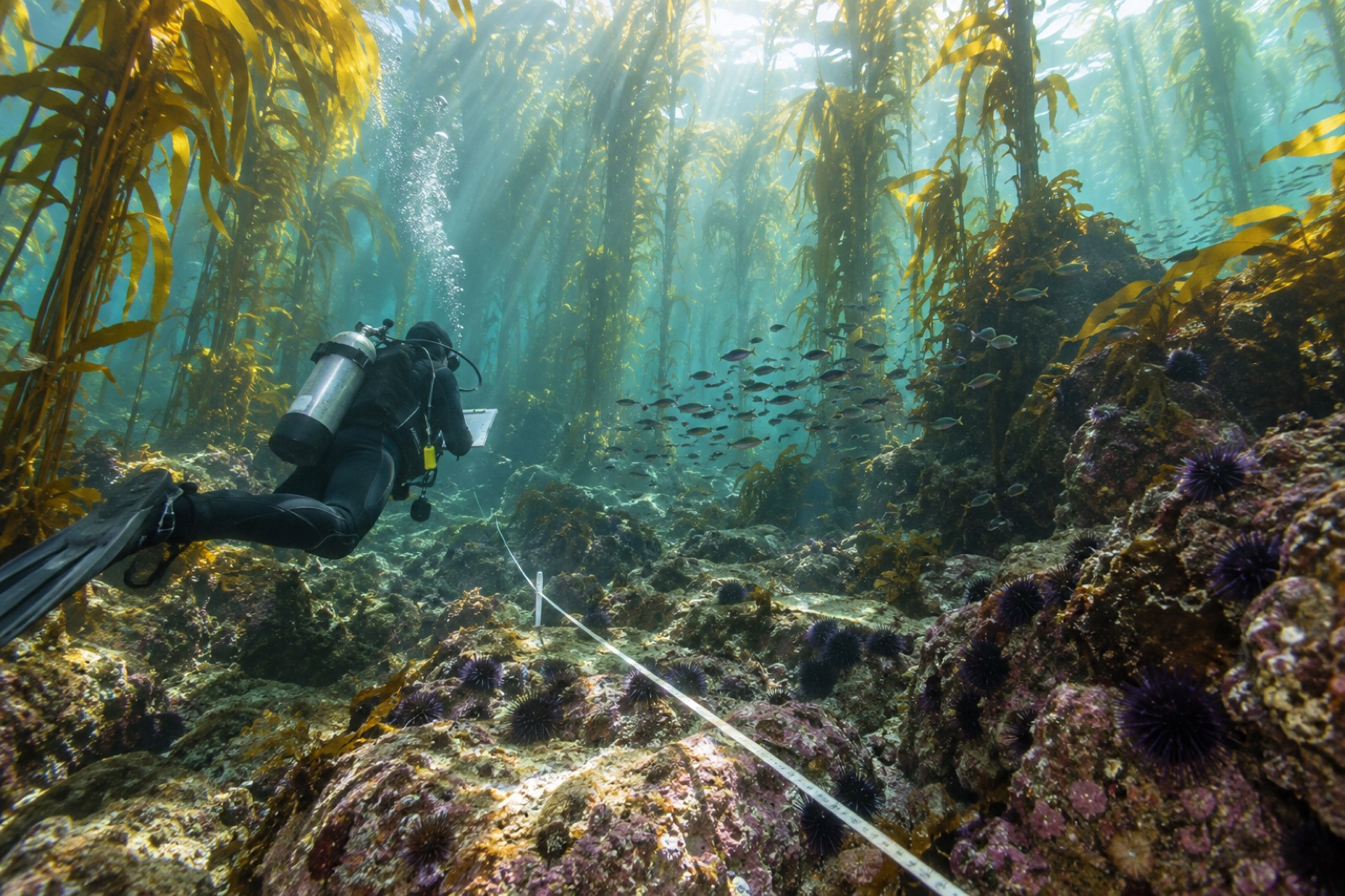
Ecological survey diving is real paid work — transects, counts and monitoring for agencies, consultancies and restoration programmes. Here's how the market works.
Tom Okafor ·
Monitoring, reporting and verification is where blue carbon's real money goes. A line-item tour of MRV budgets — and the design choices that shrink them.
Priya Raman ·
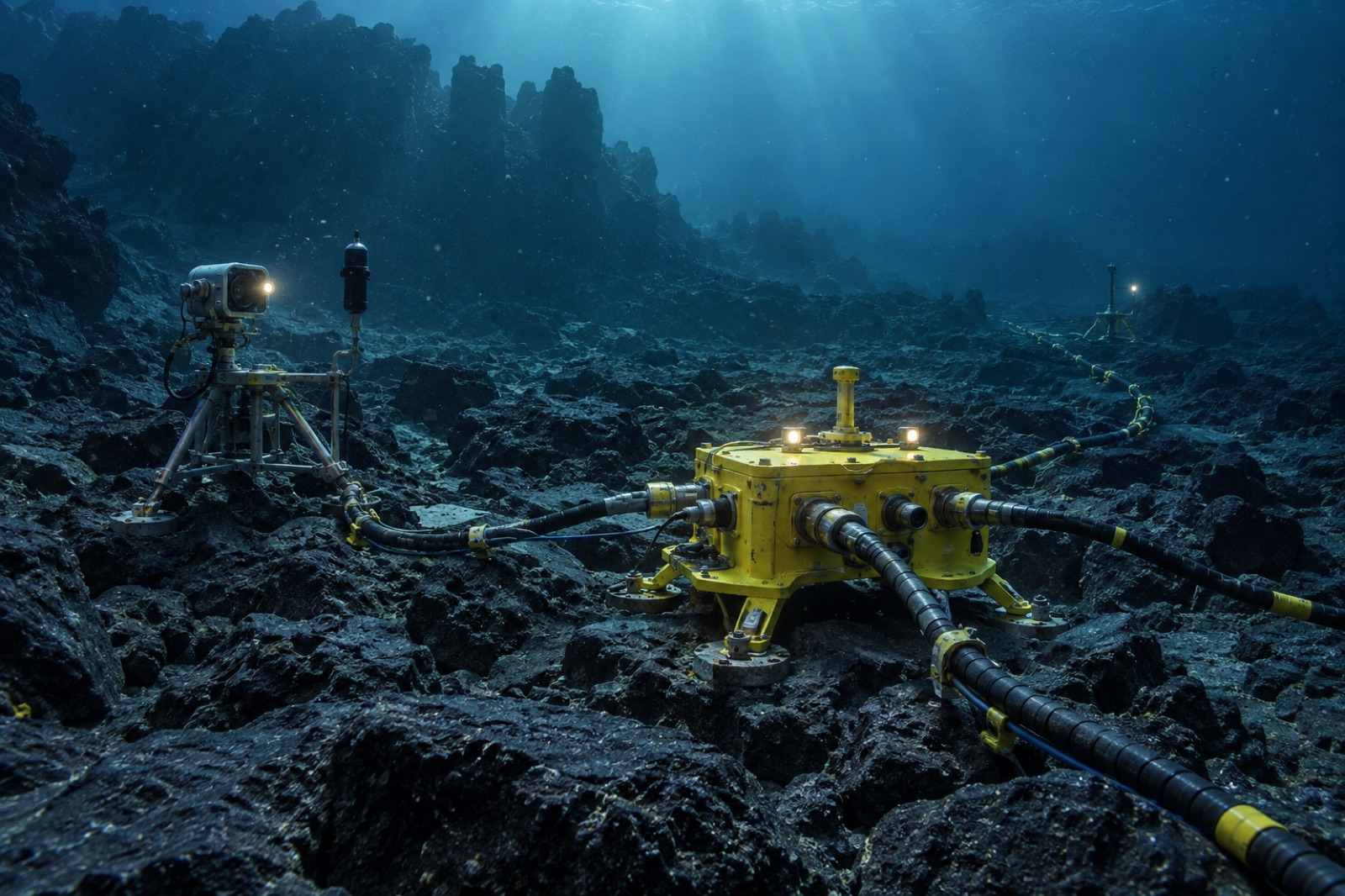
Cabled ocean observatories plug the deep sea into fibre and power, streaming data around the clock. What these wired reefs see that research ships can't.
Dr. Lena Fischer ·
Ocean colour satellites turn faint light reflected from the sea into maps of phytoplankton, sediment and kelp. How the sensors work, what they see — and what they miss.
Dr. Mara Ellison ·
Kelp disease moves faster than most farm visits. How to build a farm-level surveillance protocol — baseline, triggers, sampling cadence — that catches trouble early.
Dr. Mara Ellison ·
What to measure on a small seaweed farm, with what: temperature, light, dissolved oxygen, salinity and turbidity sensors — priced, compared and integrated into daily work.
Naomi Reyes ·
A working water-testing protocol for seaweed farms: which parameters matter, what gear to use, how often to sample, and the thresholds that trigger action.
Naomi Reyes ·
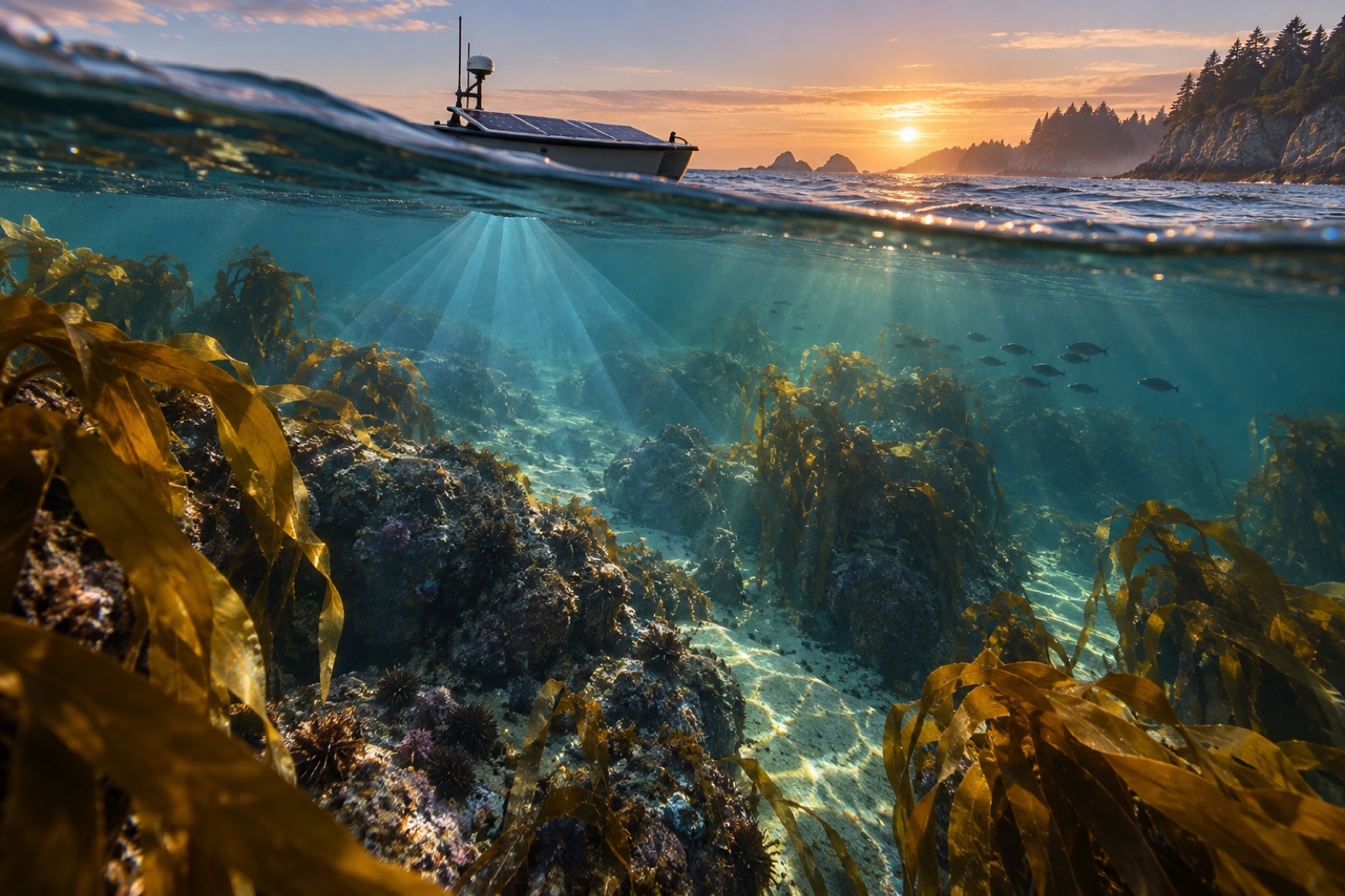
Multibeam and sidescan sonar build metre-scale maps of reef relief, substrate and kelp canopy. How acoustic mapping works, and what it can and can't see.
Dr. Mara Ellison ·
A Tidewright field note: acoustic-tagging giant sea bass near the restored kelp lines at Catalina — and what the receivers heard when the giants came back.
Jack Callum ·
MRV — monitoring, reporting, verification — is the machinery that makes blue carbon credits real. How coastal carbon claims get measured and audited.
Priya Raman ·
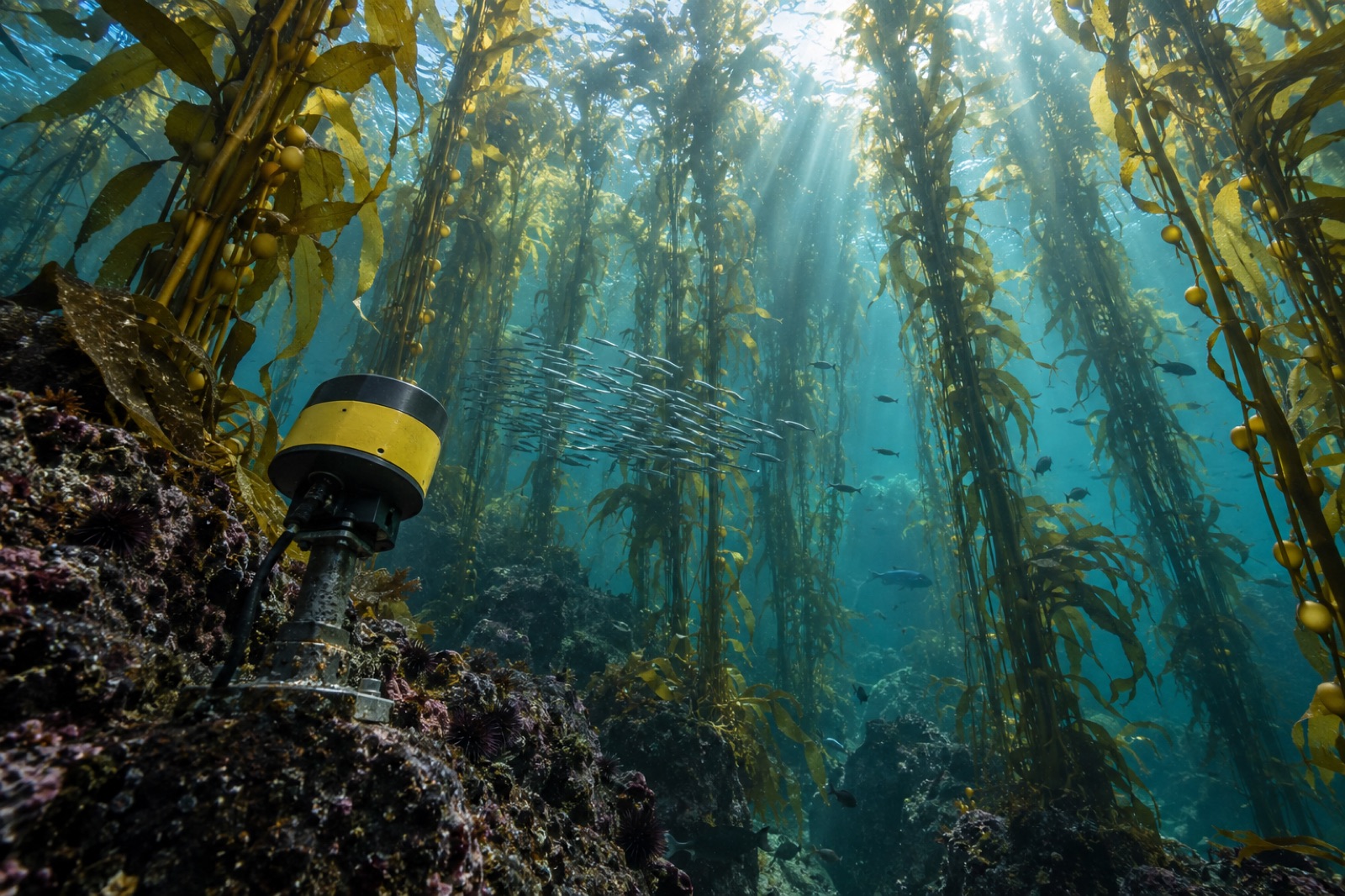
Echosounders see the part of a kelp forest satellites and divers can't — its living volume. How hydroacoustic surveys map canopy height, density and biomass.
Dr. Mara Ellison ·
Environmental DNA lets scientists census a kelp forest from a few litres of seawater. How eDNA surveys work, what they miss, and why they matter.
Dr. Mara Ellison ·
What settles on an urchin barren, and what survives? We bolted ceramic settlement plates to Mendocino reef to find out — before and after seeding.
Jack Callum ·
Tr L-7 is a single 30-metre transect off Tasmania surveyed every month since 2021. Five years of unglamorous re-measurement turned out to be our sharpest instrument.
Jack Callum ·
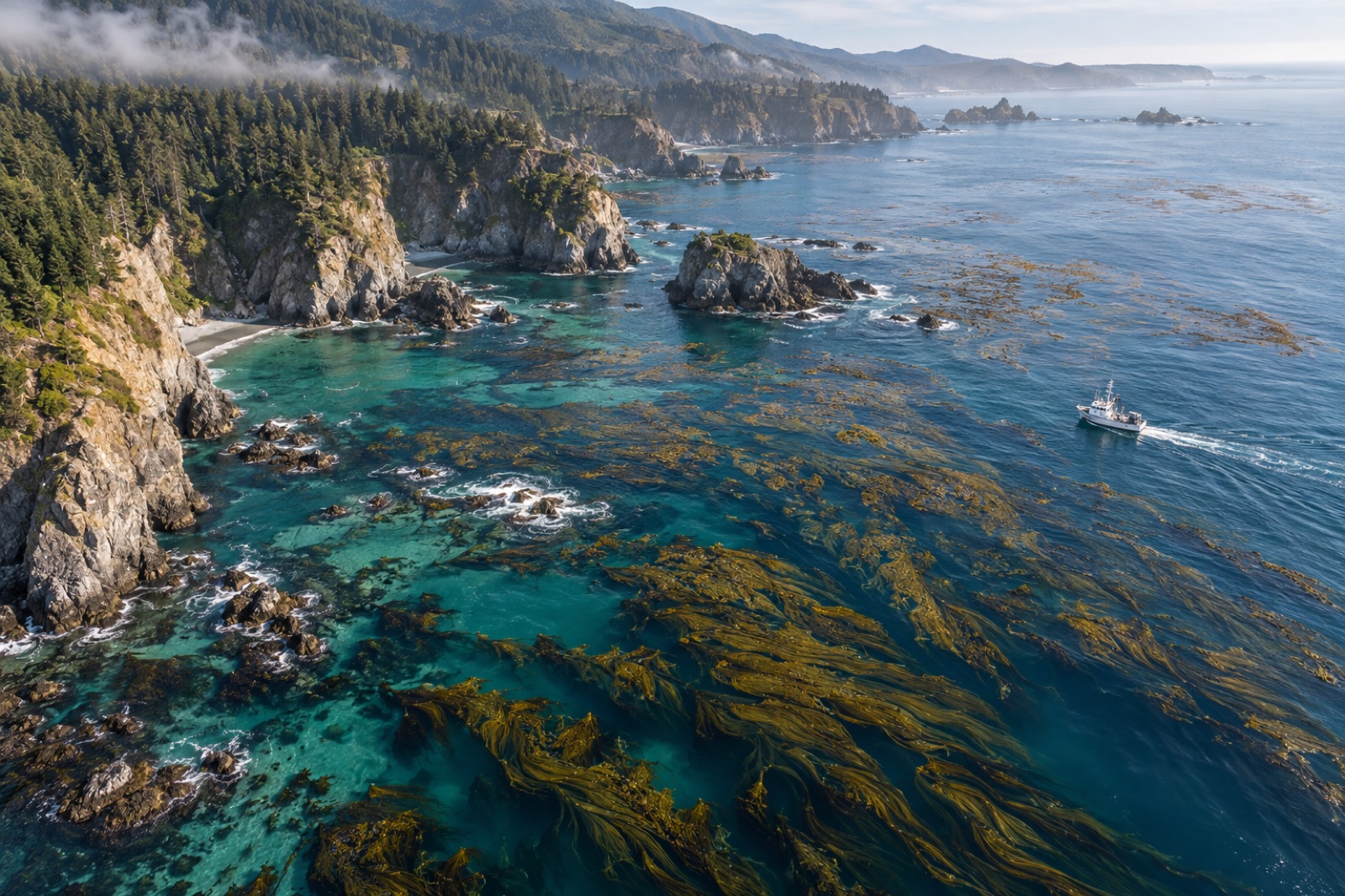
Follow kelp carbon from satellite canopy map to verified credit: the fieldwork, biomass models, fate tracing and audits behind blue carbon MRV at sea.
Dr. Mara Ellison ·
Two growing seasons after the barren survey: the first bull kelp fronds are up, the urchins are walking back in, and the blocks are holding. A field note.
Jack Callum ·
A Tasmania survey block scored high on every restoration metric and we still walked away. On suitable habitat, restraint, and the reefs that don't need us.
Jack Callum ·
A field note from the Mendocino coast: the morning sonar and diver eyes confirmed bull kelp canopy over our first seeded corridor, and what that number means.
Jack Callum ·
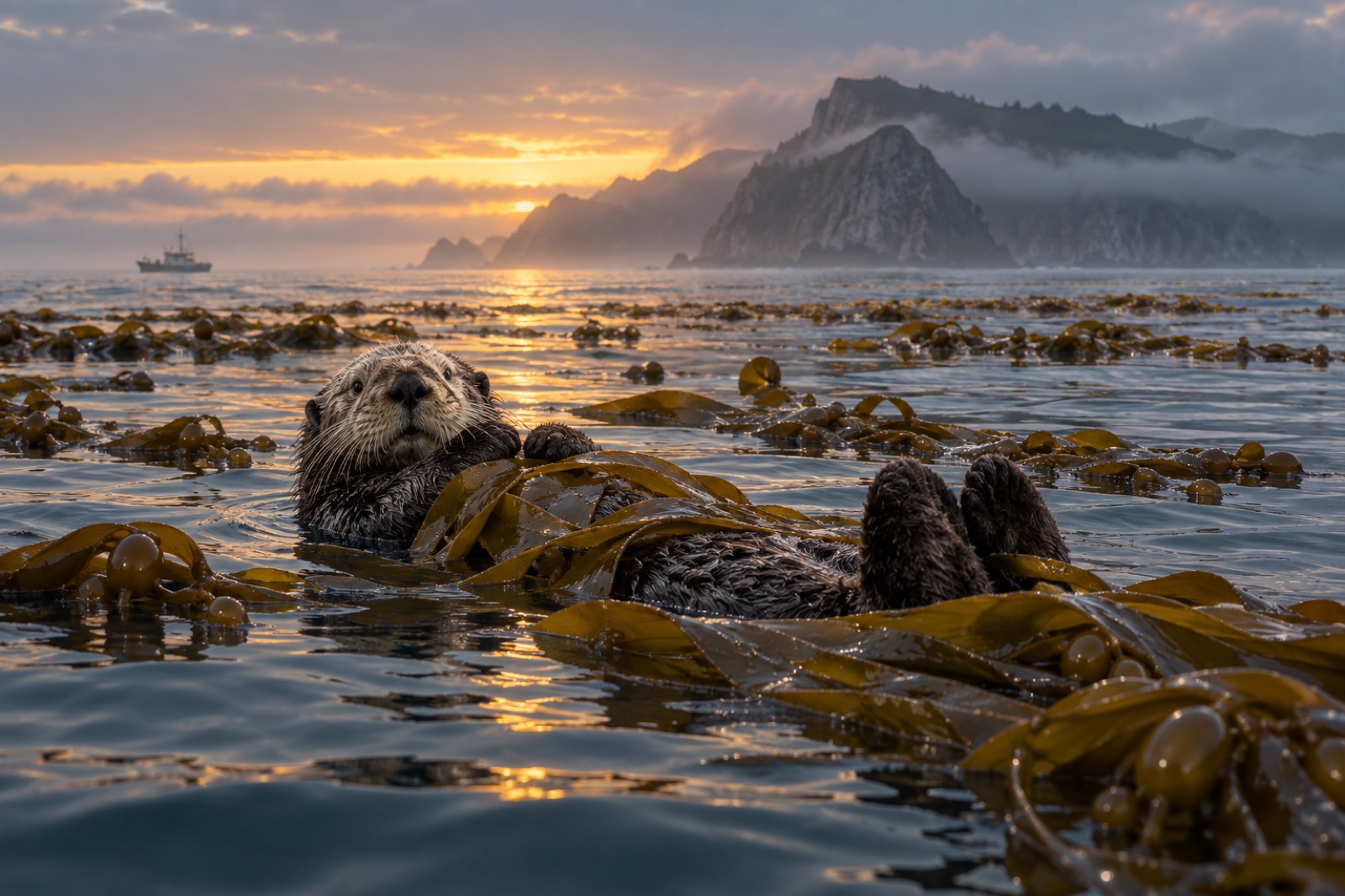
Sea otters are strangers at Catalina — so when one appeared over Tidewright's restoration block, we built a dawn count around him. What the survey found.
Dr. Mara Ellison ·
For one week at Tinderbox we counted the same kelp canopy twice — once by drone, once by diver. Here's what each method caught, missed and taught us.
Jack Callum ·
Five days on sea country with the Kudjela Rangers off Tasmania's east coast: eDNA sampling, seasonal calendars, and what genuine co-management looks like on the water.
Jack Callum ·
Inside a kelp holdfast census at Tinderbox: bagging, sieving and counting the hundreds of small animals that tell us whether a restored reef is alive.
Dr. Mara Ellison ·
After the February storm that took eleven seeded lines at Mendocino, the first formal belt transect told a calmer, stranger story. Notes from the dive.
Jack Callum ·
Why Tidewright's sharpest fish census is a diver swimming 400 metres at dawn on fin power alone. A field note on roving-diver surveys off Tasmania.
Dr. Mara Ellison ·
How scientists turn diver counts, satellite pixels and allometric equations into honest kelp biomass estimates — and why every method carries a bias.
Dr. Mara Ellison ·
Every autumn we weigh the urchins culled from the barren edge at Boomer Bay. This year the scales told a different story — and changed next year's plan.
Jack Callum ·
Multibeam sonar, sidescan texture, satellite bathymetry and AUVs: how modern seafloor mapping works, what each tool can resolve, and why reefs need it.
Dr. Mara Ellison ·
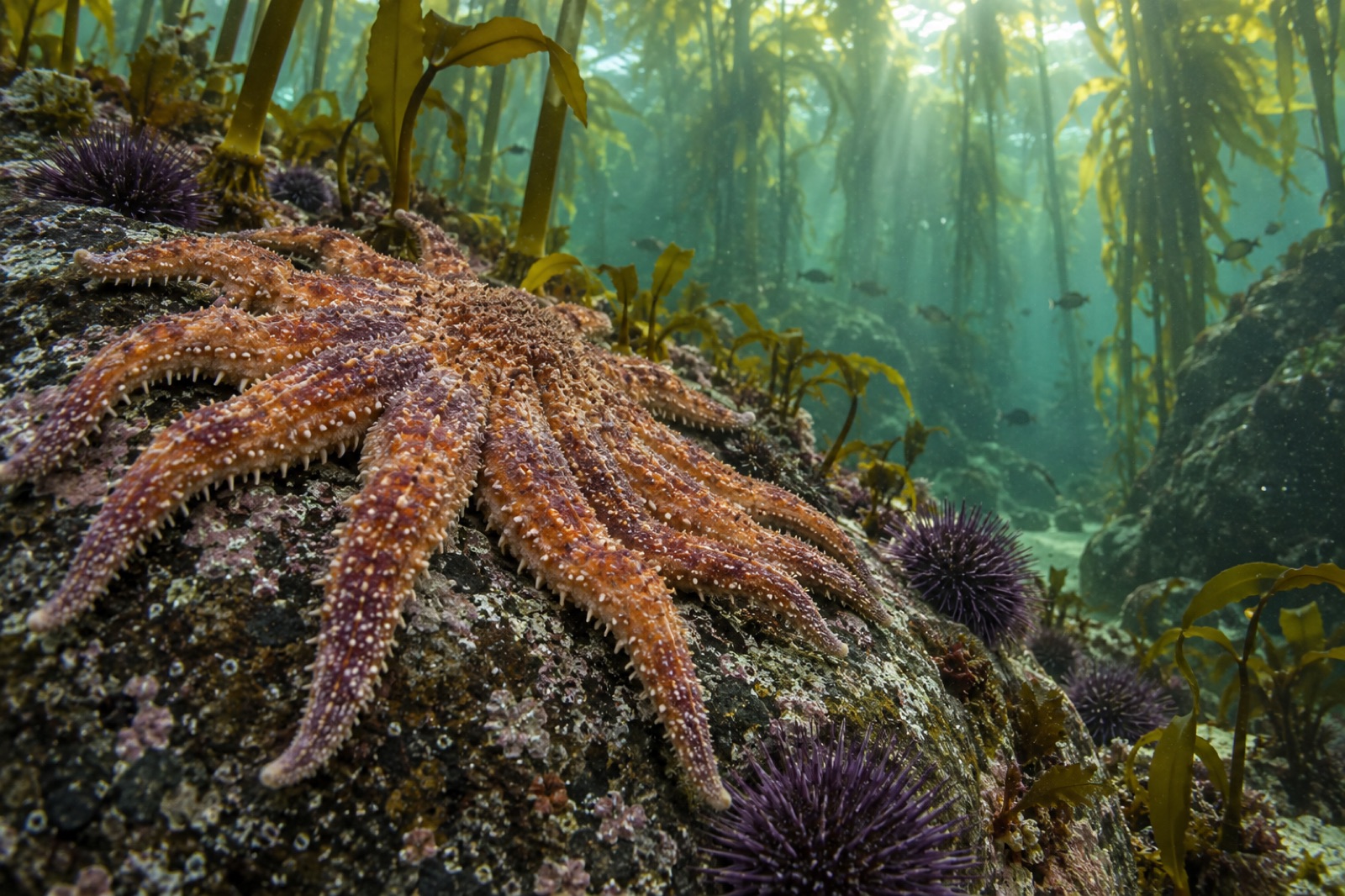
A Tidewright dispatch: the first sunflower star recorded on a long-running transect since the wasting years, and an honest crew argument about what one animal means.
Jack Callum ·
Once a year we swab restored and wild kelp beds across Tasmania for the provenance program. Two hundred blades, five sites, and what the lab read in them.
Dr. Elias Brandt ·
Decade-scale reef time series are the unglamorous backbone of kelp science. Here's what continuous monitoring reveals that snapshots never can — and why cuts hurt.
Dr. Mara Ellison ·
From satellite chlorophyll to shellfish closure thresholds, here's how harmful algal bloom forecasts are built, issued and used to keep seafood and coasts safe.
Dr. Lena Fischer ·
A newly seeded kelp bed meets its first storm season. Notes on depth, spacing and which lines came through the winter with their heads up.
Jack Callum ·
Marine heatwaves are ranked Categories I–IV like cyclones — but the scale measures a temperature anomaly, not wind. Here's how the Hobday system works and how to read it.
Dr. Lena Fischer ·
Washington's inland sea shelters floating bull kelp beds that shelter salmon in return. A Coastal Atlas guide to its patchwork beds and citizen science.
Tom Okafor ·
Join a diver or snorkeller reef survey: the main program types, the training, the transects and how to make your volunteer data scientifically usable.
Tom Okafor ·
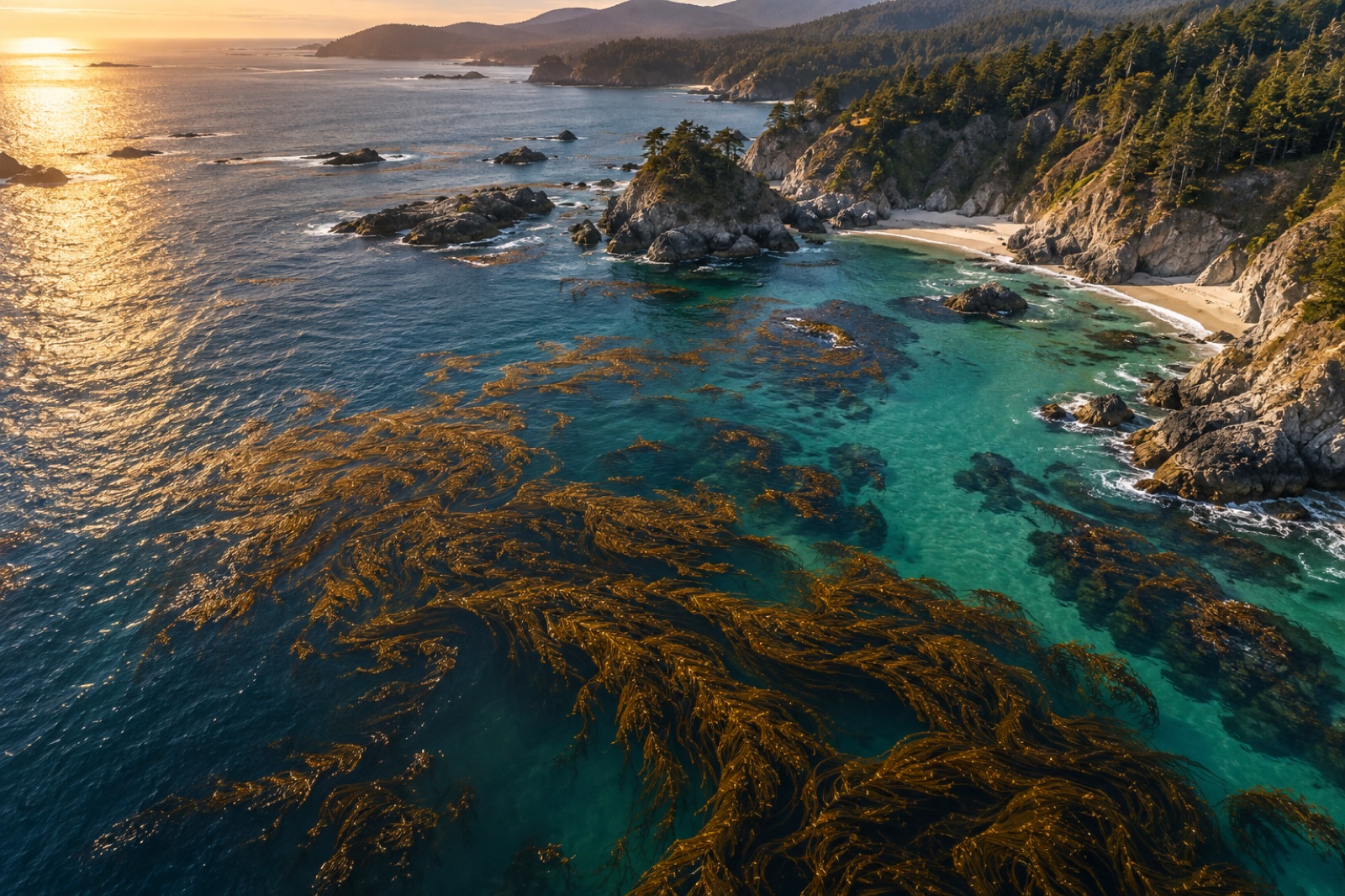
From Sentinel-2 pixels to drone orthomosaics, here's how scientists detect, map and track kelp forest canopies from space — and where the limits are.
Dr. Mara Ellison ·
Step-by-step guide to building a baited remote underwater video station (BRUV) that records real fish counts for citizen-science kelp forest monitoring.
Tom Okafor ·